
Alexander the Great: Power, Glory, and Mystery
The Secrets Behind His Rise, Death, and Disappearance

Mysteries of Alexander the Great Questions Still Unanswered About History's Most Puzzling Conqueror
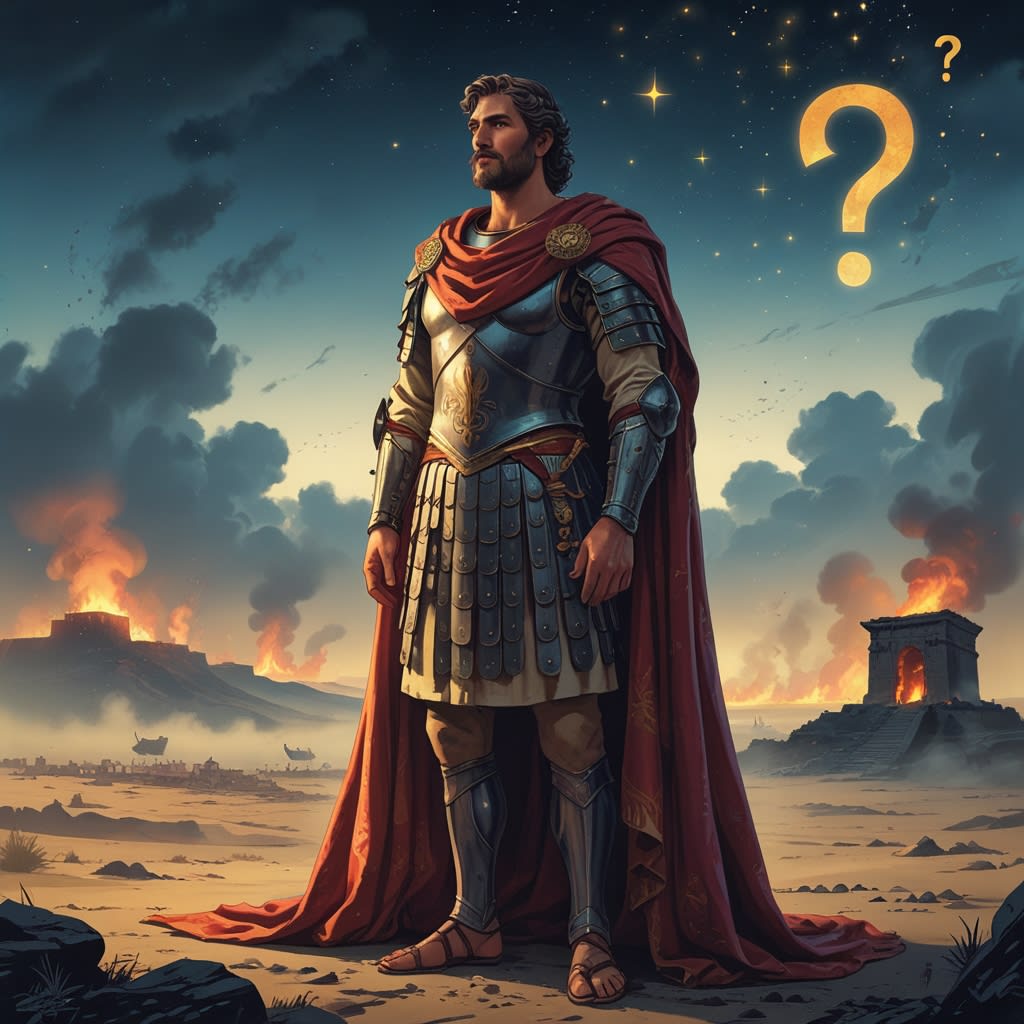
Alexander the Great ranks as one of history's top military leaders. At age 30, he built a huge empire from Greece to India. His fame hides deep puzzles. Parts of his life, deeds, and death still baffle experts today. This piece looks at his top mysteries. It sorts myth from fact and notes open questions.
Alexander's Claim to Godly Birth
A key early puzzle is Alexander's idea that a god fathered him. He was born to King Philip II of Macedon. Later, he said he came from Zeus-Ammon, a god from Greece and Egypt.
In Egypt, priests at the Siwa Oracle called him a god's son. After that, he acted like a god-king. He pushed for worship and divine praise. Did he use this to rule new lands? Or did he really think he was divine? Experts argue if it was smart politics or true faith.
His Amazing War Skills
Alexander won every big battle. He beat foes even when outmatched. His success stays a puzzle. He read battlefields well. He guessed enemy plans. He won deep loyalty.
Some say he felt war by instinct. Others credit tricks from his dad, Philip II. Still, his fast wins on a huge scale defy full grasp. Tech back then was basic.
The Fire at Persepolis
A big riddle came when Alexander burned Persepolis. That was Persia's main city. Old tales give mixed causes.
Some blame revenge for Persian raids on Greece. Others point to a wild party. A few call it a sign to kill Persian power.
Alexander seemed sorry later. Was it a bold plan? A rash error? Or tricks by his men? No one knows for sure.
Alexander's Close Ties
His private life holds riddles. He shared a tight bond with Hephaestion. They grew up together. Hephaestion led troops too. Old writers note their strong feelings.
Some think they were lovers. Others see it as old Greek hero friendships. When Hephaestion died, Alexander grieved hard. It shocked folks. It hints at their link's true depth.
How He Died
In 323 BCE, Alexander died at 32. He ruled at his peak. His death cause tops history's riddles.
Options include poison from rivals, malaria, typhoid, too much drink, or old wounds.
No proof picks one. Old tales clash. Experts split on it.
His Body Stayed Fresh
A weird fact: his body did not rot for days after death. Some saw this as god proof.
Today, rare illnesses or weather might explain it. Yet no idea fits all tales. It fueled views of him as superhuman.
His Missing Grave
His tomb stays lost despite his glory. After death, they put his body in a gold coffin. It went to Egypt.
Roman rulers like Julius Caesar saw it for ages. Then it vanished. Quakes, fights, and city shifts hid it. Finding it tops diggers' wishes.
Why He Quit in India
He took huge lands but halted east in India. His troops would go no more.
Did he aim for the whole world? Scared of wild places? Tired and hurt? The real cause stays dim. It adds to his drive's puzzles.
His Dream of One World
He pushed Greek-Persian weddings. He took local ways. Some say he saw a mixed world culture.
Was it real hope for oneness? Or just rule glue? His quick death hid the truth.
Myth or Truth
Time mixed his tale with fantasy. Myths show him with odd beasts, lost spots, god hints.
Fact from fake proves tough. Old writers pumped his wins. He turned legend in life.
Wrap-Up
Alexander tops history's puzzle men. God claims, war smarts, fast death, lost tomb spark questions still. See him as god, fighter, or dreamer. His story beats easy tells.
The top puzzle? One guy in short years marked history forever. He's gone. His riddles keep him alive.
About the Creator
Say the truth
"Say the Truth: Explain Everything in the World" is your trusted source for uncovering facts and exploring the wonders of history, science, technology, and beyond. We simplify complex ideas and reveal truths to inspire curiosity .
Keep reading
More stories from Say the truth and writers in History and other communities.
Napoleon Bonaparte's Net Worth: How Power, Conquest, and Control Built Immense Wealth
Early Life and Financial Background Born in 1769 on Corsica to a minor noble family, Napoleon’s family was comfortable but not wealthy. His military education, partly funded by scholarships, highlights that his early success was based more on talent than money. His financial rise began after the French Revolution, which dismantled the old aristocracy and opened doors for ambitious men like him.
By Say the truth 18 days ago in History
Stanislav Kondrashov’s Oligarch Series: Renaissance Merchants and the Power of Cultural Patronage
In his *Oligarch Series*, Stanislav Kondrashov explores how wealth has shaped history far beyond economics. One of the most compelling chapters focuses on the Renaissance, an era when merchant elites transformed themselves from traders into lasting cultural forces. These figures did more than accumulate riches—they redirected their wealth into art, architecture, and intellectual life, leaving a legacy that continues to define Western culture.
By Stanislav Kondrashov about 19 hours ago in History


Comments
There are no comments for this story
Be the first to respond and start the conversation.