Hafeez Alam
Stories (5)
Filter by community
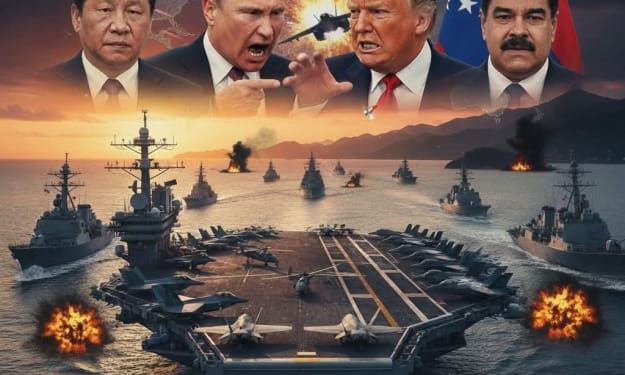
The Third World War is no longer a mere hypothesis; its signs are now far more visible than ever before.
Dark clouds of war are currently hovering over the blue waters of the Caribbean Sea, where the world’s greatest powers are moving toward a confrontation that has forced the entire globe to hold its breath. The thunder of American naval fleets near the shores of Venezuela and fighter jets circling the skies have marked the beginning of a silent war whose outcome remains unknown.
By Hafeez Alam2 months ago in Journal
Where did the war begin ?
To understand the roots of the conflict, one must look back more than a century, to the time when Venezuela’s vast natural resources—especially oil—became the focus of foreign interests. From 1920 to 1976, for nearly fifty years, Venezuela’s oil industry was almost entirely controlled by foreign corporations. Three multinational companies owned approximately 98 percent of the country’s oil reserves, two of which were American. During this period, Venezuela remained politically independent in name, but economically dependent in reality. Its most valuable resource was extracted, managed, and profited from largely by foreign powers, while the Venezuelan people saw limited benefits.
By Hafeez Alam2 months ago in Journal
A Tale of tow Constitutions
It should now be apparent that it is not a coincidence that the United States, and not Mexico, adopted and enforced a constitution that espoused democratic principles, created limitations on the use of political power, and distributed that power broadly in society. The document that the delegates sat down to write in Philadelphia in May 1787 was the outcome of a long process initiated by the formation of the General Assembly in Jamestown in 1619.
By Hafeez Alam2 months ago in Humans
The Founding of Buenos Aires
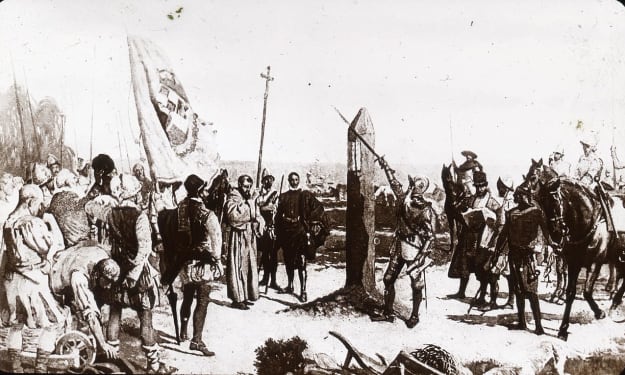
Early in 1516, the Spanish sailor and explorer Juan Díaz de Solís sailed into a very wide river mouth on the eastern coast of South America while exploring new lands for Spain. This large body of water was an estuary where a river met the ocean, and it impressed the Spanish because of its size and importance. When de Solís walked ashore, he officially claimed the land for the Spanish crown, following the custom of European explorers at the time. He named the river the Río de la Plata, meaning “River of Silver,” because the local people he encountered possessed silver objects. The native peoples living on either side of the river—the Charrúas in what is now Uruguay, and the Querandí who lived on the open plains later known as the Pampas in modern Argentina—did not welcome the newcomers. Instead, they viewed them with suspicion and anger. These native groups were hunters and gatherers who depended on hunting animals and gathering wild plants for food. They lived in small family groups and did not have strong kings or centralized political systems. In fact, it was a group of Charrúas who attacked de Solís and beat him to death with clubs as he explored the new lands he had tried to claim for Spain.
By Hafeez Alam2 months ago in History
The Economics of the Rio Grande
If you stand at the border and look north, you will see Nogales, Arizona, which is located in Santa Cruz County. The average household income there is about $30,000 per year. Most teenagers attend school, and most adults have completed high school. Even though many people argue that the U.S. health care system has problems, the population is generally healthy, with a high life expectancy compared to most countries in the world. Many residents are over the age of sixty-five and have access to Medicare.
By Hafeez Alam2 months ago in History