World History
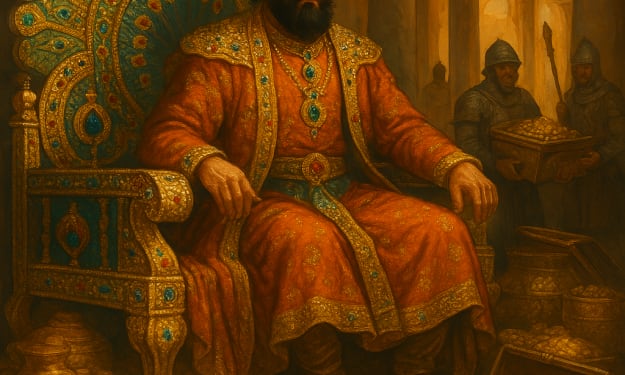
"Empire of Gold: The Mughal Treasure – Asia’s Greatest Lost Fortune". AI-Generated.
"The Golden Legacy: Revealing the Supreme Wealth in Asia's Historical Narrative" Asia, the origin of ancient societies, has been the residence of legendary affluence and overlooked fortunes. Among its numerous valuables, the treasure of the Great Mughal Empire distinguishes itself as the most lavish and historically crucial. Valued in billions at present, the Mughal treasure encompassing the Peacock Throne, the Koh-i-Noor diamond, and vaults filled with gold and gemstones epitomizes the pinnacle of imperial authority, craftsmanship, and political superiority in Asia. This article charts the ascent, magnificence, downfall, and heritage of Asia’s most significant historical treasure.
By Say the truth 9 months ago in History
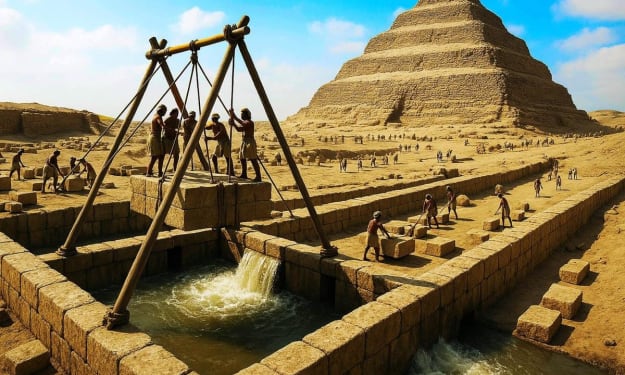
Ancient High Tech Machinery Used to Build Egypt’s Pyramids Study Claims
Ancient High Tech Machinery Used to Build Egypt’s Pyramids Study Claims For centuries the Great Pyramids of Egypt have fascinated historians engineers and tourists alike. Built over 4,500 years ago these towering monuments have sparked countless theories about how ancient civilizations managed to construct them with such precision and scale. While the mainstream archaeological consensus holds that the pyramids were built using simple tools manual labor and ingenious techniques a new controversial study claims that ancient high tech machinery may have played a crucial role in their construction.
By Adnan Rasheed9 months ago in History
Cratippus of Athens
Within the intricate landscape of ancient Greek philosophy, prominent figures such as Plato, Aristotle, and Socrates often take center stage. Yet, numerous lesser-known philosophers have made substantial contributions to the evolution of Western thought. One notable individual is Cratippus of Athens, a Peripatetic philosopher from the 4th century BCE. Although his writings have not survived, remnants of his thoughts and accounts from subsequent scholars indicate a philosopher deeply involved in metaphysics, ethics, and natural philosophy. This essay delves into Cratippus' life, his philosophical impact, and his significance for later thinkers. By analyzing ancient texts, we can reconstruct the legacy of a philosopher who connected the ideas of Aristotle with those of subsequent Hellenistic philosophy.
By A História9 months ago in History
Atlantis: The Eternal Mystery Beneath the Sea
Is Atlantis a Lost Civilization or a Philosophical Allegory? The legend of Atlantis is one of the few ancient myths that has sparked so much interest, discussion, and speculation. First introduced by the Greek philosopher Plato around 360 BCE in his dialogues Timaeus and Critias, Atlantis was described as a vast, technologically advanced island civilization that met a sudden and catastrophic end—vanishing beneath the ocean in a single day and night.
By Shahriar Kabir Emon9 months ago in History
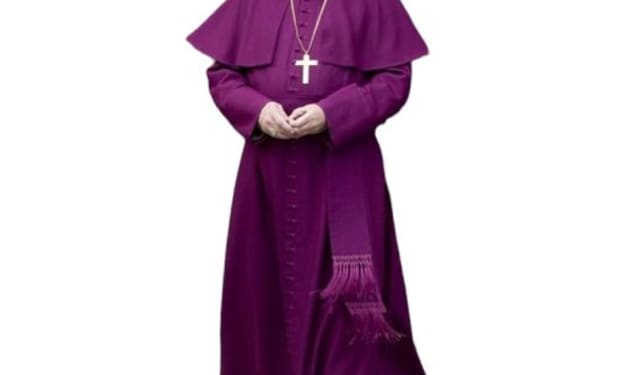
The Bishop Cassock A Robe of Service, Tradition, and Faith
The special robe worn by bishops to show their service, faith, and tradition in the church. It is a long, simple robe, often purple or red, representing their role in guiding the church community. The bishop cassock reminds them to stay humble and devoted to God. However, finding the right fit can be difficult for some bishops, especially if they are new to wearing it. To solve this, many stores offer custom-made bishop cassocks, ensuring comfort and a perfect fit for every bishop. This helps them serve with pride and confidence.
By Sameera eclergys9 months ago in History
Gog & Magog: Secrets Behind the Wall
1. Dhul-Qarnayn (AS): Who Was He? In the Qur'an, Dhul-Qarnayn (AS) is mentioned as a powerful and righteous ruler (Surah Al-Kahf, 18:83–98). His exact historical identity is still up for debate—some claim he was Alexander the Great, while others suggest Cyrus the Great—but he is portrayed as a just king who helped oppressed people wherever he went. During one of his journeys, he reached a place between two mountains where he encountered a community that complained about the corruption caused by Gog and Magog (Ya’juj and Ma’juj). They requested that he construct a barrier to safeguard them. ⸻
By Shahriar Kabir Emon9 months ago in History
The Causes and Consequences of the World Wars
The 20th century witnessed two cataclysmic conflicts that reshaped the world: World War I and World War II. These wars, although separated by two decades, were deeply intertwined in their causes and consequences. Together, they brought unprecedented destruction, altered global power dynamics, and influenced the political, economic, and social direction of nations for generations.
By Haseeb Mujaddidi9 months ago in History
Dedan Kimathi vs. Stanley Mathenge
A rivalry between Kimathi and Mathenge fermented during the heydays of the Maumau insurgence. Kimathi was originally subordinate to Mathenge. Although he was literate, he did not have any military experience. Prior to eloping into the forest, he was working at KCC in Thompson’s falls (Nyahururu) by day and the head overseer of oathing in the Rift Valley by night. Mathenge on the other hand was an ex-soldier. Kimathi’s voice was high-pitched while Mathenge’s was deep and commanded attention. The latter standing over 6 feet, towered over Kimathi’s somewhat short stature. Whereas Kimathi was rigid in his decisions, Mathenge was reasonable and could negotiate which came in handy during a crisis.
By HINGES OF TIME9 months ago in History
The Mysterious Egyptian Sistrum. A Sacred Instrument That Opened Portals and Changed the Skies
The Rattle of the Gods Deep within the stone chambers of ancient Egypt, past columns carved with forgotten glyphs, lies a sound few have heard, one said to shake the heavens and stir the Earth. It is the sound of the sistrum, a sacred instrument held not by musicians, but by priestesses, pharaohs, and gods. To the untrained eye, the sistrum is a rattle. But to the initiates of the old temples, it was far more. It was a key. A tool of vibration. A portal-opener.
By The Secret History Of The World9 months ago in History