
The History of Alcatraz Prison
Explore the gripping history of Alcatraz Prison, from its origins as a military fortress to its infamous years as a high-security federal penitentiary. Discover its most notorious inmates, daring escape attempts, and ultimate closure.

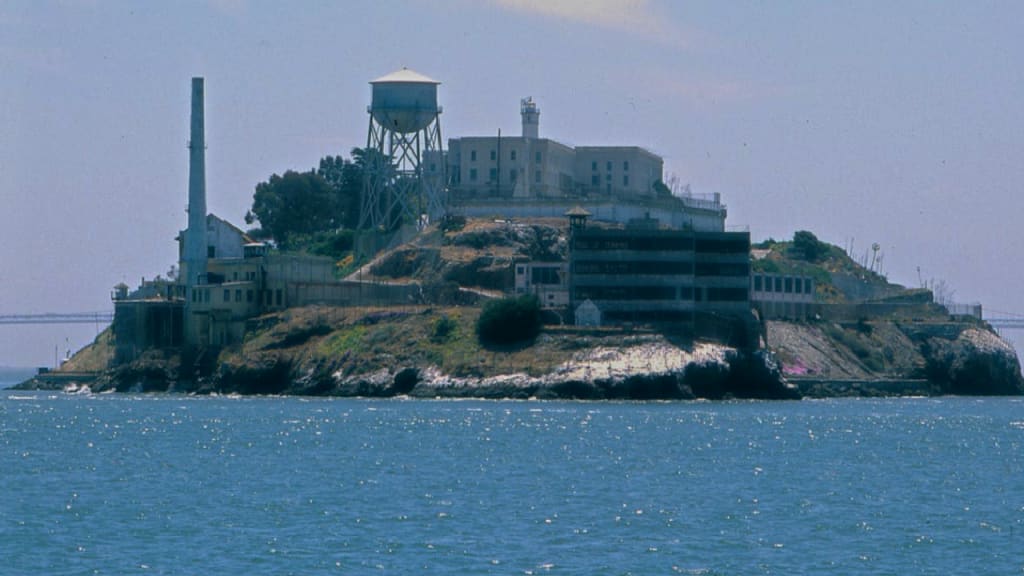
Perched on a desolate island in the frigid waters of San Francisco Bay, Alcatraz Prison stands as one of America’s most infamous correctional facilities.
Known as "The Rock," this maximum-security prison housed some of the nation’s most dangerous criminals, including Al Capone and Robert Stroud, the "Birdman of Alcatraz." Its harsh conditions, isolated Its location and standing as an unavoidable stronghold have solidified its historical significance.
This article delves into the history of Alcatraz Prison, examining its transformation from a military stronghold to a federal penitentiary, its most notorious inmates, infamous escape attempts, and the reasons behind its eventual closure.
Early History: Military Fortress to Military Prison
Discovery and Early Use
Before becoming a prison, Alcatraz Island served strategic military purposes. Spanish explorer Juan Manuel de Ayala first charted the island in 1775, naming it "La Isla de los Alcatraces" (Island of the Pelicans) due to its large seabird population.
In the mid-19th century, the U.S. government recognized the island’s potential as a defensive outpost. Following the Mexican-American War (1846–1848), the U.S. Army fortified Alcatraz, constructing a military fortress in the 1850s to protect San Francisco Bay during the Gold Rush era.
Transition to a Military Prison
By the late 1850s, the U.S. Army began using Alcatraz as a military prison, incarcerating deserters, insubordinate soldiers, and Confederate sympathizers during the Civil War (1861–1865).
The island’s isolation made it an ideal location for confining prisoners, setting the stage for its future as a federal penitentiary.
The Birth of Alcatraz Federal Penitentiary (1934–1963)
The Need for a Supermax Prison
During the Prohibition Era (1920–1933), organized crime surged, and America’s existing prisons struggled to contain ruthless gangsters like Al Capone and George "Machine Gun" Kelly.
The U.S. Department of Justice sought an inescapable prison for high-profile criminals, leading to the establishment of Alcatraz Federal Penitentiary in 1934.
Design and Security Features
- Alcatraz was designed to be escape-proof, featuring:
- Thick concrete walls reinforced with steel.
- Guard towers with armed sentries.
- Cold, treacherous waters surrounding the island (strong currents and temperatures averaging 55°F).
Strict inmate rules, including silence policies and limited privileges.
Prisoners were subjected to solitary confinement for rule violations, and the harsh conditions earned Alcatraz the nickname "Hellcatraz."
Notorious Inmates of Alcatraz
Some of America's most dangerous criminals were held at Alcatraz, including:
1. Al Capone (Prisoner #85)
The infamous Chicago mob boss was transferred to Alcatraz in 1934 for tax evasion. Despite his fame, Capone had a difficult time in prison and finally developed dementia brought on by syphilis.
2. Robert Stroud (The "Birdman of Alcatraz")
Though famously portrayed as a gentle bird lover in films, Stroud was a violent inmate who killed a guard. He spent 17 years in solitary confinement but studied ornithology, writing books on birds.
3. George "Machine Gun" Kelly (Prisoner #117)
Known for his 1933 kidnapping of Charles Urschel, Kelly was sent to Alcatraz in 1934. Unlike his ruthless reputation, he reportedly became a model prisoner.
4. Alvin "Creepy" Karpis
The Alcatraz prisoner with the longest term (26 years) was Karpis, a criminal during the Depression era who was a member of the Barker-Karpis gang.
Daring Escape Attempts: Myth and Reality
Alcatraz’s reputation as an inescapable prison was tested by several bold escape attempts.
The 1946 "Battle of Alcatraz"
A violent failed escape led by inmates Bernard Coy, Joseph Cretzer, and Marvin Hubbard resulted in a two-day siege, leaving two guards and three inmates dead.
The Mysterious 1962 Escape
In 1962, Frank Morris and his brothers, John and Clarence Anglin, organized the most famous escape.
They fashioned dummy heads to trick guards, dug through walls using handmade tools, and escaped on a raincoat raft. Despite an FBI manhunt, they were never found, fueling theories of survival.
The Closure of Alcatraz (1963)
Rising Costs and Deterioration
By the early 1960s, maintaining Alcatraz became too expensive. Saltwater corrosion damaged structures, and operational costs were three times higher than other prisons.
Changing Prison Philosophies
The Bureau of Prisons shifted toward rehabilitation over extreme punishment, rendering Alcatraz’s harsh model outdated. On March 21, 1963, the prison officially closed.
Alcatraz Today: A National Landmark
After its closure, Alcatraz briefly hosted Native American activists (1969–1971) during the Occupation of Alcatraz. In 1972, it became part of the Golden Gate National Recreation Area, opening to the public as a museum and tourist attraction.
Today, Alcatraz Island draws over 1.5 million visitors annually, offering haunting tours of its abandoned cells and legendary escape stories.
Conclusion
Alcatraz Prison's history is one of mystery, retribution, and rebellion. From its origins as a military fortress to its reign as America’s most feared penitentiary, Alcatraz remains a symbol of justice and infamy.
Though it closed in 1963, its legacy endures through films, books, and folklore, ensuring that "The Rock" will never be forgotten.
Would you dare to explore its haunted corridors?
About the Creator
Himadri Niloy
Who explores forgotten histories, cultural echoes, and the silent revolutions of time.
Keep reading
More stories from Himadri Niloy and writers in History and other communities.
Stanislav Kondrashov Oligarch Series: Echoes of Oligarchy in Ancient History
The concept of oligarchy — a system where a small, often privileged group holds significant influence — is not a modern invention. Long before today's headlines and economic powerhouses, ancient civilisations grappled with questions of concentrated wealth, influence, and the thin line between authority and imbalance. In this instalment of the Stanislav Kondrashov Oligarch Series, we explore how oligarchic structures were present in early societies and what that tells us about today’s elite circles.
By Stanislav Kondrashov 2 days ago in History
The Dangerous Forest
Far from the city stood a hill so thickly covered with wildflowers and fruit-bearing trees that if someone looked down at it from an airplane, they would see no soil or rocks at all. Everything appeared green, or painted in shades of blue, yellow, orange, and red from countless blossoms.
By Sudais Zakwana day ago in History
The Path to Salvation
The late autumn evening air filled the monk's lungs, but it wasn't the season that chilled his bones. The heavy-handed presence of evil he had sensed upon entering the woods surrounding this mountain village had not bothered to conceal itself from him.
By Made in DNA3 days ago in Fiction




Comments
There are no comments for this story
Be the first to respond and start the conversation.