
The Causes and Consequences of the World Wars
Exploring the Causes and Global Impact of WWI and WWII

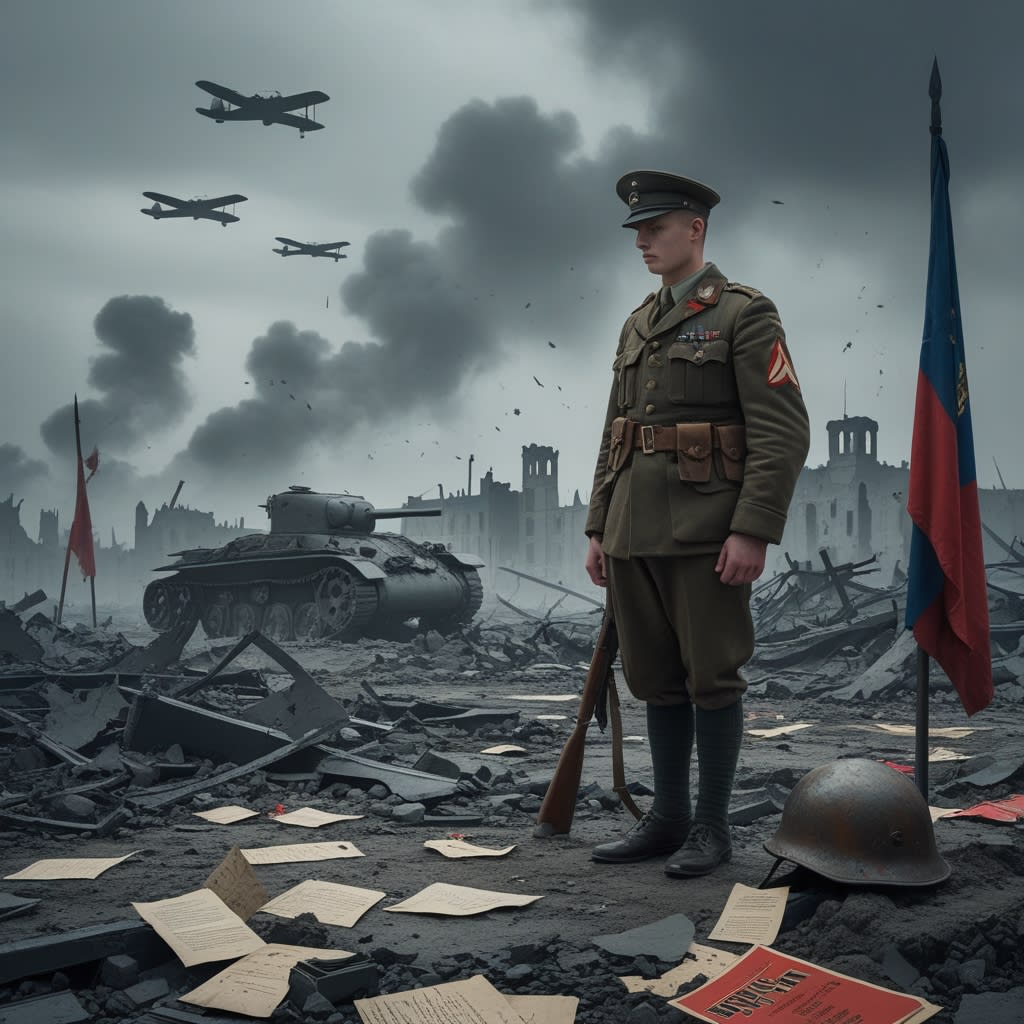
The 20th century witnessed two cataclysmic conflicts that reshaped the world: World War I and World War II. These wars, although separated by two decades, were deeply intertwined in their causes and consequences. Together, they brought unprecedented destruction, altered global power dynamics, and influenced the political, economic, and social direction of nations for generations.
The Causes of World War I
World War I, also known as the Great War, erupted in 1914, sparked by the assassination of Archduke Franz Ferdinand of Austria-Hungary in Sarajevo. However, the roots of the war ran much deeper than one act of political violence. Europe had become a powder keg due to long-standing tensions caused by militarism, alliances, imperialism, and nationalism—commonly referred to as the M.A.I.N. causes.
Militarism, the belief in building up strong armed forces to prepare for war, had led to an arms race among major European powers, especially between Britain and Germany. The formation of rigid alliances—the Triple Alliance (Germany, Austria-Hungary, Italy) and the Triple Entente (France, Russia, Britain)—meant that a conflict between two countries could quickly escalate into a broader war.
Imperial competition also stoked tensions, as European nations competed fiercely for colonies and resources in Africa and Asia. Nationalist fervor further destabilized regions like the Balkans, where various ethnic groups, especially Slavs under Austro-Hungarian control, sought independence. The assassination provided the final spark, but the conditions for conflict had been building for decades.
Once war broke out, it engulfed much of the world. Nations mobilized millions of troops and introduced deadly new weapons like machine guns, tanks, poison gas, and airplanes. Trench warfare led to massive casualties and a bloody stalemate, especially on the Western Front. By the time the war ended in 1918, more than 16 million people had died.
The Treaty of Versailles and a Fragile Peace
In 1919, the Treaty of Versailles officially ended World War I. While it was meant to ensure lasting peace, it instead laid the groundwork for future conflict. Germany was forced to accept full responsibility for the war, pay enormous reparations, and surrender territory. Its military was drastically reduced, and its economy suffered under the weight of penalties and inflation.
The treaty was viewed by many Germans as a humiliation. National pride was wounded, and economic hardship led to widespread discontent. This atmosphere of resentment and instability provided fertile ground for the rise of extremist ideologies.
In the broader world, the war led to the collapse of major empires—Austro-Hungarian, Ottoman, Russian, and German—and the emergence of new nations. However, many of these new states were unstable, and peace remained elusive. The League of Nations, created to maintain peace, lacked real authority and failed to prevent aggression by rising totalitarian regimes.
The Rise of Dictators and the Road to World War II
The interwar years were marked by severe economic distress, especially during the Great Depression. In this climate, authoritarian leaders gained support by promising national revival. In Italy, Benito Mussolini established a fascist regime. In Germany, Adolf Hitler and the Nazi Party rose to power in 1933, fueled by promises to restore German strength and undo the Treaty of Versailles.
Hitler quickly began rearming the country and expanding its territory. He annexed Austria in 1938 and was granted part of Czechoslovakia through the Munich Agreement—a failed attempt at appeasement by Britain and France. But Hitler's ambitions were far from satisfied. When Germany invaded Poland in September 1939, Britain and France declared war, marking the start of World War II.
The Global Scope and Destruction of World War II
World War II, lasting from 1939 to 1945, was even more devastating than the first. It involved over 100 million people from more than 30 countries and caused an estimated 70 to 85 million deaths. The war was truly global, with major fighting in Europe, Africa, Asia, and the Pacific.
Germany rapidly conquered much of Europe, using a new military strategy called Blitzkrieg or “lightning war.” Meanwhile, Japan, seeking to dominate Asia, attacked China and later bombed the U.S. naval base at Pearl Harbor in 1941, bringing the United States into the war.
The conflict saw unimaginable horrors, including the Holocaust—the systematic genocide of six million Jews and millions of others by the Nazi regime. Civilians were targeted more than ever before. Entire cities were bombed, and the line between soldier and non-combatant blurred.
The war ended in Europe with Germany’s surrender in May 1945, and in Asia after the United States dropped atomic bombs on Hiroshima and Nagasaki in August 1945. Japan surrendered shortly after.
Consequences and the Shape of the Modern World
The consequences of the Second World War were far-reaching. Europe was left devastated—cities in ruins, economies shattered, and millions of people displaced. But unlike after World War I, efforts were made to rebuild. The United States launched the Marshall Plan to help rebuild Western Europe and prevent the spread of communism.
Two superpowers emerged from the war: the United States and the Soviet Union. Their rivalry led to the Cold War, a decades-long period of tension, ideological conflict, and arms buildup that dominated global politics.
The United Nations was established in 1945 to promote international cooperation and prevent future wars, learning from the failures of the League of Nations. Decolonization movements also gained momentum, as many Asian and African countries demanded independence from European empires weakened by the war.
Socially and culturally, the wars transformed societies. Women had entered the workforce in large numbers during wartime and began to push for greater rights. Technological innovations born in war—such as radar, jet engines, and nuclear energy—would shape civilian life for years to come.
---
The First and Second World Wars were defining events of the 20th century. Though they arose from different circumstances, they shared common causes rooted in power struggles, unchecked ambition, and human failure. Their legacies continue to influence our world, reminding us of the costs of conflict and the importance of peace, cooperation, and remembering the lessons of history.
About the Creator
Haseeb Mujaddidi
History enthusiast uncovering the hidden stories of the past—ancient tales, lost voices, and moments that shaped our world, one story at a time.
Keep reading
More stories from Haseeb Mujaddidi and writers in History and other communities.
The Rise and Legacy of the Mughal Empire
The history of the Mughal Empire is one of grandeur, ambition, and complexity. Spanning over three centuries, this dynasty ruled much of South Asia, leaving behind a legacy that shaped the cultural, political, and architectural landscape of the Indian subcontinent. The Mughals, descendants of the great Central Asian conqueror Timur and the Mongol Empire, brought an era of prosperity, artistic brilliance, and remarkable political intrigue that reverberates in India’s heritage to this day.
By Haseeb Mujaddidi9 months ago in History
What Would World War III Look Like Today?
What Would World War III Look Like Today? When people imagine World War III, many still picture massive armies, tanks rolling across borders, and cities reduced to rubble by bombs. While traditional warfare would still play a role, a modern world war would look very different from the conflicts of the 20th century. Advances in technology, global interdependence, and new forms of power have changed how wars are fought—and how they affect the world.
By Wings of Time 6 days ago in History
El Chapo
Joaquín “El Chapo” Guzmán and the Sinaloa Cartel Joaquín Archivaldo Guzmán Loera, widely known by his nickname “El Chapo,” is one of the most infamous figures in the history of organized crime. He rose from extreme poverty in rural Mexico to become the leader of the Sinaloa Cartel, an organization that for decades played a central role in international drug trafficking. The story of El Chapo and the Sinaloa Cartel reflects broader issues such as corruption, inequality, weak institutions, and the global demand for illegal drugs.
By jhony aour3 days ago in History


Comments
There are no comments for this story
Be the first to respond and start the conversation.