World History
The Pepsi 349 Scandal: How a Marketing Error Sparked Riots and Deaths in the Philippines
In 1992, PepsiCo launched an ambitious promotional campaign in the Philippines called "Number Fever" to boost its market share against Coca-Cola, which dominated with a 75% market share compared to Pepsi’s 17%. The campaign promised life-changing prizes, including a grand prize of one million pesos (approximately $40,000 USD), in a country grappling with widespread poverty. However, a catastrophic printing error turned this marketing stunt into a national crisis, leading to riots, at least five deaths, numerous injuries, and billions of dollars in potential liability. This article delves into the campaign’s mechanics, the error that sparked chaos, the violent fallout, and the long-term consequences for Pepsi in the Philippines.
By Doctor Strange9 months ago in History
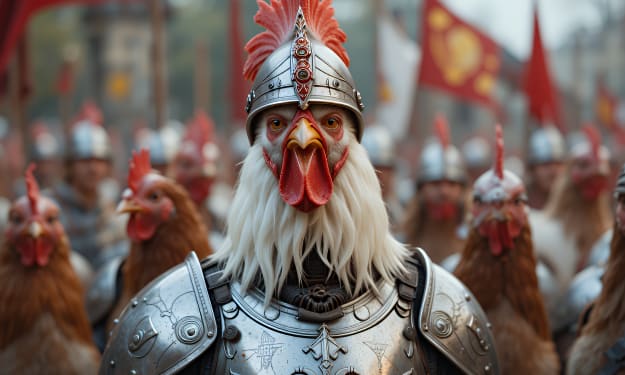
The Chicken War of 1325: When Clucking Chickens Sparked a Noble Revolt
I. A Crown Perched Precariously: Poland Before the Storm In the first decades of the 14th century, Poland was a kingdom stitched together with threadbare seams. Once a mighty and unified entity under the Piast dynasty, it had fractured during the "Period of Fragmentation" - a two-century-long brawl between dukes, princes, and churchmen, each more interested in carving up territory than fostering national unity. From the late 1100s through the 1200s, Poland resembled not a kingdom, but a jigsaw puzzle in a windstorm. Petty dukedoms rose and fell like the tides, and foreign powers nibbled greedily at Polish borders.
By Kek Viktor9 months ago in History
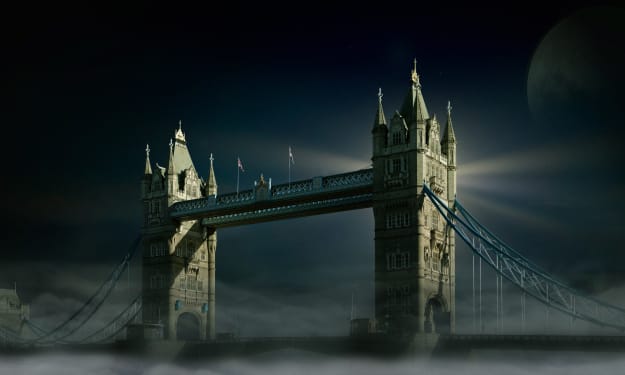
🏰The London Beer Flood of 1814: When a River of Ale Drowned a City Block
Part I: The Day London Drowned in Beer In the early afternoon of October 17, 1814, the ordinary hum of life in St. Giles, one of London's most densely populated and impoverished neighborhoods, was about to be shattered - not by war, fire, or famine, but by something far more absurd and sinister. A freak disaster was brewing behind the brick walls of the Horse Shoe Brewery on Tottenham Court Road. Unbeknownst to the workers inside or the families living nearby, a monstrous force was growing - pressurized, fermented, and lethal. The day would soon turn from mundane to macabre as 320,000 gallons of beer burst into the streets, sweeping away buildings, lives, and any sense of normalcy.
By Kek Viktor9 months ago in History
The Night the Statue of Liberty Almost Sank
When people picture the Statue of Liberty, they imagine fireworks, tourists with selfie sticks, or that triumphant scene in every New‑York‑based movie. What they rarely picture is a French steamship fighting for its life in the middle of the Atlantic, its cargo hold sloshing with seawater, and 214 giant copper pieces groaning like a wounded whale.
By Mohammad Ashique9 months ago in History
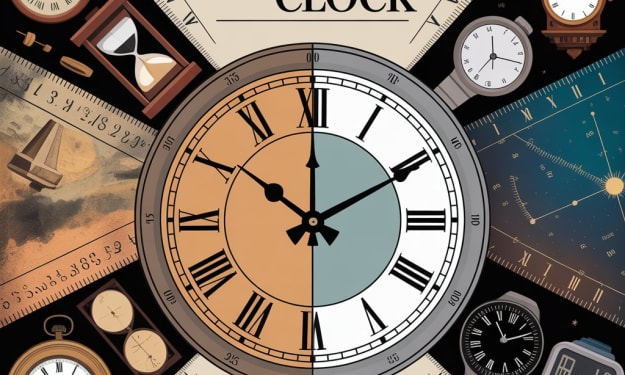
The History of the Clock
The History of the Clock From Sundials to Smartwatches: How Timekeeping Shaped Civilization Since the dawn of civilization, humanity has sought to master the rhythm of time. The story of the clock is more than a tale of gears and hands—it’s a story of how humans shaped their lives, societies, and understanding of the universe through the need to measure moments.
By FAIZAN AFRIDI9 months ago in History
Where Shadows Remember
The wind carried strange voices the day Mara stepped into the ruins of Vareth. Once a thriving mountain village, it was now only charred stone walls and hollowed streets. Locals said the town vanished overnight fifty years ago—no bodies, no signs of struggle. Just silence, as though the earth had swallowed it whole.
By Usman Khan9 months ago in History
Scientists Found an 8,000-Year-Old Figurine in a Cave: Its Engravings Tell the Story of an Ancient Culture. AI-Generated.
Scientists Found an 8,000-Year-Old Figurine in a Cave: Its Engravings Tell the Story of an Ancient Culture In a remarkable archaeological discovery that is captivating historians and researchers worldwide, scientists have unearthed an 8,000-year-old figurine from a remote cave. This ancient artifact, found buried deep within layers of soil and time, offers an extraordinary glimpse into a long-lost civilization. Intricately engraved with symbols and artistic patterns, the figurine is believed to represent not just a religious or cultural object, but also a form of early storytelling — a narrative tool used by prehistoric people to pass down their history, beliefs, and rituals.
By Adnan Rasheed9 months ago in History
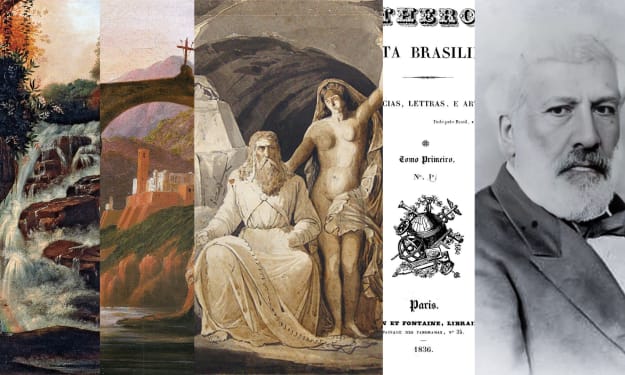
Araújo Porto-Alegre
Manuel de Araújo Porto-Alegre stands out as a remarkable figure in Brazilian cultural history. Born in 1806 in Rio Pardo, located in the southern province of Rio Grande do Sul, Porto-Alegre was truly a visionary. As a painter, poet, playwright, architect, critic, diplomat, and professor, his impact was felt across various fields, securing his essential role in shaping Brazil's cultural identity in the 19th century.
By A História9 months ago in History
The Vanished Fortune of Emperor Montezuma: The Lost Gold of the Aztecs. AI-Generated.
The Golden Empire of Montezuma The Aztec Empire, at its height in the early 1500s, dominated central Mexico through fearsome military might and sophisticated administration. The empire’s wealth flowed in the form of tribute—extracted from conquered regions and paid in cacao, textiles, jade, and above all, gold.
By Say the truth 9 months ago in History