
The History of the Clock
"From Sundials to Smartwatches: How Timekeeping Shaped Civilization"

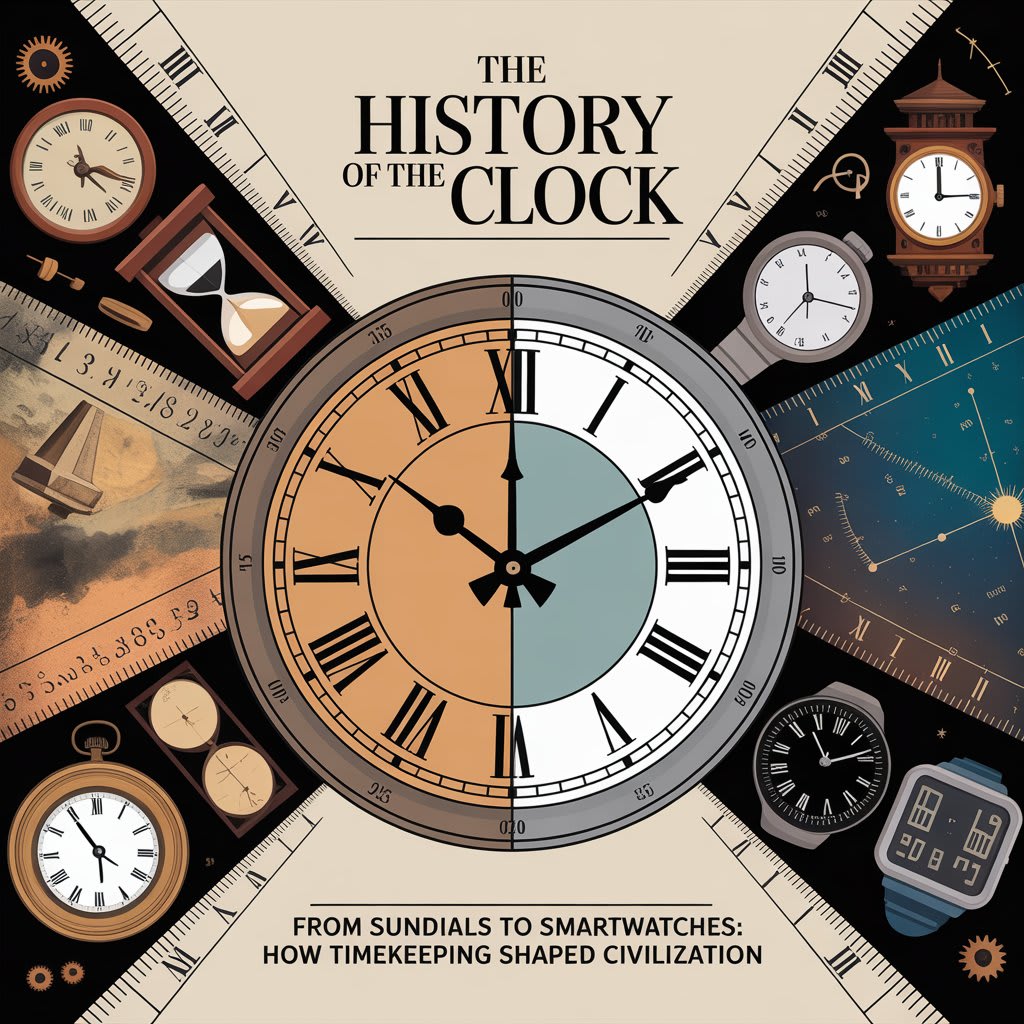
The History of the Clock
From Sundials to Smartwatches: How Timekeeping Shaped Civilization
Since the dawn of civilization, humanity has sought to master the rhythm of time. The story of the clock is more than a tale of gears and hands—it’s a story of how humans shaped their lives, societies, and understanding of the universe through the need to measure moments.
The Earliest Timekeepers: Nature’s Cues
Long before clocks existed, early humans tracked time using natural phenomena. The rising and setting sun marked the beginning and end of the day, while the lunar cycle guided early calendars. Seasonal changes dictated hunting, planting, and rituals. These observations laid the foundation for future timekeeping devices.
Sundials: Carving Time in Shadows
The first true instruments of time came in the form of sundials—used by ancient Egyptians as early as 1500 BCE. A vertical stick (or gnomon) cast shadows across a marked surface. As the sun moved, so did the shadow, dividing the day into measurable parts.
Sundials weren’t just practical—they reflected the ancient connection between time, nature, and the divine. Temples and palaces often featured elaborate sundials, symbolizing cosmic order.
However, sundials had a flaw: they didn’t work at night or on cloudy days. Humanity needed a more reliable method.
Water Clocks and Candle Clocks: Time That Flows and Burns
By 1400 BCE, Egyptians and Babylonians developed water clocks (clepsydras), which measured time by the regulated flow of water from one vessel to another. These were among the earliest devices to function independently of the sun.
In medieval China, India, and the Islamic world, water clocks grew sophisticated—with gears, valves, and chimes to signal the passing of hours.
Around the same time, candle clocks emerged—candles marked with hourly intervals would burn at a consistent rate, offering both light and time in the dark. In monasteries and courts, they were used to time prayers and ceremonies.
These innovations reflected a growing desire to regulate daily life more precisely.
Mechanical Clocks: Gears of Progress
The true revolution in timekeeping began in 13th-century Europe with the invention of mechanical clocks. These relied on gears and weights to measure time more accurately than ever before.
Installed in churches and town halls, these large, gear-driven devices often lacked faces and hands. Instead, they struck bells on the hour—a sound that transformed public life. Time was no longer a suggestion based on the sun—it was now an audible, shared experience.
By the 14th century, mechanical clocks gained faces, hands, and escapement mechanisms—technology that allowed consistent movement and regulated intervals. As time became more precise, it began to shape society more deeply.
Pendulum Clocks: Precision Takes a Leap
In 1656, Christiaan Huygens invented the pendulum clock, dramatically improving accuracy. These clocks deviated by only seconds a day—unheard of at the time.
Pendulum clocks became centerpieces of homes, schools, and government buildings. With them came the rise of hourly schedules, train timetables, and factory shifts. Time wasn’t just measured—it began to control modern life.
Pocket Watches and Wristwatches: Time Gets Personal
By the 17th and 18th centuries, portable timepieces like pocket watches became symbols of sophistication and power. Royalty, merchants, and scholars carried them with pride.
In the early 20th century, wristwatches emerged—initially used by soldiers in World War I for quick access to time. By the 1920s, wristwatches had become mainstream, reshaping fashion and personal timekeeping.
Time was no longer just public—it became private, wearable, and deeply personal.
Quartz and Atomic Clocks: Time Reaches New Precision
The invention of the quartz clock in 1927 marked another leap. Quartz crystals, vibrating at steady frequencies when electrified, allowed clocks to become incredibly accurate and compact.
Then came atomic clocks in the 1950s, using vibrations of cesium atoms to measure time to billionths of a second. These clocks now define international time standards and power technologies like GPS, internet synchronization, and space exploration.
Smartwatches: The Future on Our Wrists
Today, we wear smartwatches that don’t just tell time—they monitor our heart rates, track our sleep, send messages, and connect to satellites in space. We no longer just measure time; we live integrated with it.
What began as sun shadows on stone has evolved into data streams on glass screens.
Time and Humanity: More Than Numbers
As we look back on the evolution of the clock, one truth emerges: timekeeping has always been about more than minutes and hours. It reflects who we are—our need for order, meaning, and connection.
The clock is not just a tool. It’s a mirror of civilization’s journey—from ancient skies to digital pulses.
And as long as humanity exists, we will continue to chase time, shape it, and be shaped by it.
About the Creator
FAIZAN AFRIDI
I’m a writer who believes that no subject is too small, too big, or too complex to explore. From storytelling to poetry, emotions to everyday thoughts, I write about everything that touches life.
Keep reading
More stories from FAIZAN AFRIDI and writers in History and other communities.
A Brief History of Chocolate
A Brief History of Chocolate From Sacred Seeds to Sweet Treats Long before chocolate was a sweet treat found in colorful wrappers and glossy boxes, it was a sacred substance, steeped in ritual, trade, and transformation. The story of chocolate stretches back over 3,000 years and winds through ancient civilizations, colonial empires, and industrial revolutions before arriving in the form we recognize today. This journey—from bitter sacred drink to global indulgence—is as rich and layered as chocolate itself.
By FAIZAN AFRIDI10 months ago in History


Comments
There are no comments for this story
Be the first to respond and start the conversation.