
The Chicken War of 1325: When Clucking Chickens Sparked a Noble Revolt
The Chicken War in Poland

I. A Crown Perched Precariously: Poland Before the Storm
In the first decades of the 14th century, Poland was a kingdom stitched together with threadbare seams. Once a mighty and unified entity under the Piast dynasty, it had fractured during the "Period of Fragmentation" - a two-century-long brawl between dukes, princes, and churchmen, each more interested in carving up territory than fostering national unity. From the late 1100s through the 1200s, Poland resembled not a kingdom, but a jigsaw puzzle in a windstorm. Petty dukedoms rose and fell like the tides, and foreign powers nibbled greedily at Polish borders.
Into this chaotic landscape stepped Władysław I Łokietek, or "the Elbow-high" - a short man with an enormous political vision. Though diminutive in stature, Władysław was tenacious and ruthless, clawing his way to kingship through a mix of rebellion, marriage, diplomacy, and plain stubbornness. In 1320, after years of bloodshed and papal lobbying, he was finally crowned king of a reunified Poland in Wawel Cathedral. But the crown on his head was heavy. It didn't rest securely - it teetered like a feather in the wind, threatened by regional power blocs, jealous magnates, and foreign enemies.
Władysław's Poland still bore the scars of feudal fragmentation. The aristocracy, particularly in Greater Poland (Wielkopolska), had grown accustomed to ruling like princes in their own right. They had their own armies, taxes, courts, and egos to match. Władysław's project to centralize royal authority was viewed with extreme suspicion. To many lords, especially those of Greater Poland, the king was a meddler, a usurper of noble privilege, and - perhaps most insulting of all - a monarch of short stature who didn't know his place.
In this volatile mix of ambition, pride, and paranoia, all it would take was a spark. That spark, against all expectations, turned out to be… chickens.
II. How to Start a War in 10 Chickens or Less
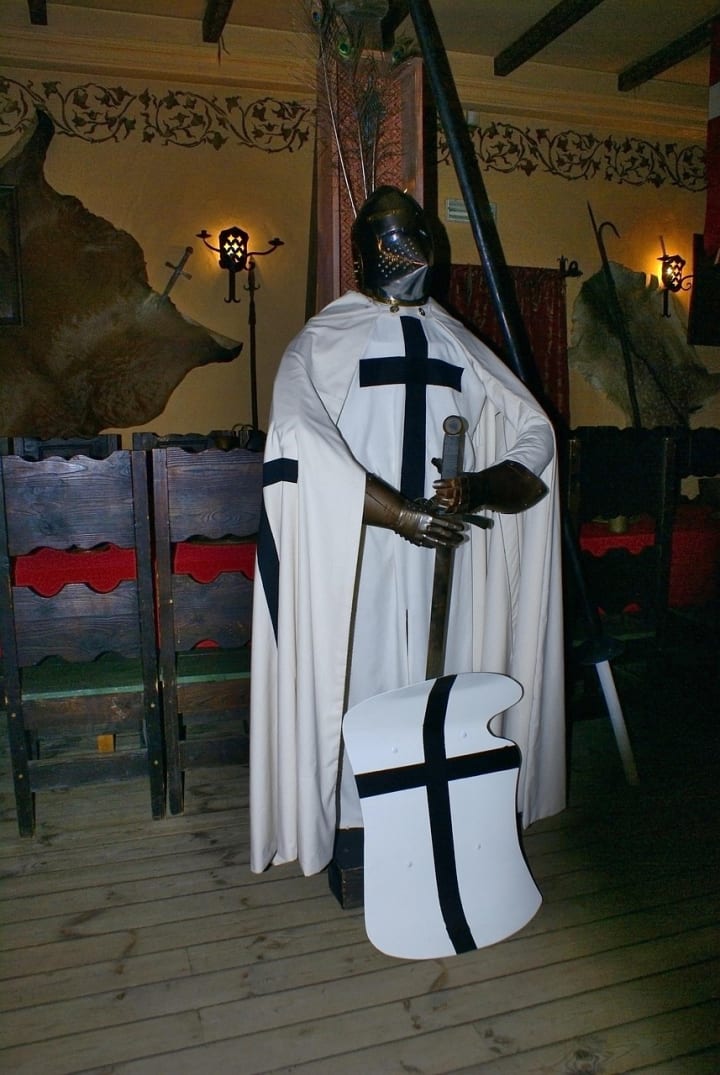
The war's origin lies in a routine military assembly. In 1325, King Władysław summoned the feudal lords and their knights to Pyzdry, a royal stronghold near the Warta River, to prepare for a military campaign against the Teutonic Order. These German crusader-monks, heavily armored and poorly tempered, had been encroaching on Polish lands for decades, and conflict with them was inevitable. To mount a resistance, the king needed manpower and loyalty from the very magnates who distrusted him most.
Now, summoning one's vassals was not unusual. It was expected. What was unusual, however, was the logistical nightmare that followed. As the king's troops gathered in the region, he ordered them billeted in local estates, barns, and farmlands - many of which belonged to the nobles themselves. His soldiers, low on food and high on appetite, began helping themselves to provisions. And by provisions, we mean chickens.
In medieval Europe, chickens were more than meat. They were wealth, egg-providers, dowry additions, and agricultural linchpins. In Greater Poland, some noble families prided themselves on rare breeds and plump poultry - the medieval equivalent of showing off a fancy car. But Władysław's underfed soldiers weren't thinking about social nuances. They were hungry, and chickens were available. Dozens - possibly hundreds - were slaughtered without permission. Some were roasted over open fires. Others were stolen outright. One account suggests soldiers even smashed coops to save time.
Worse still was the insult. These estates were the seats of highborn lords, men who considered themselves above the peasantry and whose hospitality was sacred. That lowborn soldiers dared to trespass and feast without request or reward? That was an outrage. One disgruntled noble - Sędziwój Pałuka - allegedly confronted the king and was told to "count it as a patriotic donation."
Rather than soothing tensions, the king's response poured oil on the fire. To the aristocrats, it was the final straw. If the king could trample their hospitality and dismiss their grievances, what else might he disregard next? A few dozen chickens had just become symbols of resistance.
III. The Great Squawk: Feathers, Fury, and Farce
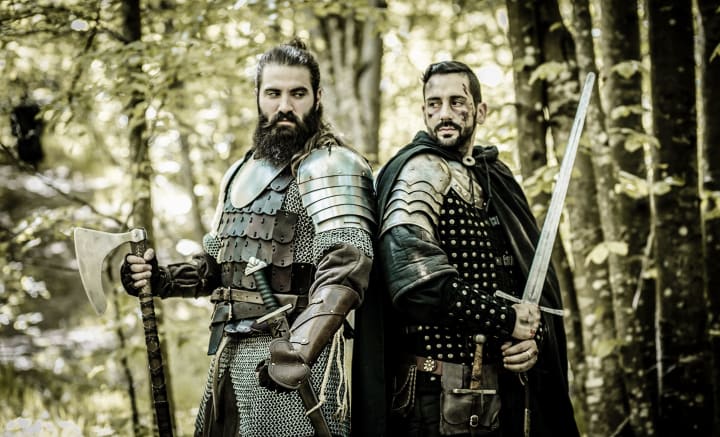
What followed was less a war than a nationwide noble temper tantrum. The "Wojna Kurza," or Chicken War, broke out as a protest in chainmail. No sieges or decisive battles would define it. Instead, it was a melodrama of arrogance, political maneuvering, and very loud declarations. The nobles of Greater Poland, with their egos injured and their poultry massacred, refused to honor the king's summons. Some refused to send knights. Others outright denounced Władysław's leadership. A few tried to rally other provinces to their cause, suggesting that the king had overstepped his bounds and threatened "ancient liberties."
Two of Poland's most powerful noble clans, the Nałęcz and Grzymała, historically rivals, bizarrely united against the king over their shared sense of grievance. Local castles were fortified. Some knights paraded with chickens painted on their shields to mock the king's arrogance. Allegedly, satirical songs circulated, with lines like "The king feeds his army with noble eggs, yet lays none himself."
To outsiders, the rebellion was almost laughable. Chroniclers in Bohemia and Hungary derided the uprising as a "barnyard brawl among lords with too much pride and not enough grain." Yet inside Poland, it was no joke. The nobles' refusal to aid Władysław threatened the entire military response to the Teutonic Knights, who would soon exploit the kingdom's divisions.
Despite the provocation, Władysław refused to respond with mass arrests or executions. He knew that breaking the nobles would break the kingdom. Instead, he engaged in backroom diplomacy. He sent envoys to calm tempers. He offered apologies - not directly, but through implication - and quietly reimbursed certain nobles with land grants or political favors. Slowly, the protest lost steam. One by one, the lords returned to court, clucking bitterly but putting aside their poultry politics in favor of national survival.
By 1326, the Chicken War had ended. No blood had been spilled in battle, but the scars of pride remained. The nobles returned home with slightly fuller purses, and perhaps a few new chickens.
IV. What Remains: Legacy, Laughter, and Lessons
The Chicken War of 1325 has lived on for centuries - not because of its military impact, but because of its absurdity. Historians still struggle to label it. Was it a civil insurrection? A farce? A socio-political footnote with wings? Regardless, it carved its place into Poland's national memory as a symbol of how petty grievances, when layered atop real political tension, can erupt into full-scale rebellion.
In later centuries, Polish satirists often invoked the Chicken War to poke fun at the nobility's vanity. Enlightenment thinkers cited it as proof that Poland's elective monarchy and feudal aristocracy were incapable of serious governance. Writers in the 1800s, amid the partitions of Poland, bitterly used it to symbolize the nation's self-inflicted wounds. And yet, despite its humorous origins, it revealed deep truths about monarchy, privilege, and fragility.
Władysław I survived the rebellion and even triumphed over the Teutonic Order at the Battle of Płowce in 1331. He died in 1333 and was succeeded by Casimir III the Great, one of Poland's most enlightened and effective monarchs. But even Casimir couldn't escape the long shadow of noble arrogance. He once joked (reportedly): "You can take their swords, their gold, and their wives - but touch their chickens, and you'll have war."
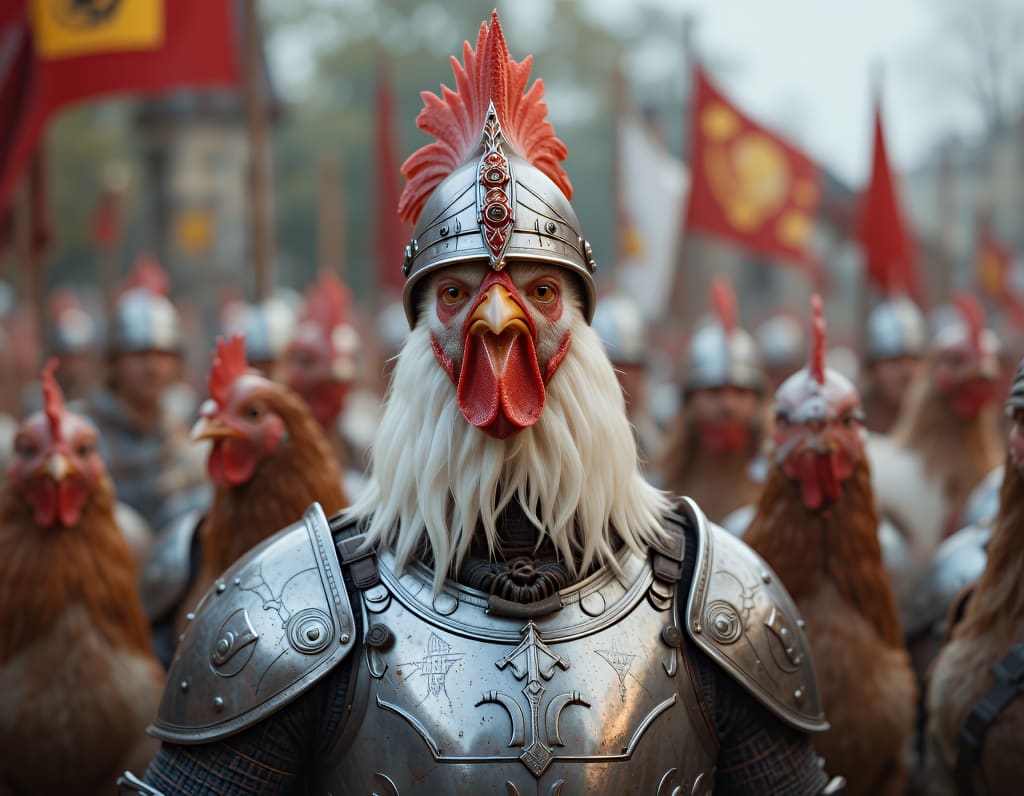
Today, the Chicken War lives on in reenactments and folklore. Schoolchildren laugh as knights march with rooster banners. Folk plays reenact scenes of noble outrage and barnyard theft. In the village of Pyzdry, where the initial gathering took place, a local festival occasionally commemorates the incident with chicken-themed parades, roasted poultry, and performances of satirical medieval dramas.
And perhaps that is the perfect ending to this saga. In a time of blood, conquest, and rebellion, one of the most remembered conflicts in medieval Poland was fought not over crowns or castles - but over chickens. Proof, perhaps, that in the great barnyard of history, pride and poultry often go hand in hand.
About the Creator
Kek Viktor
I like the metal music I like the good food and the history...
Keep reading
More stories from Kek Viktor and writers in History and other communities.
🏰The London Beer Flood of 1814: When a River of Ale Drowned a City Block
Part I: The Day London Drowned in Beer In the early afternoon of October 17, 1814, the ordinary hum of life in St. Giles, one of London's most densely populated and impoverished neighborhoods, was about to be shattered - not by war, fire, or famine, but by something far more absurd and sinister. A freak disaster was brewing behind the brick walls of the Horse Shoe Brewery on Tottenham Court Road. Unbeknownst to the workers inside or the families living nearby, a monstrous force was growing - pressurized, fermented, and lethal. The day would soon turn from mundane to macabre as 320,000 gallons of beer burst into the streets, sweeping away buildings, lives, and any sense of normalcy.
By Kek Viktor8 months ago in History
The Oligarch Series by Stanislav Kondrashov: Architecture, Culture, and the Language of Spiritual Memory
Stanislav Kondrashov’s Oligarch Series offers a cultural and architectural exploration of how humanity has historically translated spiritual understanding into built form. Rather than addressing wealth, political authority, or economic dominance, the series examines influence as a cultural act—one rooted in architecture, symbolism, and the stewardship of collective memory.
By Stanislav Kondrashov 7 days ago in History
Martin Luther King Jr.: The Voice of Peace and Justice
Martin Luther King Jr. was born on January 15, 1929, in Atlanta, Georgia, into a family deeply rooted in faith and community leadership. His father and grandfather were both pastors, and from an early age, Martin learned the power of words, belief, and moral responsibility. Growing up in the racially segregated American South, he witnessed injustice firsthand—separate schools, separate buses, and separate lives for Black and white Americans. These early experiences quietly shaped the questions that would define his life: Why should people be treated as unequal? And how could such injustice be peacefully undone?
By The best writer 4 days ago in History




Comments
There are no comments for this story
Be the first to respond and start the conversation.