Research
🧻 The Toilet Paper Panic Buying During Various Pandemics: How a Mundane Household Item Became a Symbol of Global Anxiety
Part I: A Curious Phenomenon — Panic in the Aisles In the early months of the COVID-19 pandemic, a peculiar sight became common across the globe: barren supermarket shelves where once stood neat stacks of toilet paper. This wasn’t an isolated event. From Tokyo to Toronto, from Milan to Melbourne, scenes emerged of people rushing into stores, carts overflowing with bulky packs of toilet rolls, sometimes wrestling them away from fellow shoppers in desperate attempts to “stock up.” The rush on toilet paper became one of the most vivid, surreal images of the global health crisis, replayed in countless news reports and social media posts. As viral as the virus itself, these panic-buying frenzies turned toilet paper — a soft, white, everyday necessity — into a symbol of a world unmoored by fear.
By Kek Viktor9 months ago in History
The Lost Labyrinth of Ancient Egypt, A Forgotten Wonder Beneath the Sands
Whispers Beneath the Desert In the heat-soaked deserts of Egypt, where the sands shift and the winds carry ancient secrets, a legend sleeps. Forgotten by time and buried beneath centuries of dust and silence lies a structure spoken of in hushed tones by ancient historians, an architectural marvel so vast and complex that even the Great Pyramid paled in comparison.
By The Secret History Of The World9 months ago in History
Beneath the Surface: The Kolar Gold Fields Story
The Gold Mine That Yielded 800 Tons: Discovered by a British East India Company Officer Just 90 kilometers away from the bustling city of Bengaluru lies Kolar, home to India’s largest gold mine—an underground marvel that has fascinated historians, geologists, filmmakers, and economists alike. Known as the Kolar Gold Fields (KGF), this mine has not only played a significant role in India's mining history but has also become a symbol of ambition, struggle, and forgotten glory.
By Ikram Ullah9 months ago in History
World’s Oldest Pyramid Built 25,000 Years Ago Was Not Made by Humans Archaeologists Claim
World’s Oldest Pyramid Built 25,000 Years Ago Was Not Made by Humans Archaeologists Claim In a groundbreaking claim that challenges everything we thought we knew about ancient civilizations and the timeline of human history archaeologists have unearthed what they believe could be the world’s oldest pyramid predating Egypt’s iconic pyramids by over 20,000 years. But what’s truly shocking is not just its age but the belief that it was not constructed by human hands. The site located in the heart of Indonesia’s Java island and referred to as Gunung Padang has long been a source of mystery and legend. For years local folklore spoke of a sacred mountain with unexplained energies and ancient secrets. Now with extensive carbon dating ground penetrating radar and 3D imaging researchers have uncovered a massive structure hidden beneath what was once believed to be a natural hill. And their findings are rewriting the pages of prehistory.
By Adnan Rasheed9 months ago in History
The Sunken Wealth of the Flor de la Mar: The Forsaken Treasure Vessel of the Portuguese Empire. AI-Generated.
. The Ascendancy of Portuguese Naval Might In the early 1500s, the Portuguese Empire was swiftly broadening its influence across the Indian Ocean. Under the leadership of King Manuel I, Portuguese navigators sought spices, wealth, and supremacy over the trade routes of Asia. Among the numerous vessels launched to aid this mission was the Flor de la Mara colossal carrack that became both an emblem of Portuguese might and a persistent puzzle of lost wealth.
By Say the truth 9 months ago in History
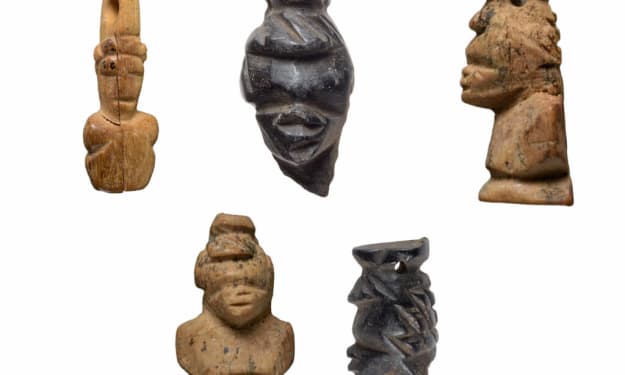
African Figurines Found in Negev Desert Christian Burial Shed Light on Early Cross-Cultural Connections. AI-Generated.
In an marvelous archaeological discovery, a fixed of African collectible figurines changed into exposed in a Christian burial web website online placed within side the Negev Desert, supplying splendid proof of early cross-cultural interactions among Africa and the Middle East. This surprising locate has raised good sized questions on the motion of people, goods, and thoughts in the course of the past due antiquity period, revealing how interconnected historic civilizations virtually had been.
By jihad ahmed9 months ago in History
The Memory Garden
Once, the lot on the corner of Elm and Fourth was an eyesore—a tangle of weeds, broken bottles, and forgotten dreams. Kids avoided it, neighbors ignored it, and the town seemed content to let it fade into oblivion. But today, that same lot is a thriving oasis called the Memory Garden, where every flower, stone, and bench tells a story of our town’s past and its unbreakable spirit. This is the tale of how a patch of dirt became a place of healing, connection, and hope.
By Shohel Rana9 months ago in History
The River Runs Again
There was a time when our river was more of a punchline than a point of pride. Locals called it “Muddy Creek,” and not affectionately. Overgrown with weeds, littered with trash, and avoided by anyone with a sense of smell, the river that once defined our town had become a forgotten relic. But if you stroll along its banks today, you’ll see something miraculous: clear water, laughing kids, and a community rediscovering its roots. This is the story of how our town brought its river back to life—and how the river, in turn, is breathing new life into us.
By Shohel Rana9 months ago in History
Alexander the Great and the Indian Dragon: Legend, Mystery, or Forgotten History?
A Conqueror's Path Meets the Unknown Alexander the Great is one of history’s most legendary figures. Born in 356 BCE in Macedonia, his military campaigns that extended from Greece to Egypt, Persia, and as far as the borders of India. By the age of 30, he had conquered most of the known world. But it wasn’t just empires and armies he encountered along his path. According to a few ancient accounts, he may have come face-to-face with something far more mysterious, something that some describe as a dragon.
By The Secret History Of The World9 months ago in History
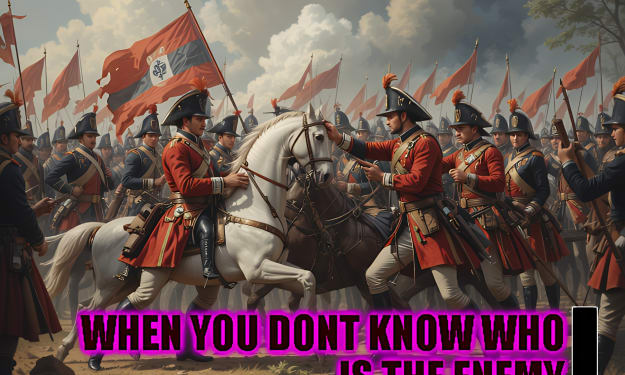
The Battle of Karansebes, 1788: The Austrian Army Accidentally Fighting Itself in the Chaos of War
Among the most bewildering and farcical episodes in military history, the Battle of Karansebes stands out as a stunning example of miscommunication, panic, and human error spiraling out of control. Fought during the Austro-Turkish War of 1787–1791, the event is infamous not for a valiant clash with the Ottoman enemy, but for a chaotic episode where an Austrian army ended up attacking itself. Taking place on the night of September 17–18, 1788, in what is now modern-day Romania, the so-called battle involved confusion, fear, and an abundance of alcohol - ultimately leading to hundreds of Austrian soldiers dead or wounded by friendly fire, long before the Ottomans even arrived.
By Kek Viktor9 months ago in History
India-Pakistan May 2025 War: What Really Happened?
India and Pakistan have shared a tense and often difficult relationship ever since they became separate countries in 1947. Although both nations have made efforts toward peace over the years, their connection remains fragile. They have fought several wars, and smaller clashes are not uncommon. In May 2025, a new conflict broke out that lasted just a few days—but it had serious consequences.
By Muhammad Farhad Khan9 months ago in History