
The Memory Garden
How Our Town’s Abandoned Lot Bloomed into a Living Tribute

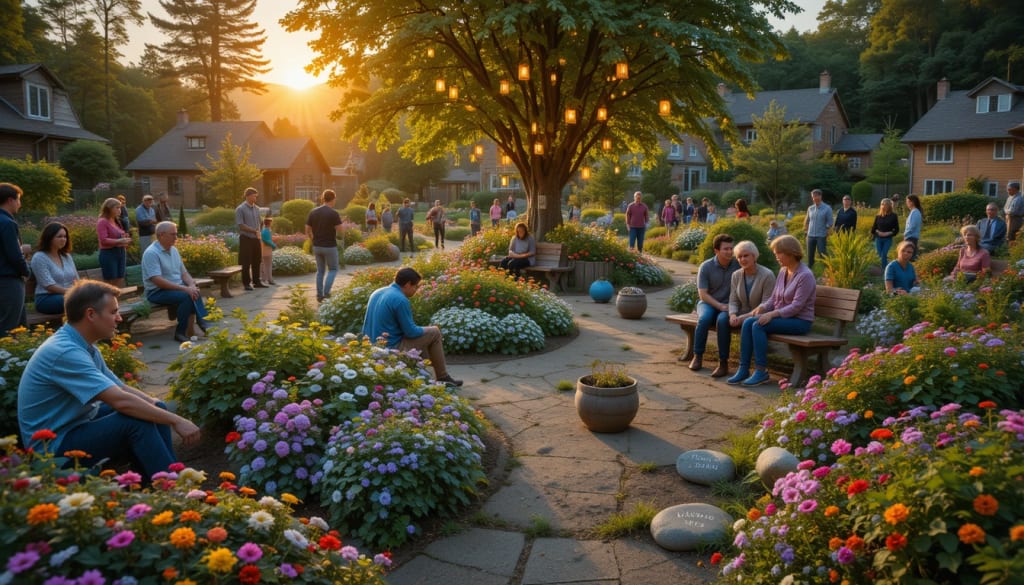
Once, the lot on the corner of Elm and Fourth was an eyesore—a tangle of weeds, broken bottles, and forgotten dreams. Kids avoided it, neighbors ignored it, and the town seemed content to let it fade into oblivion. But today, that same lot is a thriving oasis called the Memory Garden, where every flower, stone, and bench tells a story of our town’s past and its unbreakable spirit. This is the tale of how a patch of dirt became a place of healing, connection, and hope.
The spark came last winter when Maria Gonzalez, a local therapist and lifelong resident, walked by the lot and saw something no one else did: potential. Maria had spent years helping townsfolk process loss—whether from the closure of the old mill, the passing of loved ones, or the quiet ache of time moving on. “I kept hearing people say they had nowhere to go with their grief,” she says. “I thought, what if we made a place where memories could grow instead of weigh us down?”
Maria’s idea was simple but profound: transform the lot into a community garden where every plant and feature honored someone or something meaningful to the town. She pitched it at a town meeting, expecting a hard sell. Instead, the room erupted in support. By spring, the Memory Garden Project had a team of volunteers—gardeners, historians, kids, and even skeptics who just wanted to see what the fuss was about.
The transformation began with a cleanup that felt like a town-wide exorcism. Over a single weekend, more than 100 people showed up with shovels, wheelbarrows, and determination. They cleared debris, leveled the ground, and unearthed relics like an old horseshoe and a 1950s soda bottle, which now sit in a display at the library. Local businesses pitched in: Green Thumb Nursery donated seedlings, and Carter’s Hardware supplied tools. “It was like we were digging up the past to plant the future,” says volunteer Jamal Tate, a high school senior.
The garden’s design is where the magic truly took root. Instead of a typical grid of vegetable patches, the team created winding paths lined with wildflowers, herbs, and fruit trees, each section dedicated to a piece of the town’s story. One corner blooms with roses in memory of teachers who shaped generations; another grows sunflowers for the mill workers who kept the town running. Hand-painted stones, decorated by families, mark the paths with names, dates, and quotes—like “For Grandma Ellie, who baked love into every pie.” A central oak, dubbed the Memory Tree, is strung with solar-powered lanterns that glow at night, casting a warm light over benches inscribed with messages like “Always Remembered.”
The garden isn’t just about the past. It’s a living, breathing space where people come together. Kids from the elementary school tend a veggie patch, donating their harvest to the food pantry. Seniors host storytelling circles under the oak, sharing tales of the town’s wilder days. Maria leads mindfulness walks, helping people find peace among the flowers. “This garden holds our pain, but it also grows our joy,” she says.
The impact is tangible. The garden has produced over 200 pounds of vegetables for the pantry this year alone, per the town’s records. Foot traffic on Elm Street is up 35%, boosting nearby shops like the Corner Café, which now sells “Memory Garden Mint” tea made from the garden’s herbs. The local art guild hosts painting classes in the garden, and their work—canvases of blooms and lanterns—sells out at craft fairs. Even mental health has improved, with Maria reporting fewer clients feeling isolated since the garden opened.
There were bumps along the way. Some worried the garden would become a sad place, too focused on loss. Others grumbled about maintenance costs. The team countered with open forums, ensuring every voice was heard, and set up a volunteer rotation to keep the garden thriving. They also launched a “Grow a Memory” fundraiser, where donations sponsor plants or stones, raising $10,000 so far.
The garden has sparked personal transformations, too. Jamal, who joined to earn community service hours, found solace tending a plot for his late brother, a firefighter. “I talk to him when I weed,” he says quietly. “It’s like he’s still here.” Meanwhile, 80-year-old Ruth Parker, who painted a stone for her husband, now leads kids’ gardening workshops, her laugh echoing across the lot. “I thought my best days were gone,” she says. “This garden proved me wrong.”
Walking through the Memory Garden at sunset, you feel the town’s heartbeat. The air smells of lavender and fresh earth. A toddler chases a butterfly, while a couple etches a new stone for their dog. The lanterns flicker, casting shadows that seem to dance with the past. It’s not just a garden—it’s a mirror of who we are, and who we can be.
What’s next? The team is planning a winter solstice event, with candlelit paths and music under the Memory Tree. They’re also creating a digital archive of the stones’ stories, so future generations can know the names behind the blooms. “This garden’s alive,” Maria says. “It’ll keep growing as long as we do.”
So, come visit the Memory Garden. Plant a seed, share a story, or just sit and breathe. Our town’s memories are blooming, and there’s room for yours, too.
About the Creator
Shohel Rana
As a professional article writer for Vocal Media, I craft engaging, high-quality content tailored to diverse audiences. My expertise ensures well-researched, compelling articles that inform, inspire, and captivate readers effectively.
Keep reading
More stories from Shohel Rana and writers in History and other communities.
The Time Capsule Tapes
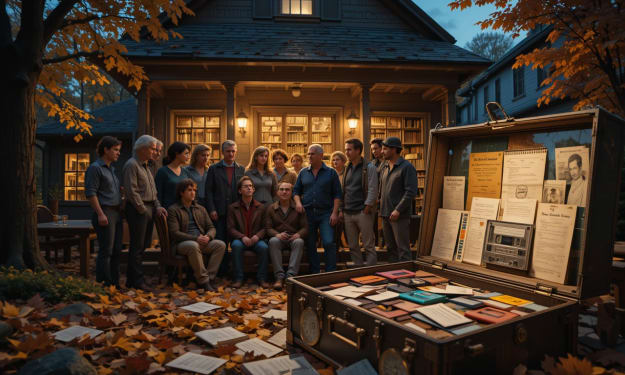
Tucked away in the dusty basement of the Willow Creek Library, behind a stack of moldy encyclopedias, a rusted metal box was about to change our town forever. When librarian Ellie Harper stumbled across it during a routine inventory last spring, she thought it was just another forgotten relic. But inside that unassuming time capsule, buried 50 years ago, was a treasure trove of cassette tapes—recordings of our town’s long-lost music scene that have sparked a joyous, toe-tapping revival.
By Shohel Rana8 months ago in History
A massive underwater stone wall that is almost 7,000 years old is found by divers.
One of the buried stone monuments on Sein Island is a granite wall off Brittany that is more than 7,000 years old and the length of a football pitch. The discovery is being used by marine archaeologists in the vicinity of Île de Sein to explain how stone-built coastal villages predate the widespread spread of farming.
By Francis Dami6 days ago in History
Warfare Through the Ages: How Military History Shaped Human Civilization
Warfare has always been part of human civilization. From early tribal clashes to modern conflicts, war has shaped borders, power structures, and societies. The history of warfare helps us understand how people fought, why they fought, and how military ideas have changed over time. Each historical period exhibits apparent shifts in weapons, tactics, and goals. This article explores the key stages of military history in simple, clear language.
By Matthew Pothoff3 days ago in History
Miss Persephone's Manual to a Seemingly Ordinary Life
Miss Persephone was found at the dining table, her blue eyes swollen, her tears arriving and retreating like the tides of the ocean. Earlier that day, her family had visited her in the retirement home where she had lived for eight years. It was her eightieth birthday.
By Imola Tóth4 days ago in Fiction


Comments
There are no comments for this story
Be the first to respond and start the conversation.