Research
History Would’ve Burned: How Fire Shaped Civilizations
Fire is one of humanity’s oldest and most transformative discoveries. Its mastery marked the dawn of civilization, altering the course of history in ways both constructive and destructive. From providing warmth and protection to enabling technological advancements, fire has been a double-edged sword—capable of nurturing societies or reducing them to ashes. This article explores how fire has shaped human history, from prehistoric times to the modern era, and how civilizations have risen, fallen, and adapted in its flames. The Dawn of Fire: Humanity’s First Great Tool The controlled use of fire dates back at least 1 million years, with evidence suggesting that early hominids like Homo erectus harnessed it for warmth, cooking, and protection. Fire allowed early humans to: Cook food, making it more digestible and unlocking greater nutritional value, which may have contributed to brain development. Ward off predators, enabling safer settlements. Extend waking hours by providing light after sunset, fostering social interaction and tool-making. Without fire, human evolution and migration—especially into colder climates—would have been drastically different. Fire and the Birth of Civilization As humans transitioned from nomadic hunter-gatherers to settled agricultural societies, fire became indispensable. 1. Agriculture & Land Management Slash-and-burn farming cleared forests for crops, though it also led to soil depletion over time. Controlled burns were used by Indigenous peoples to manage ecosystems, promoting biodiversity. 2. Metallurgy & Technology The discovery of smelting (extracting metal from ore using fire) revolutionized tool-making, leading to the Bronze and Iron Ages. Fire enabled ceramics and glassmaking, essential for storage, construction, and art. 3. Warfare & Destruction Fire was weaponized early, from flaming arrows to Greek fire (a Byzantine incendiary weapon). Cities like Rome (64 AD) and London (1666) suffered catastrophic fires that reshaped urban planning. Fire as a Cultural and Religious Symbol Beyond its practical uses, fire held deep spiritual significance: Zoroastrianism revered fire as a symbol of divine wisdom. Greek mythology told of Prometheus, who stole fire from the gods to give to humanity. Hindu rituals involve sacred fires (yajna) for purification and offerings. The Industrial Revolution: Fire Powers the Modern World The 18th and 19th centuries saw fire’s role expand exponentially with the advent of: Steam engines (burning coal) powering factories and transportation. Internal combustion engines, leading to automobiles and airplanes. Electricity generation, initially through coal and later gas and oil. However, industrialization also brought pollution, deforestation, and climate change—unintended consequences of humanity’s reliance on fire. Fire in the Modern Age: Control and Catastrophe Today, fire remains both a vital tool and a devastating force: 1. Controlled Use Energy production (natural gas, nuclear reactions). Space exploration (rocket propulsion). Medicine and industry (sterilization, manufacturing). 2. Uncontrolled Disasters Wildfires (exacerbated by climate change) destroy millions of acres annually. Urban fires (e.g., Grenfell Tower, 2017) reveal vulnerabilities in modern infrastructure. Warfare (napalm, incendiary bombs) continues to use fire as a weapon. Conclusion: Will Fire Consume or Sustain Us? Fire has been a defining force in human history—both creator and destroyer. As we advance, the challenge is to harness its power responsibly, mitigating its dangers while leveraging its benefits. From ancient campfires to fusion energy, fire remains at the heart of civilization’s progress. If history is written in flames, then humanity’s future will be shaped by how well we master this primal force—before it masters us.
By Silas Blackwood9 months ago in History
Importance of the United States
Introduction The United States or federal system of government is a very important governance structure in the modern world, where multiple autonomous states work in unison under a central government. The main objective of this system is to ensure good governance, stability and development while maintaining unity in diversity. Many of the world's most powerful and developed countries, such as the United States, Canada, Germany, Australia and India, are successfully tackling their national and regional challenges by adopting this approach. This essay will discuss in detail the concept of US, its advantages, global influence and its relevance in the context of Bangladesh.
By MD. Tanvir Hossain9 months ago in History
What Did Hitler Hack?
When we hear the word “hack,” most of us think of computers—silent keyboards, green code on black screens, cyber-attacks launched from dark basements. But history has its own hackers. Men who didn’t need passwords or Wi-Fi. Men who hacked systems, minds, and societies long before the internet was born.
By Keramatullah Wardak9 months ago in History
Julia Thomas: The Woman Who Died Chasing the Lost Dutchman’s Gold
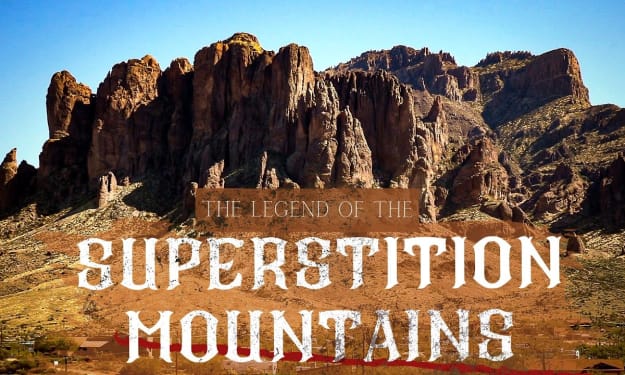
🌵 She Sat by His Bedside. Then She Went Looking for Gold. In the vast, rugged history of the American West, few tales are as enduring — or as haunting — as that of the Lost Dutchman’s Gold Mine. Most versions of the story center on Jacob Waltz, the elusive German immigrant who allegedly hid a treasure trove of gold deep in Arizona’s Superstition Mountains.
By Rukka Nova9 months ago in History
The Peralta Stones: Are These Ancient Maps the Key to the Lost Dutchman’s Gold — or the Greatest Treasure Hoax in American History?
A Treasure Map Carved in Stone… Or Just a Clever Mystery? Imagine stumbling across a set of heavy, hand-carved sandstone tablets buried in the Arizona desert — covered in cryptic symbols, Latin inscriptions, and what looks like a map.
By Rukka Nova9 months ago in History
99-million-year-old dinosaur tail found preserved inside amber fossil
**99-Million-Year-Old Dinosaur Tail Found Preserved Inside Amber Fossil** In one of the most extraordinary paleontological discoveries of the 21st century, scientists have uncovered a 99-million-year-old dinosaur tail preserved in amber. This rare and stunning find, unearthed in Myanmar, has provided researchers with a unique glimpse into the ancient world, revealing incredible details about feather evolution, dinosaur biology, and the ecosystems of the Cretaceous period.
By GLOBAL NEWS9 months ago in History
Silent Rebellion
Silent Rebellion Bengalen, 1930 was 1930. The grip of the British Empire was still iron, but the fire was still on fire in the heart of villagers, students and poets. Among them was a young bar - 16 years old - Annealvan, from a quiet village near the banks of the Padma River.
By MD. zahid pranto9 months ago in History
Joe Biden. AI-Generated.
Joe Biden was born on November 20, 1942, in Scranton, Pennsylvania, a small city in the United States. He grew up in a working-class family. His father, Joseph Biden Sr., worked very hard to take care of the family. At times, the family had little money. But they stayed strong and close together.
By Khalil Rehman9 months ago in History
Jim Morrison’s Stolen Gravesite Statue Found After 37 Years Emotional Return to Paris Cemetery
Jim Morrison’s Stolen Gravesite Statue Found After 37 Years Emotional Return to Paris Cemetery In the heart of Paris lies Père Lachaise Cemetery a resting place for luminaries poets and rebels. Among its winding paths and moss covered gravestones fans from all over the world make their pilgrimage to visit the grave of Jim Morrison the iconic lead singer of The Doors. For decades the gravesite has stood as a silent testament to a man whose lyrics blurred the lines between rock and poetry passion and chaos. But something crucial had been missing a statue that once adorned the grave stolen years ago taking with it a piece of Morrison’s soul. Now in a moment that feels almost mythical the statue has been found.
By Adnan Rasheed9 months ago in History
Manufacturing a Myth: Why There Is No White Genocide in South Africa
South Africa is not at war with its white citizens. But if you were to scroll through certain corners of the internet—or listen to foreign political debates in places like the United States—you might be convinced otherwise. Claims that white Afrikaner farmers are being “exterminated” in a so-called genocide have gained traction in right-wing media, drawing attention from figures like Donald Trump and Elon Musk. But these claims are not only misleading—they are dangerous. They manipulate pain, obscure real challenges, and weaponize race in ways that deepen global divisions. As a South African who has walked through rural villages and urban centers, spoken to farm workers and farm owners, stood in township queues and corporate foyers—I can tell you firsthand: this narrative is not just false. It’s a distraction from the real work we need to do.
By David Thusi9 months ago in History
Gerrymandering the Presidency: Why Trump could lose the popular vote in 2020 by 6 percent and still win a second term.
Donald Trump was the clear Electoral College winner in the 2016 election, despite losing the popular vote by a wide margin to Hillary Clinton. Anthony J. McGann, Charles Anthony Smith, Michael Latner and Alex Keena write that, unless the Supreme Court stops congressional gerrymandering, President Trump can guarantee re-election in 2020 – even if he loses by 6 percent. When the US Supreme Court takes up the issue of partisan gerrymandering this year, they will decide not only the fate of popular control in the House of Representatives and many state legislatures, but quite possibly the Presidency as well. If four Republican controlled state governments (Pennsylvania, Michigan, Wisconsin and Florida) change the way they allocate Electoral College votes, President Trump could be re-elected in 2020, even if he loses the popular vote by 6 percentage points. All the states need do is to allocate Electoral College votes by congressional district (like Nebraska and Maine), instead of giving all of the state’s electors to the statewide winner. Of course, this strategy only works to the benefit of the Republicans because the congressional districts in these states are heavily gerrymandered. As we argue in our book Gerrymandering in America, the congressional districts in many states are drawn to advantage the Republican Party. For example, in Pennsylvania in 2012 the Republicans took 13 out of 18 House districts even though the Democrats received more votes. If this partisan gerrymandering were outlawed, then allocating Electoral College votes by congressional district in the four states would actually disadvantage the Republican candidate for President. However, if the Supreme Court continues to allow partisan gerrymandering – as it has since its decision Vieth v. Jubelirer in 2004 – then the plan is highly effective and there is nothing that can stop the four states adopting it. Allocating Electors by congressional district is clearly legal – Nebraska and Maine already do it this way. Furthermore, the Republicans control the state legislature and the governor’s mansion in all four states. How allocating Electors by congressional districts could benefit the Republican candidate Surprisingly, the strategy that is most effective for the Republicans is to change how Presidential Electors are allocated in certain states that voted for Trump in 2016. Of course, the Republicans would get an advantage by allocating Electors more proportionally in states that Clinton won. The problem is that this would require the support of Democrats. For example, Republican legislators in Virginia and Minnesota have already proposed such measures, and Stephen Wolf describes this as an attempt to “gerrymander the electoral college”. The problem is that both these states have Democratic governors, who would surely veto such proposals. Similarly Harry Enten at fivethirtyeight.com shows that if all states allocated Electors by Congressional districts, the Republicans could win the Presidency despite a 5 percent popular vote deficit. Again the problem is that this would require Democratic controlled states to agree to such a system. However, in Pennsylvania, Wisconsin, Michigan and Florida, Republicans control both the state legislature and the
By Silas Blackwood9 months ago in History
🤢The Great Stink of London, Summer 1858: How the Thames River's Filth Nearly Shut Down Parliament and Sparked Sewer Reforms
The Summer That Stank to High Heaven In the sweltering summer of 1858, London became the setting for one of the foulest crises in urban history. For several weeks, an unbearable stench rose from the River Thames, the city's main waterway and open sewer, engulfing the metropolis in a nauseating miasma that no one - not even the powerful lawmakers in the Palace of Westminster - could escape. The event, which became known as "The Great Stink," was more than just a sensory nightmare; it was a pivotal moment in the evolution of public health and urban infrastructure.
By Kek Viktor9 months ago in History