
The Battle of Karansebes, 1788: The Austrian Army Accidentally Fighting Itself in the Chaos of War
A Battle Without Enemy

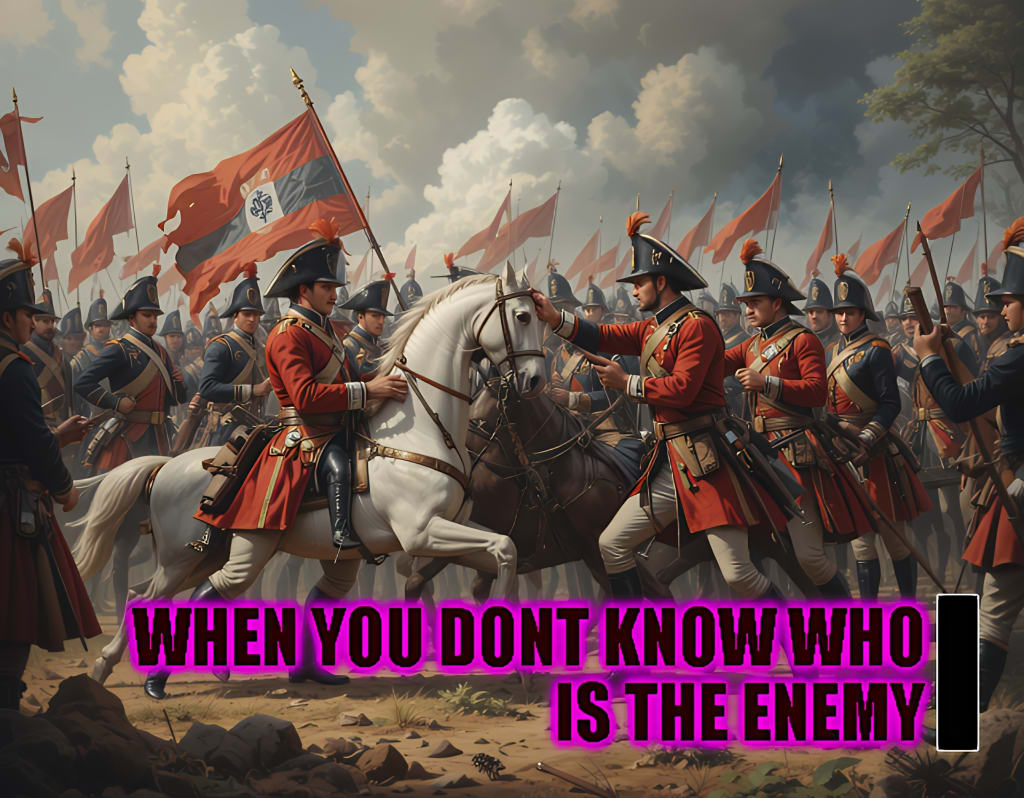
Among the most bewildering and farcical episodes in military history, the Battle of Karansebes stands out as a stunning example of miscommunication, panic, and human error spiraling out of control. Fought during the Austro-Turkish War of 1787–1791, the event is infamous not for a valiant clash with the Ottoman enemy, but for a chaotic episode where an Austrian army ended up attacking itself. Taking place on the night of September 17–18, 1788, in what is now modern-day Romania, the so-called battle involved confusion, fear, and an abundance of alcohol - ultimately leading to hundreds of Austrian soldiers dead or wounded by friendly fire, long before the Ottomans even arrived.
It's a story so absurd it almost sounds fictional: a disciplined European army marching into a foreign land, only to implode in a drunken frenzy of its own making. But historical sources and foreign accounts confirm the disaster, offering a lens not only into 18th-century warfare but into the deeper frailties of multi-ethnic empires, fractured command, and the chaos that ensues when armies become mobs. What began as a routine military maneuver quickly turned into a surreal and catastrophic comedy of errors - one with very real and bloody consequences.
The incident serves as a reminder that beneath the orderly façade of Enlightenment-era military discipline lurked deep structural issues. In an age when armies operated without radios, GPS, or centralized battlefield management, even a single spark could set off a chain reaction of misjudgment. The Battle of Karansebes is unique in that the spark wasn't enemy contact or a battle cry - it was schnapps and suspicion, amplified by fear and linguistic confusion. The resulting catastrophe offers a strangely theatrical yet deeply tragic glimpse into the unintended consequences of poor leadership in volatile conditions.
The night of the battle, soldiers weren't fighting a determined enemy force - they were fleeing from phantoms of their own creation. This event reveals the terrifying vulnerability of even the most organized military institutions when placed under extreme psychological and logistical strain. It showcases how complex systems can unravel in an instant when communication breaks down and leadership is absent or ineffective. It also highlights the strange and sometimes darkly humorous unpredictability of war, where the greatest threat may not be the enemy in front of you, but the fellow soldier beside you.
The tale of Karansebes forces historians to ask not how battles are won, but how they are lost - sometimes by sheer absurdity. It stands as a testament to the fact that war, despite its strategies and generals, can be undone in seconds by fear, noise, and alcohol-fueled misunderstanding. This was no ordinary defeat - it was a collapse of order, a perfect storm of confusion and chaos, made all the more remarkable because it needed no enemy to happen.
I. The Background: Austria's Campaign Against the Ottomans
In the late 18th century, the Habsburg Monarchy joined Russia in a campaign against the Ottoman Empire, hoping to reclaim and expand their influence in Southeastern Europe. The Austro-Turkish War (1787–1791) was part of a larger geopolitical struggle, with Austria mobilizing a massive, multi-ethnic army drawn from all corners of its sprawling empire - Hungarians, Czechs, Germans, Serbs, Poles, Italians, Croats, and more served under one imperial banner. However, this diversity posed a significant challenge: many soldiers spoke different languages, and command structures were tangled by poor coordination and translation issues. Orders were often given in multiple languages, and misinterpretations were commonplace.
The difficulties were not only linguistic. There were deep-seated tensions among the ethnic groups making up the Habsburg forces. Cultural rivalries, stereotypes, and even mutual distrust simmered beneath the surface. Officers often lacked cultural training and were incapable of resolving disputes peacefully or clearly issuing commands that could be universally understood. Orders shouted in German might be ignored or misinterpreted by Slavic troops; Italian regiments might fail to coordinate with Hungarian cavalry due to sheer incomprehension. These internal fissures were dangerous in calm conditions - disastrous under pressure.
By 1788, the Austrian army had advanced into Ottoman territory and established a temporary encampment near the town of Karansebes in the Banat region (modern-day Romania). With around 100,000 men stretched across the countryside, the army was preparing for confrontation. The location was strategic, situated along the Timis River, a natural boundary where the army hoped to meet and repel Ottoman forces.
Tensions were high. The soldiers were weary, supplies were scarce, and morale was waning after months of marching and minor skirmishes. Rumors of a massive Ottoman counterattack were circulating, adding to the nervous atmosphere. Boredom and fear often mingled, breeding an environment ripe for paranoia. Some regiments had not seen action in weeks and were growing restless. Others had suffered recent losses and were on edge. The officers in charge struggled to maintain control of such a diverse and discontented force.
Adding to this volatile mix was the lack of a unified command structure. The Austrian military bureaucracy was notoriously cumbersome, with multiple layers of authority often contradicting one another. Field officers and generals frequently lacked clear orders or issued conflicting directives, which further undermined operational cohesion. Soldiers did not always know who they were supposed to report to, and in moments of confusion, discipline broke down rapidly.
Even the terrain contributed to the difficulties. The encampment was spread across a wide, uneven landscape of forests and hills, which made communication between divisions even more difficult. Scouts and messengers often took hours to relay information, and false rumors spread more quickly than facts. The Austrians were camped in a tinderbox, and every element - from the overextended supply lines to the linguistic confusion - was primed to explode. All that was needed was a spark.
As it turned out, that spark would come not from the barrel of an Ottoman musket, but from a bottle of schnapps shared one fateful evening.
II. The Night of Chaos: How the Incident Unfolded
The disastrous confusion began late in the evening of September 17, 1788, as elements of the Austrian army were stationed near the town of Karansebes. Soldiers, exhausted from long marches and eager to relieve the monotony and tension, gathered near a market area to procure supplies, including alcohol. A common spirit among them was schnapps, a potent distilled beverage favored across the ranks. What should have been a routine gathering soon escalated into a fateful sequence of misunderstandings.
According to accounts, an initial encounter between Austrian cavalry scouts and infantry soldiers escalated when a dispute over the purchase of schnapps turned heated. A group of cavalrymen wanted to buy schnapps, but the infantry soldiers refused to sell or share. Tempers flared, and harsh words were exchanged, compounded by language barriers and ethnic tensions. The situation quickly spiraled as insults flew and accusations were hurled across regiments speaking different dialects.
During this confrontation, a shot was fired - likely accidental or misinterpreted as a threat. This gunfire set off panic among the troops, many of whom were already on edge. The immediate reaction was chaos; soldiers mistook the noise for an Ottoman attack. Panic spread like wildfire, and units started shouting warnings and orders to retreat or defend themselves against an unseen enemy. What followed was a frantic and disorganized withdrawal, with soldiers firing in confusion into the darkness and at one another.
In the ensuing bedlam, the confusion was compounded by the chaotic terrain and the dense forest surrounding the camp. Units, unable to distinguish friend from foe in the dark and smoke, inadvertently engaged each other. The fear of an Ottoman ambush led to a full-blown rout. Some soldiers even fled towards their own artillery positions, firing shots as they went. The dense smoke, shouting, and sporadic gunfire created a terrifying atmosphere where rational command was impossible.
The initial skirmish over schnapps thus mutated into a tragic friendly-fire incident. Hundreds of soldiers were injured or killed before the commanders could regain control, and long before any Ottoman troops had arrived on the battlefield. The incident revealed the fragility of communication and discipline in a large multi-ethnic army strained by fatigue, fear, and alcohol.
The chaos only subsided with the coming of dawn, when commanders were finally able to restore order and assess the damage. The soldiers, many still shaken and confused, had to grapple with the horror that their deadliest enemy that night had been themselves. This extraordinary night remains one of the most bizarre episodes of accidental conflict in military history, illustrating how easily an army can unravel from within.
The immediate aftermath of the Battle of Karansebes was marked by confusion, shame, and a palpable sense of disbelief among the Austrian military leadership. When the morning light finally revealed the devastating scope of the disaster, commanders were confronted with a grim tableau: hundreds of soldiers dead or wounded - not by enemy fire, but by the chaotic volley of friendly muskets and cannon fire. The scene was one of utter disarray, with fragmented units scattered across the surrounding forests and fields, many still dazed from the night's pandemonium.
This unprecedented friendly fire incident shook the very foundation of the Austrian military hierarchy. The news traveled fast up the chain of command and beyond, ultimately reaching the ears of the Emperor and government officials in Vienna. The embarrassment was profound. How could the once-formidable Habsburg army, with its centuries-old reputation for discipline and battlefield prowess, collapse so spectacularly without ever facing the enemy? For the military aristocracy, the Battle of Karansebes was a stark indictment of leadership failure and a glaring symptom of deeper structural problems.
Investigations followed, though their results were mixed and often inconclusive. Many officers were officially reprimanded, and some were quietly reassigned away from front-line command. However, the systemic causes - linguistic confusion, ethnic rivalries, poor communication channels, and ineffective leadership - remained stubbornly unaddressed. This failure to learn the full scope of lessons from Karansebes would haunt the Austrian army for years to come.
One of the most profound consequences of the incident was the severe blow dealt to troop morale. Soldiers who survived the chaotic night were not only physically wounded but also psychologically scarred. The trauma of having fired upon comrades, of being both victim and perpetrator in the same tragic event, left deep emotional wounds. Reports from military hospitals describe soldiers haunted by guilt and fear, some developing symptoms akin to what modern psychology would identify as post-traumatic stress disorder (PTSD). Trust within units - already fragile due to ethnic tensions - fractured further. Soldiers became wary of their fellow regiments, and cohesion suffered, undermining the army's ability to fight effectively in the subsequent campaigns.
Morale issues were compounded by a pervasive sense of futility and humiliation. The story of Karansebes quickly spread throughout the ranks and among civilian populations, often with exaggeration and mockery. Soldiers were called "the drunken fools of Karansebes" in some circles, and this stigma added to their psychological burden. The incident undermined the Habsburg army's credibility, both domestically and internationally, emboldening their Ottoman adversaries who reportedly found the Austrian blunder both baffling and advantageous.
Strategically, the Austrian command had to contend with the tangible weakening of their forces. The loss of manpower and the disruption to unit organization impaired their operational readiness. In a war where timing and cohesion were critical, the self-inflicted damage at Karansebes likely contributed to a string of Austrian setbacks during the 1788 campaign season. While the Ottomans did not directly capitalize on the specific event militarily, the indirect consequences - demoralization, leadership doubts, and unit fragmentation - were felt acutely.
Historians have since analyzed the Battle of Karansebes as a case study in military failure attributable to human factors rather than enemy action. It exemplifies how complex human systems such as armies can collapse due to psychological stress, cultural divisions, and communication breakdowns. The event underscores the critical importance of leadership that is not only strategically competent but culturally aware and capable of maintaining discipline across diverse forces.
Moreover, the incident highlights the dangers of alcohol consumption in military environments, especially where tensions run high and command is fragmented. The soldiers' consumption of schnapps was not merely a backdrop but a catalyst that exacerbated tempers and impaired judgment. This has led military historians and psychologists alike to consider the role of stress management and the regulation of substances within armies operating under extreme pressure.
The legacy of Karansebes also resonates as a cautionary tale about the vulnerabilities inherent in multi-ethnic empires. The Habsburg Monarchy, with its mosaic of languages and cultures, struggled to forge unity among disparate groups - a challenge magnified on the battlefield. The incident revealed the cracks in this imperial façade, contributing to long-term discussions about how to manage diversity within military and political institutions.
The Battle of Karansebes has fascinated historians, military scholars, and enthusiasts for centuries, not only because of its tragic consequences but due to its almost surreal nature. It stands as a remarkable example of how the fog of war can obscure reality to such an extent that an army can turn violently upon itself, making it a subject of enduring intrigue and study.
In military literature, Karansebes is often cited as the quintessential example of "friendly fire" or "fratricide" on an almost epic scale. It is frequently referenced in analyses exploring the failures of communication under duress, the challenges of coalition warfare, and the human factors that can override strategy and planning. The battle underscores the fact that wars are not just fought with weapons and numbers but with the fragile psychology and social fabric of the soldiers themselves.
The cultural impact of the incident extends beyond military studies. Karansebes has entered the realm of folklore and popular culture as a symbol of absurdity and tragic comedy. Writers and artists have drawn on the story to illustrate how human error and chance can produce outcomes both disastrous and bizarre. The event has inspired novels, plays, and documentaries that explore the fine line between chaos and order in human affairs, particularly in the high-stakes context of war.
One notable aspect of the cultural legacy is how the battle is used to teach lessons about the dangers of ethnic divisions within armies. In modern multinational coalitions, the challenge of fostering unity across language and culture remains deeply relevant. Military academies today sometimes include Karansebes as a case study, emphasizing the need for clear communication, mutual respect, and understanding to maintain cohesion. The incident serves as a stark reminder that failure to address these human factors can lead to catastrophic breakdowns, even without enemy intervention.
The story also acts as a cautionary example of how alcohol consumption can exacerbate military tensions. Although drinking has long been part of soldier culture, Karansebes illustrates the destructive potential when discipline falters, and the psychological stresses of war lead to impaired judgment. Modern militaries have learned to manage these risks more carefully, though the temptation and dangers persist in many armed forces worldwide.
Historically, the Battle of Karansebes also serves as an allegory for the broader decline of the Habsburg Empire's military effectiveness in the late 18th and early 19th centuries. The incident revealed the weaknesses of an imperial system struggling to integrate diverse peoples under a single command. It foreshadowed future challenges the empire would face in nationalism and internal cohesion, which eventually contributed to its dissolution in the 20th century.
In contemporary historical discourse, the incident is often invoked to illustrate the unpredictable nature of warfare. It challenges traditional narratives that frame battles solely in terms of strategic genius or valor, reminding us instead that confusion, miscommunication, and fear can be just as decisive. The battle's legacy encourages historians to adopt a more nuanced view of military history - one that accounts for human error and the chaotic realities soldiers face.
Finally, the tale of Karansebes continues to resonate as a powerful lesson in leadership and communication. It underscores that the effectiveness of an army depends not just on weaponry or numbers, but on the clarity of command, the cohesion of its members, and the ability to manage stress and cultural differences. These lessons remain critical in today's complex military operations, where multinational forces must cooperate in environments even more challenging than those faced by the Habsburgs over two centuries ago.
About the Creator
Kek Viktor
I like the metal music I like the good food and the history...
Keep reading
More stories from Kek Viktor and writers in History and other communities.
🌷 The Tulip Mania Bubble in the Dutch Republic, 1636–1637: When Tulip Bulbs Became the World's Most Valuable Commodities Before the Crash
🏩 Part 1: A Blooming Republic - The Dutch Golden Age and the Rise of the Tulip In the early 17th century, the Dutch Republic stood at the pinnacle of European power and prosperity. This confederation of provinces, recently liberated from Spanish rule after decades of conflict, had rapidly evolved into a formidable maritime, financial, and cultural powerhouse. The Dutch Golden Age, as historians now call it, was marked by explosive growth in global trade, scientific exploration, art, and banking.
By Kek Viktor8 months ago in History
Seven Dials
Introduction Seven Dials is a famous and historic area located in London, England. It is found near Covent Garden, one of the busiest and most popular parts of the city. Seven Dials is known for its unique road design, rich history, old buildings, shops, cafés, and lively atmosphere. Today, it is a popular place for tourists and local people who enjoy culture, shopping, and history.
By Farhan Sayed4 days ago in History
A secret staircase found beneath a 1,500-year-old French church
A subterranean staircase and burial strata dating back approximately 1,500 years were discovered during a project inside the Church of Saint Philibert in Dijon, France. The stairs were discovered by restoration workers inside the church when repairs were being made, and the excavation soon ensued.
By Francis Dami5 days ago in History
Wild Card Weekend Recap: What Happens Now?
I think I figured out why I love Wild Card Weekend so much. It's because it's the first playoff anything of the calendar year. The NFL season starts in the fall, and once upon a time, the champion was crowned either on or slightly before New Year's. The evolution of the NFL schedule has resulted in the playoffs starting just into the New Year, and currently, the final week of the season falls on the first weekend of the New Year, with Wild Card Weekend coming a week after that. So yes, chronologically, the NFL's Wild Card Weekend serves as the first playoff anything of the calendar year.
By Clyde E. Dawkins7 days ago in Unbalanced




Comments
There are no comments for this story
Be the first to respond and start the conversation.