
India-Pakistan May 2025 War: What Really Happened?
A Simple and Clear Look at the Recent Clash Between Two Neighbours

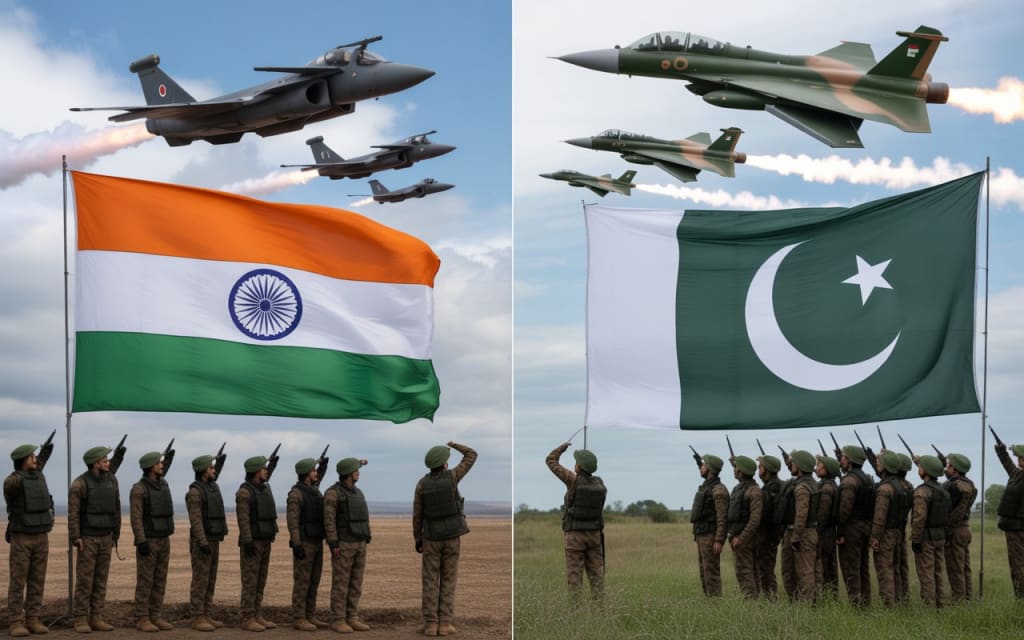
India and Pakistan have shared a tense and often difficult relationship ever since they became separate countries in 1947. Although both nations have made efforts toward peace over the years, their connection remains fragile. They have fought several wars, and smaller clashes are not uncommon. In May 2025, a new conflict broke out that lasted just a few days—but it had serious consequences.
How the Trouble Started: The Pahalgam Attack
The conflict began after a shocking terrorist attack in Pahalgam, a peaceful tourist town in Indian-administered Kashmir. On April 22, 2025, armed men attacked a tourist bus, killing 27 people—25 Hindu pilgrims, one Christian visitor, and a local Muslim resident. This heartbreaking incident deeply saddened the country and sparked strong emotions.
A group called The Resistance Front (TRF), which is banned in India, claimed responsibility. India quickly accused Pakistan of backing this group, since the group is believed to be connected to well-known Pakistan-based militant organizations. Pakistan denied this and said it had nothing to do with the attack.
India Reacts with Operation Sindoor
Just over two weeks later, on May 7, 2025, India responded with a military operation called Operation Sindoor. The Indian military carried out missile and drone strikes on places in Pakistan-occupied Kashmir (PoK). According to Indian officials, these locations were being used as training camps for terrorist groups like Jaish-e-Mohammed and Lashkar-e-Taiba.
India said it carefully avoided civilian areas and only targeted terrorist bases. However, reports from the Pakistani side claimed that some civilians were killed, and a few mosques were damaged in the strikes. This raised the anger even more and made the situation very tense.
Pakistan’s Answer: Operation Bunyan-un-Marsoos
In response to India’s strikes, Pakistan launched its own military action on May 10, 2025. The operation was named "Operation Bunyan-un-Marsoos." It included drone strikes on Indian army positions and even a missile attack aimed at New Delhi, India’s capital. Fortunately, India said the missile was stopped in the air by its defense systems.
India also claimed that Pakistan tried to attack the Golden Temple in Amritsar with drones, which were intercepted before they could do any harm. The Golden Temple is one of the most sacred places in India, and an attack there could have led to even more serious problems.
A High-Tech, High-Tension Conflict
The May 2025 war was different from previous conflicts between India and Pakistan. It lasted just four days, but it involved advanced weapons like drones, guided missiles, and radar systems. This made it one of the most modern wars between the two countries.
People living near the border faced a lot of fear. Alarms rang in towns, and many families left their homes to find safety. Schools were shut, electricity was lost in some places, and the whole region was on edge. News reports and social media were filled with updates, fears, and emotional messages from both sides.
The Ceasefire and Aftermath
On the same day that Pakistan launched its strikes—May 10, 2025—a ceasefire was announced. This happened after pressure from international groups like the United Nations and powerful countries that asked both nations to stop fighting.
While the ceasefire brought peace back to the border, the damage was already done. Both sides had suffered losses, and many civilians had been affected. Trust between India and Pakistan took another serious hit. Diplomats were recalled, flights were canceled, and trade was paused.
What Comes Next?
Although the guns have fallen silent, the larger issues between India and Pakistan remain. The biggest of these is Kashmir, the region that has caused so many arguments and wars in the past. Unless both countries find a way to talk calmly and work toward a peaceful solution, new conflicts may happen again in the future.
The sad truth is that most people in both countries don’t want war. Ordinary citizens want peace, jobs, education, and safety. They want to raise their children without the fear of war. Hopefully, one day, the leaders of both nations will focus more on peace and less on fighting.
Final Words
The May 2025 conflict between India and Pakistan was short but intense. It showed how easily things can get out of hand when problems like terrorism and territorial disputes remain unsolved. This war reminds us all that violence brings pain, but peace brings progress. It's time for both countries to move forward together, not as enemies, but as neighbors who choose understanding over anger.
About the Creator
Keep reading
More stories from Muhammad Farhad Khan and writers in History and other communities.
The Day a Pakistani Pilot Downed an Indian Rafale: A Story of Skill and Strategy
In the world of air combat, few events capture attention like a dogfight between two modern jets. One such moment happened when a skilled Pakistani pilot reportedly downed an Indian Rafale jet. The event quickly became the talk of the town, sparking debates, pride, and even surprise across both countries. But how did it happen? How did a pilot flying for Pakistan manage to bring down a jet that was considered one of the most advanced in the region?
By Muhammad Farhad Khan10 months ago in History
Dracula: The Real Man Behind the Legend and His War Against the Ottoman Empire
When most people hear the name Dracula, they imagine a mysterious vampire who drinks human blood and lives in a dark castle. This terrifying character became famous through Bram Stoker’s 1897 novel Dracula. However, the fictional vampire was actually inspired by a real historical figure: Vlad III of Wallachia, better known as Vlad the Impaler. His life was filled with war, brutality, and political struggle, especially against the powerful Ottoman Empire.
By Irshad Abbasi 6 days ago in History


Comments
There are no comments for this story
Be the first to respond and start the conversation.