
Beneath the Surface: The Kolar Gold Fields Story
A British Discovery That Unearthed 800 Tons of Gold and Changed Indian Mining History
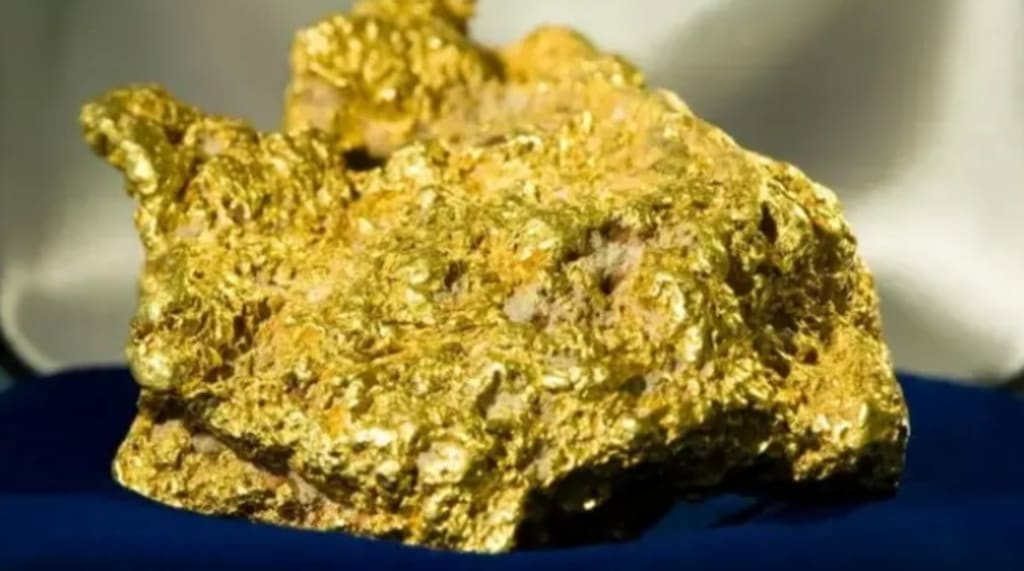
The Gold Mine That Yielded 800 Tons: Discovered by a British East India Company Officer
Just 90 kilometers away from the bustling city of Bengaluru lies Kolar, home to India’s largest gold mine—an underground marvel that has fascinated historians, geologists, filmmakers, and economists alike. Known as the Kolar Gold Fields (KGF), this mine has not only played a significant role in India's mining history but has also become a symbol of ambition, struggle, and forgotten glory.
The Genesis of Kolar’s Golden Era
Although industrial-scale gold mining in Kolar began in the 1880s, the stories surrounding the region's riches stretch back centuries. During its peak, more than 800 tons of gold were extracted from its depths, though that accounted for just 2% of the world’s gold production at the time.
The mining site boasted an astonishing 1,360 kilometers of underground tunnels, dug approximately 3 kilometers below the surface, making it the second deepest mine in the world during its operational years.
Ancient Roots and Cultural Lore
Historian Bridget White, in her book "Kolar Gold Field Down Memory Lane", suggests that gold was mined here as far back as the Gupta period in the 5th century. Some researchers believe that even the ancient Indus Valley Civilization may have exploited the region’s golden potential. Venkataswamy’s book, Kolar Gold Mines, published by the Geological Survey of India, further strengthens this belief.
The region changed hands between several ruling dynasties over time—Ganga, Chola, Hoysala, and the Vijayanagara Empire—before eventually coming under the rule of the Bijapur Sultanate, and later, Hyder Ali and Tipu Sultan of Mysore.
Discovery by the British
The turning point came after Tipu Sultan’s death in the Fourth Anglo-Mysore War, when the British East India Company began surveying Mysore. A British officer, John Warren, was tasked with geological surveys. During his travels to the Erakonda Hills, he heard of gold being extracted from soil and rock in areas like Argowan and Marikuppam. The local Theru and Dheda communities, skilled in primitive gold extraction, assisted him.
Warren decided to study the soil samples and employed 12 local laborers for the task, three of whom received a silver coin as daily wages—a considerable amount for the time. To encourage further exploration, Warren announced a reward for anyone who could locate potential gold reserves.
One man from Warangal took the challenge seriously and began digging at an ancient mining site. His gamble paid off—he discovered a significant quantity of gold. The gold samples were sent to Madras (now Chennai) for quality testing, where they were found to be of exceptionally high grade. Despite the findings, the British government initially showed little interest in investing in mining operations.
The Birth of an Industry
Enter Michael Lavelle, a soldier stationed in Bengaluru. When he heard of the gold discovery, he sought permission to mine the area. After several attempts, he was finally granted the license in 1875. However, he transferred his rights just a year later.
A group of investors soon pooled together £5,000 and formed the Kolar Concessionaires. At first, their efforts yielded little, but eventually, gold production increased. Later, major entities such as the Chennai and Oorgaum Company, the Mysore Mines Company, and Nandi Durga invested in the site.
A pivotal figure during this boom was Captain Plummer, who explored deeper into the Marikuppam region. His efforts bore fruit when he discovered nearly 6,000 ounces of gold in one location.
To support mining and logistics, a meter-gauge railway track was built between Bengaluru and Kolar in 1894. Initially, miners used lanterns and torches, but soon electricity was brought in from the Shivanasamudra Dam (completed in 1902), making Kolar one of South India’s first electrified towns.
Life in the Mines
As mining operations expanded, thousands of workers, particularly from tribal communities in Tamil Nadu, were brought in. Working conditions were perilous, and safety measures were minimal, leading to numerous fatalities. During World War II, more than 32,000 workers were employed in the mines.
However, after Independence in 1947, the situation began to change. When Hanumanthaiah became Chief Minister of Mysore, he strongly advocated for the nationalization of Kolar’s mines. On 28 November 1956, under the leadership of S. Nijalingappa, the mines came under state control, and operations were handed over to a new public sector undertaking, Kolar Gold Mining Undertakings (KGMU).
Despite this shift, the output began to decline. Between 1956 and 1962, gold worth ₹20 crore was extracted, but the cost of operations continued to rise.
From Boom to Bust
Eventually, the state government handed over the mine’s management to the Central Government. In 1972, the Ministry of Mines established India Gold Mines Limited to take over operations. Despite significant efforts, the output continued to decline. By the late 1990s, gold yield had dropped drastically—from 14 grams per ton of ore to just 4 grams.
The final blow came in 1998, when it was confirmed that the gold reserves were depleted. In 2001, the central government officially shut down the mine, ending over a century of glory. Roughly 3,800 workers protested the closure, but their efforts were in vain.
Cultural Legacy
Kolar Gold Fields didn’t just shine underground—it also became a source of fascination in Indian popular culture. Blockbuster films like KGF and KGF 2 brought the tale to mainstream audiences, blending history with cinematic fiction. Recently, the Tamil film Thangalaan also dramatized the region’s mining history.
Much like the mythical city of El Dorado, KGF became a symbol of hidden wealth and human ambition. It showcased not only the grandeur of India’s mineral wealth but also the complex intersection of colonialism, labor, and industrialization.
Conclusion
Today, Kolar stands as a ghost of its golden past. The tunnels lie abandoned, the equipment rusts in silence, and the workers who once dreamed of prosperity have long since dispersed. Yet, its legacy lives on—in books, in films, and in the memory of a time when the earth beneath Kolar truly glittered with gold.
The story of Kolar Gold Fields is more than a tale of mineral wealth—it is a story of human endeavor, sacrifice, and the relentless pursuit of prosperity in the face of uncertain odds. It remains one of India’s most captivating chapters in the history of industrialization and colonial resource exploitation.
About the Creator
Keep reading
More stories from Ikram Ullah and writers in History and other communities.
Vlad the Impaler: Dracula's Real History and His Clash with the Ottoman Empire
Who was Dracula originally, and what was his conflict with the Ottoman Empire? The scene was a field where, in a semi-circular area spanning about a mile, nearly 20,000 stakes were driven into the ground, and on each one was impaled the mutilated corpse of a Turkish prisoner. On the two tallest stakes were the bodies of Hamza Pasha, a regional official of the Ottoman Empire, and the Greek Katavolinos, who had been dead for several months. The remnants of their once-valuable clothing fluttered in the air, while the only scent in the atmosphere was that of decaying human flesh. The Greek historian Chalcocondyles writes that this was the sight that greeted the vanguard of the Ottoman Sultan Mehmed II's army in June 1462, 60 miles from the city of Târgoviște in the European state of Transylvania. When Sultan Mehmed II set out from Istanbul on May 17, 1462, to teach a lesson to Prince Vlad III Dracula, the ruler of the state of Wallachia across the Danube River in Europe, few would have thought that the campaign would end in such a way. Historians Radu Florescu and Raymond McNally, in their book Dracula: Prince of Many Faces, His Life and Times, quote the Greek historian as saying that this scene so affected Sultan Mehmed that he said, "...it is very difficult to take his land from a man like this." They wrote that for the night's stay, the Sultan had a deep trench dug around the Turkish camp, and the next day he ordered the army to retreat, saying that the area was not important enough to pay such a price. Wallachia had previously been a tributary state of the Ottoman Empire and remained so after this campaign, but according to historians, its status could not be changed to that of an Ottoman province. The Sultan himself returned, but the campaign against Vlad Dracula did not end. He left Dracula's brother, Radu, with a part of the Turkish army. As a result of this campaign, Dracula had to flee his state, and his younger brother Radu 'the Handsome', supported by the Ottoman Empire, took the throne with the help of the local nobility and those classes who were tired of Dracula's cruelties. Historian Caroline Finkel, briefly mentioning the action against Wallachia in her book Osman's Dream: The History of the Ottoman Empire, writes that "due to the failure of the tributary state of Wallachia to provide the annual tribute and the subsequent provocative actions of its ruler Vlad Dracula, Sultan Mehmed ordered the crossing of the Danube in 1462 to restore order. After a successful operation, Vlad's brother Radul, who had been held hostage in Istanbul as a guarantee of Vlad's good behavior, was made the ruler in Vlad's place. Vlad himself fled to Hungary." About ten years before the Sultan launched this campaign in Europe, he had already earned the title of 'the Conqueror Sultan' by conquering Constantinople, the last vestige of the powerful Byzantine Empire that had lasted for centuries. His empire had spread across more than one continent. This Sultan, who saw himself in the lineage of conquerors like Alexander the Great, now had his sights set far into Europe. In this campaign in 1462, his target was Vlad Dracula, the ruler of the Ottoman tributary state of Wallachia, who, according to historians, had not appeared before the Sultan to pay tribute for three years. Furthermore, historians like Florescu and McNally write that after the conquest of Constantinople, as well as "most of Bulgaria, Serbia, and Greece, the Sultan naturally considered making Wallachia a province of his empire, and to achieve this goal, he ordered operations in the regions of the Danube River, which flows from Germany eastward through several countries and into the Black Sea." Historically, the Danube River had been an important route for those coming from the east with the desire for conquest in the west, and the state of Wallachia was located on the northern bank of this river. The ruling family of this state, with a population of less than a million, had a history of sometimes good and sometimes bad relations with the Ottoman Empire for generations. Florescu and McNally write that now the Sultan, displeased with the policies of the new ruler of the state, Prince Vlad III Dracula, decided to deal with the issue. They wrote that war between Dracula and the conquering Sultan Mehmed II was inevitable; the only question was when. And "(the conqueror of Constantinople) Sultan Mehmed, having grown up together with Dracula, was well aware of the Sultan's desire for conquests." Compared to Mehmed II's empire, Dracula's country was very small, but historians write that his sense of being a ruler was in no way less than that of Sultan Mehmed II. This was a time when the title of Dracula was an honor. Not One, But Two Draculas Before proceeding, let's mention history, where two Draculas are mentioned. One is the one whose name has been unusually prominent worldwide once again this year, as it is every year around the 'Dracula Day' celebrated on May 26th recently, and whose pictures are shared. This Dracula is depicted sinking his teeth into the neck of a victim, or looking towards the sky with blood dripping from his pointed fangs. This series began after the publication of Bram Stoker's novel on May 26, 1897, in which this fictional blood-drinking character, Dracula, was introduced. This character of Dracula might have been fictional, but the name Dracula was not entirely fictional. The prince called Dracula in history, who confronted the Sultan of the superpower of his time, became infamous on one hand for his cruelties, while on the other hand, he is considered a national hero in Romania. This prince of Wallachia, a relatively small state, was called Vlad III Dracula. Dracula meant 'son of Dracul'. This prince is famous in history for being a ruler who impaled thousands of his own people and foreigners on stakes. For this reason, Vlad III Dracula is also known as 'Vlad the Impaler' in English. Interestingly, history tells us that in childhood, the conquering Sultan Mehmed II and Dracula spent some time together, and at that time, they even had the same teacher. On one side was the prince and heir to a Muslim empire spread over different continents, and on the other side was the son of the ruler of a Christian state, one of the many tributary states of this empire in Europe. How did these two end up together under one roof? This will be discussed later, first, an introduction to the prince who was called Dracula. Who was Vlad the Impaler? According to Encyclopedia Britannica, Prince Vlad the Impaler, who ruled the state of Wallachia in the Danube region multiple times, his full name was Vlad III Dracula. He was born in 1431 and died in 1476. He was born in Transylvania and died in an area north of Bucharest, the capital of present-day Romania. Romanian historians Florescu and McNally write that Dracula's era coincided with the time of 'two great Sultans' in the Ottoman Empire: Murad II (1421-1451) and Mehmed II (1451-1481), and they wrote that "(the conqueror of Constantinople) Sultan Mehmed II and our young prince (Dracula) grew up together." Romanian historians write that both these Ottoman Sultans were highly civilized and worldly individuals. "They were far-sighted politicians who taught Europe a lesson in religious tolerance by sheltering Jews and other religious minorities at a time when the Roman Catholic Church was 'persecuting' them." According to Encyclopedia Britannica, in 15th-century Europe, Vlad gained notoriety for his cruel treatment of his enemies. It is also written there that a group of historians believes that the Dracula of Bram Stoker's world-famous novel is actually this Vlad. Vlad's father was Vlad II Dracul. He was given the title Dracul by Sigismund, the Holy Roman Emperor at the time, for his membership in the 'Order of the Dragon', which was formed to stop the Turkish invasion of Europe. According to the encyclopedia, the word Dracul comes from the Latin word Draco, which means dragon. And Dracula means 'son of Dracul'. Thus, the son of Vlad II Dracul was named Vlad III Dracula. Historians also give various reasons for Dracula's title, one of which is that in the Romanian language, Dracul also means 'devil'. According to Encyclopedia Britannica, Dracula lived in the Ottoman Empire from 1442 to 1448, and then he returned to Wallachia after the murder of his father and elder brother. Dracula faced opposition from the Wallachian nobility, including his younger brother, who was supported by the Ottoman Empire, in his attempt to take his father's throne. He became ruler for the first time in 1448 but was soon overthrown, and then it took him eight years to regain his father's seat. In this second reign, he committed the atrocities that made him famous and earned him the name Vlad the Impaler. This period ended in 1462 after the campaign of Sultan Mehmed II mentioned above, which is remembered for Vlad Dracula's 'forest of hanging corpses on stakes'. History tells us that Vlad managed to regain the rule of his father's state for the third and last time in 1476, but in the same year, he was killed in a battle at the age of 45. Vlad III Dracula and the conquering Sultan Mehmed II probably first met in 1442 when Dracula's father left him and his younger brother Radu 'the Handsome' in the custody of Sultan Murad II as a guarantee of his loyalty to the Ottoman Empire. Historians say that at that time, Vlad III Dracula was eleven or twelve years old, and his younger brother Radu was about seven. Prince Mehmed was also about the same age as Dracula at that time. The story is that by this time, Serbia and Bulgaria in Europe had come under Ottoman rule, and Sultan Murad II was preparing to deliver the final blow to the centuries-old Byzantine Empire. Vlad II Dracul, as mentioned earlier, had become a member of the 'Order of the Dragon', formed for opponents of the Ottomans and the Roman Catholic Church, but Florescu and his fellow historian McNally wrote that he was a cunning politician, and as soon as his grip on the throne of Wallachia strengthened, he realized that the balance of power in the region favored the Ottomans. Historians write that seeing the situation, immediately after the death of his patron, the Holy Roman Emperor Sigismund, Vlad II Dracul made a treaty with the Turks. "Dracul and 300 of his companions appeared before Sultan Murad in Bursa, and in a magnificent ceremony, the Prince of Wallachia formally declared his obedience." It is said that after some time, doubts arose in the heart of Sultan Murad (who, according to both historians, was a ruler who honored treaties) about Vlad II. When summoned, Vlad II appeared before the Sultan with his two young sons, Dracula and Radu. According to historians, at the city gate, Turkish soldiers chained them, and both sons were taken to a remote mountain fortress. Vlad II Dracul remained a prisoner of the Sultan for about a year, during which time his elder son Mircea, who had good relations with the Sultan, sat on the throne of Wallachia. Dracul was finally freed after swearing allegiance to the Ottomans on the Quran and the Bible. To prove his goodwill, Vlad II also left his two younger sons in Ottoman custody. Dracula at the Ottoman Sultan's Court Dracula's next six years were spent away from his parents in the Ottoman Empire. He could not speak the local language, and his religion was also different. "Surely, he must have felt that his own people had abandoned him." Dracula remained in the Ottoman Empire until 1448, and his brother Radu until 1462. The Difficulty for Wallachian Rulers Wallachia was among those regions where, unlike in Europe, the throne was not inherited solely by the eldest son; all sons had the right to seek power. Therefore, if one son received the support of a major Western power like the Holy Roman Empire or the Kings of Hungary, the other would try to gain the support of the Ottomans. This is reflected in the efforts of various members of the ruling family for the throne of Wallachia. Florescu and McNally wrote that on the one hand, Vlad could not afford to anger the Holy Roman Emperor Sigismund by ignoring Catholic institutions, and he also knew that according to Wallachian traditions, it was necessary for any ruler to be Orthodox Christian. The history of differences between Orthodox and Catholic Christians was very old and bitter. This was also one reason why it was very difficult for the Orthodox Byzantine Empire to get help from Roman Catholic Europe in its fight against the Ottoman Empire. The Training of the Hostage Prince Vlad III Dracula at the Ottoman Court When princes from small states came as hostages to the Ottoman court, one of the purposes was to make them loyal. History tells us that these princes were trained with the idea that if any of them became the ruler of their state in the future, their loyalty would be with the Ottoman Empire. Good treatment of these foreign princes was conditional on their father's loyalty to the Ottoman Empire. Besides Dracula and his brother, two Serbian princes were also present at the Sultan's court during those days. As punishment for their suspected correspondence with their father, their eyes were gouged out, and "all this happened despite the tears of their 22-year-old beautiful sister, Princess Mara, who was the wife of Sultan Murad II at that time." Dracula was trained by the best teachers of that era. According to historians, he already knew more than one European language, and now he had also mastered the Turkish language. Among his teachers, history mentions "the famous Kurdish philosopher Ahmed Gurani, who was also authorized to use the whip during the training of the Sultan's heir." He was also taught the Quran, Aristotle's logic, and mathematics. Florescu and McNally write that Dracula was a difficult student who could not control his anger and was whipped several times. In contrast, according to historians, his brother received a lot of attention from both men and women at the court due to his good looks. The different characters of these two brothers and the separate treatment they received became the cause of intense hatred between them, which had far-reaching consequences. Meanwhile, the Ottomans again became suspicious of the loyalty of Dracula's father, Vlad II, the ruler of Wallachia. The sword hung over the heads of both princes. However, no action was taken against them. Historians say that they spent a long time in this uncertainty. Florescu and McNally write that this environment must have had a profound effect on Vlad Dracula. According to these historians, on the one hand, he must have felt that his father and elder brother had put his life in danger, and on the other hand, he could be killed by his hosts at any time. In 1447, Vlad Dracula's father and brother were killed, victims of the politics of those European regions. Dracula was now free. He was made an officer in the Ottoman army, and the impression was given that the Ottoman Empire wanted to see him on his father's throne in Wallachia. Florescu and McNally write that Sultan Murad II was quite impressed with him. Vlad Dracula, Ruler of Wallachia Florescu and McNally write that in 1456, the sky was illuminated by a comet, and people predicted wars, epidemics, and natural disasters. It was during these days that the 25-year-old Vlad Dracula, after an eight-year-long struggle, succeeded in sitting on the throne of his ancestral state of Wallachia for the second time. Florescu and McNally write that this time too, within a month, the Ottomans began to doubt his loyalty, and an envoy of Sultan Mehmed was sent to Wallachia. Dracula agreed to the Ottoman conditions at that time, but he did not repeat the mistake his father had made in 1442 by going to the Ottoman Empire himself. Vlad Dracula's state was not very large but consisted of beautiful mountains, dense forests, lakes, and fertile plains. According to historians, his palace, the ruins of which still exist today, was destroyed and rebuilt several times by the Turks. Vlad Dracula's Cruelties / When Vlad First Impaled Someone All of Vlad Dracula's policies were aimed at consolidating power in his own hands within the state. Like some other states in Western Europe, he focused on creating an army whose loyalty was solely to him. Florescu and McNally write that Dracula used to say that a prince who is weak at home cannot do as he pleases abroad, and therefore, for the first two years, he adopted a policy of appeasing his western neighbor Hungary and his eastern neighbor the Ottoman Empire in order to solve his domestic problems. Due to the rapid succession of rulers, power had fallen into the hands of the local nobility, whom they called Boyars. History tells us that in the half-century after 1418, the rulers of Wallachia changed 12 times, meaning that on average, a ruler sat on the throne for two years. Dracula realized that his nobility believed in keeping the Ottomans happy. In addition, supporters of the previous ruler of Wallachia were still present in the state, and Dracula still had to avenge the death of his brother Mircea. Florescu and McNally, citing a 17th-century Romanian historian and the Greek historian Chalcocondyles, state that in 1457, when about 200 Boyar families and some important officials were gathered at his palace for Easter celebrations, they were arrested. Dracula's soldiers impaled the older members among them through their bodies from bottom to top and left them hanging on stakes outside the city walls. The healthy members of these families were taken to a distant mountain peak to repair the ruins of an old fortress from the time of their elders and forced to do hard labor. This fortress was called Dracula's Castle. Historians say that for a tributary state ruler to build such a fortress was a violation of the orders of the two powerful neighbors, Hungary and the Ottoman Empire. It is said that there was a secret passage in this castle through which Dracula managed to escape in 1462 when he was overthrown. Florescu and McNally write that during his reign, the old nobility of the region was almost eliminated through impalement or forced labor in Dracula's famous castle. The people who replaced them were 90 percent from the lower classes or those who were free peasants in the past.
By Ikram Ullah8 months ago in History
Power's Sake
When it comes to gaining power, bad people use it to gain more They never gain power to do something with it, they gain power to have it, relish in it, double it down on itself so it grows exponentially and never goes anywhere. Even if you see the people in power commit an atrocity, that is never the true goal. It is a deplorable action for sure but the action itself usually doesn't matter it's the outcome.
By Donny Foleya day ago in History
Military Strength of Alexander the Great and the Chola Empire: A Historical Comparison
Though separated by more than a thousand years and operating in vastly different geographical and cultural contexts, both forces achieved extraordinary success through discipline, innovation, and strategic brilliance. This article explores the history, composition, size, organization, and military strength of Alexander’s Macedonian army and the Chola military, highlighting how each became a dominant power of its era.
By Say the truth a day ago in History




Comments
There are no comments for this story
Be the first to respond and start the conversation.