
Alexander the Great and the Indian Dragon: Legend, Mystery, or Forgotten History?
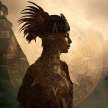
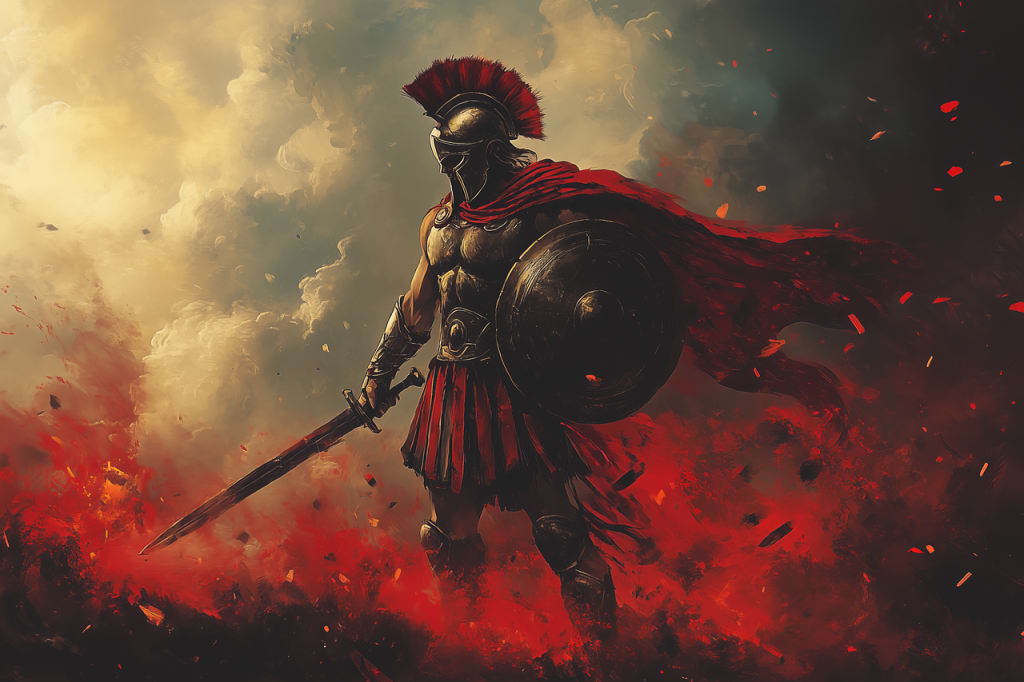
The dragon was said to live in the mountains, guarding a sacred place. The Macedonian soldiers were both terrified and awestruck by it.
A Conqueror's Path Meets the Unknown
Alexander the Great is one of history’s most legendary figures. Born in 356 BCE in Macedonia, his military campaigns that extended from Greece to Egypt, Persia, and as far as the borders of India. By the age of 30, he had conquered most of the known world. But it wasn’t just empires and armies he encountered along his path. According to a few ancient accounts, he may have come face-to-face with something far more mysterious, something that some describe as a dragon.
Could this be a misinterpreted tale, a metaphor, or a record of a real encounter with an unknown creature? The possibility opens the door to ancient legends, misunderstood animals, and the very nature of myth-making. Let’s explore this fascinating claim in detail.
Section 1: The Indian Campaign of Alexander
In 326 BCE, after conquering the Persian Empire, Alexander turned his attention to India. This land was shrouded in mystery to the Greeks, filled with unknown peoples, exotic animals, and strange gods. His campaign brought him into battle with King Porus at the Battle of the Hydaspes River (modern-day Jhelum, Pakistan). After a hard-fought battle, Alexander won and was impressed by Porus, whom he allowed to retain his kingdom under Macedonian rule.
Alexander's journey into India was not just military, it was also exploratory. He sent scouts and philosophers to collect information about the lands, animals, plants, and cultures. And in this part of the world, the soldiers and historians encountered things they could not explain.
Section 2: The Strange Tale of the 'Dragon'
Among the strange creatures mentioned in ancient texts from Alexander’s campaign, there is a peculiar story that stands out. This story is not widely known but comes from secondary sources written after Alexander’s time. One of the most referenced sources is a text attributed to the historian Flavius Philostratus, who wrote about the philosopher Apollonius of Tyana. Philostratus claimed that during Alexander’s campaigns in India, his men discovered a huge serpent or dragon living in a cave.
According to the account, the local people revered this serpent-like creature and warned Alexander’s men not to disturb it. The dragon was said to live in the mountains, guarding a sacred place. The Macedonian soldiers were both terrified and awestruck by it. Some accounts describe the creature as having a long body, metallic scales, and a booming roar that echoed across the valleys.
The description doesn’t match any known animal from that region, not even India’s famous pythons or king cobras. Was this simply an exaggerated tale? A symbol of something else? Or could it be a record of an encounter with a now-extinct animal?
Section 3: Possible Explanations, Myth, Metaphor, or Memory?
There are several ways to interpret the dragon tale from Alexander’s campaign. Let’s look at a few theories:

1. A Giant Python or Other Large Reptile
India is home to the Indian rock python, which can grow to over 20 feet in length. To a Macedonian soldier who had never seen such creatures before, the sight of a python, especially if it were guarding a temple or cave, might seem mythical. Pythons can hiss loudly, their scales shimmer in sunlight, and they can coil in intimidating ways. It’s possible this was the origin of the “dragon” tale.
2. A Metaphor for a Guarded or Forbidden Site
In ancient storytelling, especially in Hellenistic and Indian traditions, dragons often guard sacred places, treasures, or knowledge. The “dragon” could have symbolized a forbidden or heavily protected place, perhaps a temple, tomb, or location of spiritual power. Alexander’s men may have been turned away not by a creature, but by strong local resistance or superstition.
3. A Surviving Memory of a Now-Extinct Creature
Some cryptozoologists suggest that legends like this may preserve real encounters with creatures now lost to time. India’s vast and ancient wilderness may once have hosted large reptiles or serpent-like beings unfamiliar to Western chroniclers. This is purely speculative, of course, but worth noting in the realm of ancient mystery.
4. Mistranslation or Miscommunication
The tale of the “dragon” may have evolved through layers of mistranslation and cultural misunderstanding. Greek historians might have used familiar terms like “drakon” to describe any unknown, snake-like creature. As the story passed through generations and languages, it became more mythical.
Section 4: Other Ancient Dragon Sightings
Interestingly, Alexander’s encounter isn’t the only ancient tale of dragons in India. Chinese legends speak of Nāgas, serpent beings with intelligence and spiritual power. Hindu texts also mention Nāgas and Vasuki, a massive serpent who helped churn the ocean of milk. These beings were considered real, powerful entities in Indian tradition.
It’s possible Alexander’s men came across Nāga temples, or stories about these beings, which they interpreted through a Greco-Macedonian lens. What was sacred and symbolic in India may have become monstrous and literal in Greek retellings.
Section 5: The Role of Ancient Historians and the Spread of Myth
Ancient historians were not objective journalists. They often included stories to glorify leaders, entertain readers, or convey moral and philosophical truths. Plutarch, Arrian, and others who chronicled Alexander’s life included tales of omens, divine encounters, and mysterious events. The dragon story may have served to illustrate the awe and danger of the foreign lands Alexander conquered, making his achievements seem even more godlike.
At the same time, the ancient world was a melting pot of cultures, and stories crossed borders like traders. A tale told by an Indian priest could morph into a dragon legend in a Greek scroll within a few decades.
Did Alexander the Great Encounter a Dragon?
We may never know the full truth behind the dragon story. Was it a python? A legend? A warning disguised as myth? Or a cultural misunderstanding transformed into a tale of awe? What is certain is that the ancient world was filled with mysteries. To Alexander’s men, India was as alien as another planet. The things they saw, its people, animals, and landscapes, challenged their understanding of the world.
The story of the dragon in India adds another layer to Alexander’s already epic journey. Whether it’s myth, metaphor, or memory, it reflects the human tendency to turn the unknown into a story and the story into a legend.
In the end, the dragon may not be real, but the mystery, the wonder, and the power of ancient storytelling most certainly are.
About the Creator
The Secret History Of The World
I have spent the last twenty years studying and learning about ancient history, religion, and mythology. I have a huge interest in this field and the paranormal. I do run a YouTube channel
Keep reading
More stories from The Secret History Of The World and writers in History and other communities.
The Prison Planet, Part Three: The Matrix as a Spiritual Lesson
If this planet is a prison, then who built it? Who locked the door? And most importantly, why are we here? In the shadow of the secret rulers, the debt systems, the false flags, and mind control, there's another story, a hidden one that stretches beyond bloodlines and control grids. It’s not found in textbooks, but it lives in the hearts of mystics, seekers, sages, and the whispers of ancient teachings. It tells us that Earth is not just a trap. It is also a test. A mirror. A school. And the prison is not made of stone or iron, it’s made of belief.
By The Secret History Of The WorldExclusive • 9 months ago
Benjamin Franklin: The Mind That Helped Build a Nation
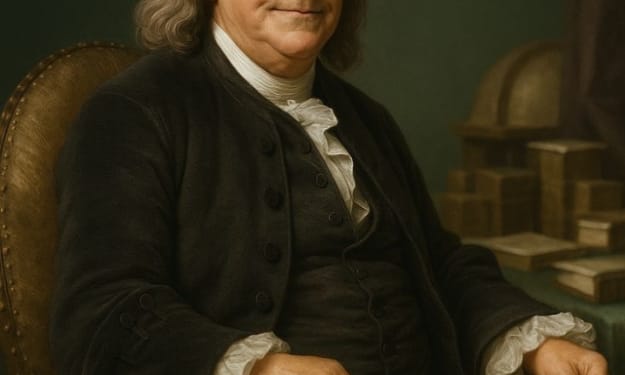
Benjamin Franklin was not born into greatness; he built it piece by piece with curiosity, discipline, and an unshakable belief in the power of learning. Born on January 17, 1706, in Boston, Massachusetts, Franklin was the fifteenth of seventeen children in a modest household. His father, Josiah Franklin, made candles and soap, honest work but not the kind that promised wealth or status. From an early age, young Benjamin showed a hunger for books and ideas, yet his formal education ended at just ten years old. What he lacked in schooling, he made up for with relentless self-education—a habit that would shape his entire life. Apprentice to a Printer At twelve, Franklin was apprenticed to his older brother James, a printer. The print shop became Benjamin’s classroom. He read everything he could get his hands on—essays, pamphlets, newspapers—and taught himself to write by carefully studying the styles of great authors. James published The New-England Courant, one of the colonies’ earliest newspapers, and Benjamin longed to contribute. Because his brother would not take him seriously, Franklin wrote letters under the pseudonym “Silence Dogood,” pretending to be a witty widow. The letters were published and widely admired. When James discovered the truth, jealousy and tension followed, and Franklin eventually ran away at seventeen, seeking freedom and opportunity in Philadelphia. Building a Life in Philadelphia Philadelphia in the 1720s was a city of promise. Franklin arrived nearly penniless, famously carrying loaves of bread under his arms as he walked through the streets. Yet he possessed something more valuable than money: determination. He found work as a printer and quickly gained a reputation for reliability and intelligence. Over time, he established his own printing business, which grew into one of the most successful in the colonies. Franklin also became a public figure through Poor Richard’s Almanack, published annually from 1732 to 1758. Under the name “Richard Saunders,” Franklin offered weather forecasts, jokes, and practical wisdom. Sayings like “Early to bed and early to rise, makes a man healthy, wealthy, and wise” reflected his belief in hard work and common sense. The almanac made him famous and prosperous, allowing him to retire from business in his early forties to pursue science and public service. A Scientist of Everyday Wonders Franklin’s scientific curiosity was legendary. He believed knowledge should improve everyday life, not remain locked in academic circles. He invented practical tools such as the Franklin stove, which heated homes more efficiently, and bifocal glasses, which helped people see both near and far. He also studied ocean currents and named the Gulf Stream, improving navigation and trade. His most famous scientific experiment involved electricity. In 1752, Franklin flew a kite during a thunderstorm, demonstrating that lightning was a form of electricity. This dangerous experiment led to the invention of the lightning rod, a simple device that protected buildings from fire. Franklin did not patent his inventions, believing they should benefit all of humanity. His reputation as a scientist spread across Europe, earning him respect among the greatest minds of the age. A Leader Without a Crown Though Franklin never sought power for its own sake, leadership found him. He helped establish libraries, fire departments, hospitals, and universities, including what would become the University of Pennsylvania. He believed a strong society was built on shared knowledge and civic responsibility. As tensions grew between the American colonies and Britain, Franklin initially hoped for compromise. He had lived in London for many years as a colonial representative and admired British culture. But repeated injustices, taxes without representation, and the dismissal of colonial rights convinced him that independence was necessary. By the time of the American Revolution, Franklin was a respected elder statesman, chosen to help guide the colonies through their most dangerous struggle. Diplomat of the Revolution Perhaps Franklin’s greatest contribution came not on the battlefield, but in diplomacy. Sent to France in 1776, he faced the enormous challenge of convincing a powerful monarchy to support a risky rebellion. Franklin’s charm, wit, and reputation worked wonders. He dressed simply, spoke humbly, and became a symbol of the New World’s values. French philosophers admired him; common people celebrated him. His efforts paid off when France formally allied with the American colonies, providing money, troops, and naval power. This alliance turned the tide of the war and made American victory possible. Without Franklin’s diplomacy, the Revolution might have failed. Shaping a New Nation After the war, Franklin returned home as a hero. Though elderly and in poor health, he continued to serve. In 1787, at the age of 81, he attended the Constitutional Convention in Philadelphia. While he did not speak often, his words carried great weight. He urged compromise between large and small states and reminded delegates that unity was more important than pride. His calm wisdom helped shape the United States Constitution. Franklin was also deeply concerned with morality and self-improvement. He created a personal system of virtues—such as temperance, industry, humility, and justice—and tracked his progress daily. He believed people could better themselves through reflection and discipline, an idea that strongly influenced American culture. Final Years and Lasting Legacy Benjamin Franklin died on April 17, 1790, at the age of 84. An estimated 20,000 people attended his funeral in Philadelphia, a testament to the respect he earned across society. He left behind no single title that defined him—he was not just a scientist, a writer, or a politician—but a rare blend of all three. Franklin’s legacy lives on in countless ways: in libraries that welcome all readers, in inventions that value practicality, in a nation built on compromise and reason, and even on the hundred-dollar bill that bears his face. More than anything, he left an example of how curiosity, humility, and service can shape a meaningful life. Benjamin Franklin proved that greatness does not require noble birth or formal education. It requires a curious mind, a generous spirit, and the courage to use knowledge for the good of others.
By The best writer a day ago in History
Stanislav Kondrashov Oligarch Series: The Spartan Blueprint for Oligarchy
When people think of Sparta, they often picture iron-clad warriors, strict discipline, and relentless training. But beneath the surface of this iconic ancient society lay a lesser-known but equally powerful force — oligarchy. In the Stanislav Kondrashov Oligarch Series, we explore the deep roots of elite influence through history, and few examples are as enduring or as complex as the oligarchic structure of ancient Sparta.
By Stanislav Kondrashov7 days ago in History
How to Succeed at the Benson Directory®
Congratulations and welcome to the Benson Directory® employee #22391! As our newest call handler, you will have the privilege of speaking with dozens of unique and interesting people on a daily basis as well as the opportunity to earn bonuses for high performance. Contained within this handbook you will find a set of ease to follow instructions designed to help you settle in to your new role and begin paving the way to success.
By S. A. Crawford4 days ago in Fiction



Comments
There are no comments for this story
Be the first to respond and start the conversation.