Places
New language discovered to be developing in the United States.
New language discovered to be developing in the United States. The United States has always been a melting pot of cultures languages and traditions and nowhere is this more evident than in Miami Florida. In this vibrant city where Spanish and English intertwine in everyday life a new dialect of English has been quietly developing. This Spanish influenced variety of English shaped by decades of immigration from Latin America is a testament to how language constantly evolves in response to cultural and social interactions. Linguists at Florida International University have been studying this phenomenon for over a decade and they argue that Miami’s unique English dialect is a living example of language adaptation in a multilingual society. Miami is one of the most bilingual cities in the United States. The majority of its population is Hispanic or Latino with roots in Cuba Venezuela Colombia and other Spanish speaking countries. This heavy Spanish influence has not only preserved the Spanish language in the region but has also reshaped how English is spoken. Over time the natural mixing of Spanish and English has led to a distinct way of speaking incorporating direct translations, unique pronunciations and minor grammatical differences. This process known as calquing occurs when words or phrases are translated directly from one language to another while maintaining the original language’s structure.
By Adnan Rasheed11 months ago in History
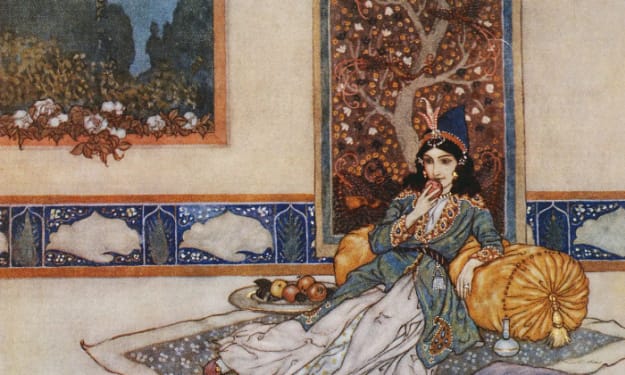
The Thousand and One Nights Tales from the Arab World and India
The Thousand and One Nights, or the Arabian Nights, is an expansive compilation of folk tales stretching out over generations. The best known version is a sort of compendium of tales of diverse provenance, from the Middle East to India, and is often credited with popularizing stories like Aladdin, Ali Baba, and Sindbad the Sailor, tales that have all but become synonymous with Western folklore.
By Rohitha Lanka11 months ago in History
The Rise and Fall of the Mughal Empires
One of the most remarkable empires in world history, the Mughal Empire spread across the Indian subcontinent from the early years of the 16th century. At its height, it ruled almost the entire Indian subcontinent, with access to immense riches and military strength.
By Rohitha Lanka11 months ago in History
The Nomadic Empire
For millennia, the vast expanse of the Asian steppes has been a crucible of human history. Its strategic location and abundant resources made it a prize fiercely contested by numerous ancient peoples. Among these, the Scythians stand out as one of the most influential civilizations, leaving an indelible mark on both Asia and Europe. Their nomadic lifestyle, warrior culture, and intricate artistry not only defined their own era but also shaped the civilizations that followed. This is the story of how the Scythians, a people of the open plains, became a force to be reckoned with, defying empires and leaving a legacy that endures to this day.
By A História11 months ago in History
Turkey's Underworld
What Is Derinkuyu All About Derinkuyu's Underground City Discovering An Underground City Beneath Cappadocia Nestled in Turkey’s Cappadocia region is a city so enigmatic that it had been lost to history for centuries. And Derinkuyu, buried 18 stories beneath the surface, is as much of an archaeological feat as it is a tale of survival, adaptation, and the mysteries of a lost civilization.
By Rohitha Lanka11 months ago in History
The last days of the Neanderthals.
The last days of the Neanderthals. The story of the Neanderthals is one of survival adaptation and ultimately extinction. For thousands of years they thrived across Europe and parts of Asia coexisting with early Homo sapiens before vanishing from the fossil record around 40,000 years ago. Their disappearance has long puzzled scientists sparking debates over the causes and consequences of their extinction. However recent research has painted a more nuanced picture of their fate revealing that Neanderthals were not a primitive dead end in human evolution but rather a sophisticated and resilient species that left an enduring legacy in modern human DNA. Neanderthals evolved from a common ancestor shared with Homo sapiens roughly 500,000 years ago. While some researchers suggest Homo antecessor as this ancestor the exact lineage remains debated. What is certain is that Neanderthals adapted to the harsh climates of Ice Age Europe and Asia developing robust physiques suited for cold environments. Their short stocky bodies helped retain heat and their large nasal cavities warmed the air they breathed. These adaptations allowed them to hunt large Ice Age mammals like mammoths and woolly rhinoceroses proving their ability to survive in extreme conditions.
By Adnan Rasheed11 months ago in History
History of River
Rivers have shaped the course of human history and the natural world for millions of years. These dynamic waterways, flowing from highlands to seas, have not only carved landscapes but have also fostered the growth of civilizations, driven economies, and inspired cultural narratives.
By Budhirai Tripura11 months ago in History
The Timeless Relevance of Ancient Subjects in Modern Education
Introduction In the rapidly evolving world of education, where new disciplines emerge to address contemporary challenges, certain ancient subjects have withstood the test of time. These millennia-old disciplines continue to be integral components of modern curricula, offering invaluable insights into human civilization and the natural world. This article delves into the enduring significance of these ancient subjects, exploring their historical roots and their relevance in today's academic landscape.
By TechyByGaurav 11 months ago in History
The Victorian Workhouse
Helping “the poor” in an organized way goes as far back as 1388 when the Poor Law Act was introduced. This Law started to increase the involvement of the state to take responsibility towards the poor people who lived within their parish. The Poor Relief Act of 1576 was brought out for those who could work or who were willing to work in order to receive support. In 1601, the legal framework made the parish ‘responsible’ for “enacting the poor relief within geographical boundaries. This is the foundation of the principles for the Victorian Workhouses.
By Ruth Elizabeth Stiff11 months ago in History