
The last days of the Neanderthals.
Neanderthals

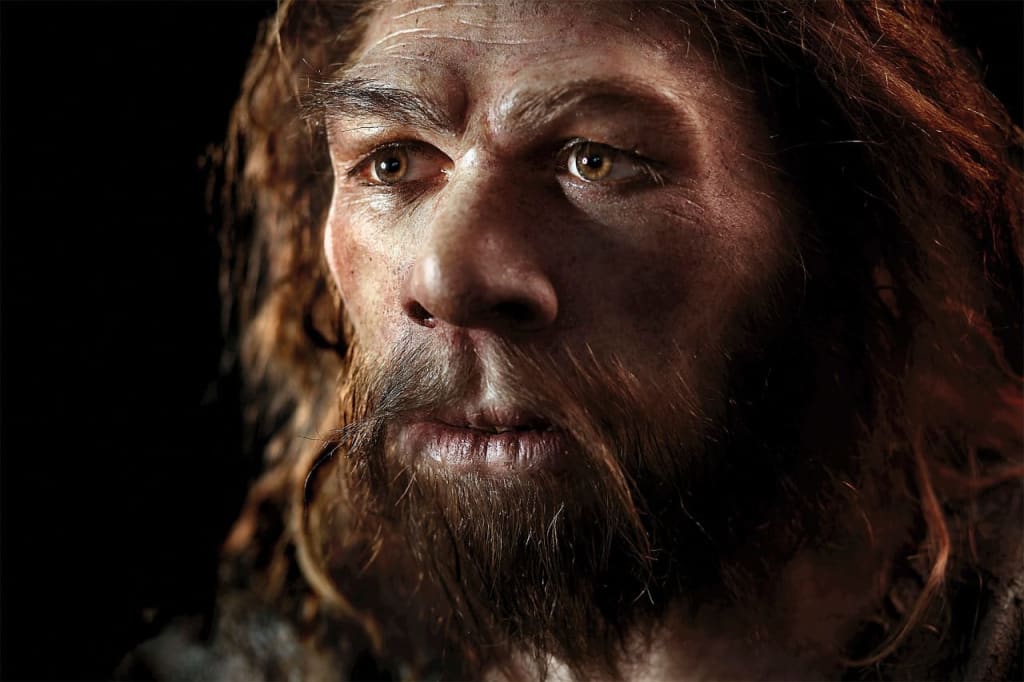
The last days of the Neanderthals.
The story of the Neanderthals is one of survival adaptation and ultimately extinction. For thousands of years they thrived across Europe and parts of Asia coexisting with early Homo sapiens before vanishing from the fossil record around 40,000 years ago. Their disappearance has long puzzled scientists sparking debates over the causes and consequences of their extinction. However recent research has painted a more nuanced picture of their fate revealing that Neanderthals were not a primitive dead end in human evolution but rather a sophisticated and resilient species that left an enduring legacy in modern human DNA. Neanderthals evolved from a common ancestor shared with Homo sapiens roughly 500,000 years ago. While some researchers suggest Homo antecessor as this ancestor the exact lineage remains debated. What is certain is that Neanderthals adapted to the harsh climates of Ice Age Europe and Asia developing robust physiques suited for cold environments. Their short stocky bodies helped retain heat and their large nasal cavities warmed the air they breathed. These adaptations allowed them to hunt large Ice Age mammals like mammoths and woolly rhinoceroses proving their ability to survive in extreme conditions.
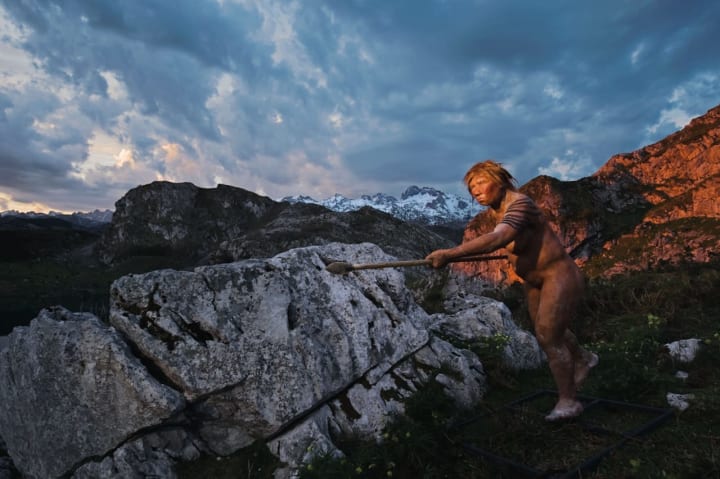
For much of their existence Neanderthals were remarkably successful. They created tools built shelters controlled fire and even crafted ornaments and primitive art. Archaeological evidence suggests they engaged in symbolic behavior possibly including ritual burials and personal adornment. These findings challenge the outdated view that Neanderthals were intellectually inferior to modern humans. In fact their cognitive abilities were likely comparable to those of early Homo sapiens making their disappearance even more intriguing. One of the most significant revelations in recent years is that Neanderthals did not simply vanish they interbred with Homo sapiens. When modern humans migrated out of Africa they encountered Neanderthals in Europe and Asia leading to genetic exchanges. Today nonnAfrican populations carry between 1% and 2% Neanderthal DNA a testament to the interbreeding that took place thousands of years ago. This genetic legacy has had lasting effects influencing traits such as immune system responses and even susceptibility to certain diseases.
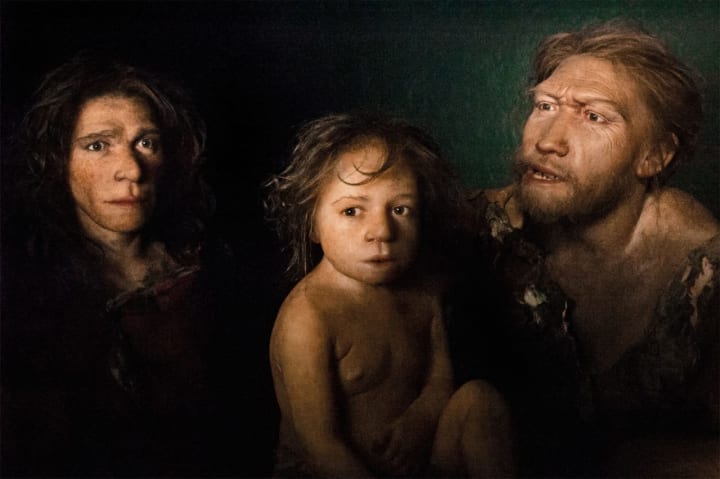
Despite their resilience Neanderthals eventually disappeared. The reasons for their extinction remain a subject of debate with multiple factors likely contributing to their decline. One possibility is climate change. The Ice Age brought unpredictable environmental shifts altering ecosystems and reducing the availability of food sources. While Neanderthals were skilled hunters their reliance on large game may have made them vulnerable to these changes. Another factor is competition with Homo sapiens. As modern humans expanded into Neanderthal territories they may have outcompeted them for resources. Homo sapiens had more advanced tools, complex social networks and perhaps a greater ability to adapt to changing environments. This competition could have gradually pushed Neanderthals to the margins making survival increasingly difficult.
Disease transmission is another theory. As humans and Neanderthals came into contact they may have exchanged pathogens. Homo sapiens having evolved in Africa could have carried diseases that Neanderthals had never encountered leading to devastating outbreaks among their populations.
Some researchers suggest that Neanderthals’ low population numbers made them more susceptible to extinction. Genetic studies indicate that Neanderthal populations were relatively small and isolated which could have made them vulnerable to inbreeding and reduced genetic diversity. Over time this may have weakened their ability to adapt and recover from environmental pressures. While Neanderthals as a distinct species disappeared their genetic legacy lives on. The interbreeding between Homo sapiens and Neanderthals means that their DNA is still present in modern human populations. This challenges the idea that they were simply replaced by modern humans instead they were absorbed into the gene pool of the species that would come to dominate the planet. Today advances in genetic research and archaeology continue to reshape our understanding of Neanderthals. Rather than viewing them as a failed evolutionary experiment scientists now recognize them as a crucial part of human history. Their story is not one of mere extinction but of survival in a different form through their descendants who continue to carry fragments of their DNA.
The last days of the Neanderthals were not marked by a sudden catastrophic event but rather a gradual fading into history. Whether through interbreeding environmental pressures or competition with modern humans their distinct identity as a species eventually dissolved. However their contributions to human evolution remain undeniable. The Neanderthals were not an evolutionary dead end they were a branch of humanity that thrived for hundreds of thousands of years adapting to their world in ways that still influence us today. Their legacy endures not just in fossils and artifacts but in the very genetic code of modern humans a reminder that their story is intertwined with our own.
About the Creator
Adnan Rasheed
Author & Creator | Writing News , Science Fiction, and Worldwide Update| Digital Product Designer | Sharing life-changing strategies for success.
Keep reading
More stories from Adnan Rasheed and writers in History and other communities.
What is Ramadan and how do Muslims observe the Islamic holy month?
What is Ramadan and how do Muslims observe the Islamic holy month? Ramadan is the holiest month in the Islamic calendar a period of spiritual reflection self discipline and devotion. It is observed by millions of Muslims worldwide who fast from dawn to sunset refraining from food drink and other physical needs during daylight hours. However Ramadan is much more than just abstaining from food it is a time of increased worship charity self improvement and community bonding. The essence of this sacred month lies in deepening one's relationship with God seeking forgiveness and purifying the heart and soul. Fasting known as sawm is one of the Five Pillars of Islam making it a fundamental religious obligation for adult Muslims with exceptions for children the elderly pregnant or nursing women travelers and those who are ill. The fast begins before sunrise with a pre dawn meal called suhoor and it is broken at sunset with iftar, the evening meal. Traditionally Muslims break their fast with dates and water followed by a meal that varies based on cultural and regional traditions.
By Adnan Rasheedabout a year ago in History
The War in Iran (2026): Causes, Developments, and the Latest Events
Escalations before the 2026 war The Middle East experienced several escalating conflicts between 2023 and 2025. Iran and Israel exchanged missile strikes and cyberattacks, while Israel conducted airstrikes against Iranian military infrastructure in Syria and other locations.
By Sorea Cata6 days ago in History
My First Time Skiing and I Got Lost, Alone, in the French Alps
Looking back, I can trace some of my life’s biggest adventures to a simple action from my sister. She’d introduced me to Tommy (a very long time ago), a colleague of hers, who had overshared his penchant for Italian-looking women, and I ticked that box.
By Chantal Christie Weissabout 17 hours ago in Humans


Comments
There are no comments for this story
Be the first to respond and start the conversation.