
The Timeless Relevance of Ancient Subjects in Modern Education
Exploring the Enduring Significance of Millennia-Old Disciplines in Today's Academic Landscape

Introduction
In the rapidly evolving world of education, where new disciplines emerge to address contemporary challenges, certain ancient subjects have withstood the test of time. These millennia-old disciplines continue to be integral components of modern curricula, offering invaluable insights into human civilization and the natural world. This article delves into the enduring significance of these ancient subjects, exploring their historical roots and their relevance in today's academic landscape.
1. Mathematics: The Universal Language
Mathematics, often hailed as the universal language, has been a cornerstone of human knowledge for thousands of years. Its origins trace back to ancient civilizations such as Egypt, Mesopotamia, and Greece, where it played a pivotal role in architecture, commerce, and astronomy. The oldest known mathematical artefact, the Ishango bone, discovered in the Congo, dates back to approximately 20,000 BCE and showcases early counting efforts. Today, mathematics remains fundamental, underpinning various fields from engineering to economics, and continues to evolve with advancements in technology and science.
2. Medicine: Healing Through the Ages
The practice of medicine has ancient roots, with early healers utilizing natural remedies and surgical techniques. Texts like the Ebers Papyrus from ancient Egypt and the Ayurvedic traditions of India highlight sophisticated medical knowledge. Modern medicine builds upon this foundation, integrating traditional wisdom with cutting-edge research to improve healthcare outcomes globally.
3. Astronomy: Charting the Cosmos
Ancient civilizations meticulously observed the skies, laying the groundwork for modern astronomy. Structures like Stonehenge and the Pyramids of Giza align with celestial events, reflecting early astronomical understanding. Today, astronomy continues to captivate, expanding our comprehension of the universe and inspiring technological innovations.
4. Philosophy: Seeking Wisdom
Originating in ancient cultures, philosophy explores fundamental questions about existence, knowledge, and ethics. Thinkers like Socrates, Confucius, and Buddha have profoundly influenced human thought. In contemporary times, philosophy encourages critical thinking and ethical reasoning, essential skills in an increasingly complex world.
5. Law: Foundations of Justice
The concept of law dates back to ancient codes such as Hammurabi's Code and Roman law, establishing societal norms and justice systems. Modern legal systems are deeply rooted in these early frameworks, evolving to address contemporary issues while maintaining foundational principles of justice and equity.
6. Music: The Soundtrack of Humanity
Music has been an integral part of human culture for millennia, serving as a medium for expression, communication, and ritual. Ancient instruments and compositions reveal the universality of musical expression. Today, music continues to evolve, blending traditional and modern elements to reflect diverse cultures and societies.
7. Art: Visualizing the Human Experience
Artistic expression dates back to prehistoric cave paintings, capturing the human experience and imagination. Throughout history, art has evolved, reflecting societal changes, beliefs, and innovations. In contemporary times, art remains a vital medium for personal and collective expression, challenging perspectives and inspiring change.
8. Literature: Narratives Across Time
Literature preserves the stories, beliefs, and knowledge of cultures across time. Ancient epics like the "Epic of Gilgamesh" and Homer's "Iliad" offer insights into early human societies. Today, literature continues to be a powerful tool for storytelling, education, and cultural preservation, adapting to new formats and audiences.
9. Architecture: Building Civilizations
The architecture reflects the technological advancements and cultural values of societies. From ancient structures like the Parthenon to modern skyscrapers, architectural styles have evolved while maintaining influences from the past. Contemporary architecture balances aesthetic appeal with functionality and sustainability, drawing lessons from historical designs.
10. Agriculture: Cultivating Societies
Agriculture has been the backbone of civilizations, enabling settled societies and population growth. Ancient farming techniques laid the foundation for modern agricultural practices. Today, agriculture faces climate change and food security challenges, prompting innovations that blend traditional knowledge with modern technology.
Conclusion
The enduring presence of these ancient subjects in modern education underscores their fundamental importance to human development. They provide continuity, connecting us to our past while equipping us with the tools to navigate the future. By studying these timeless disciplines, we honour the legacy of human inquiry and ensure that the wisdom of the ages continues to enlighten and guide us.
We invite readers to share their thoughts on the relevance of ancient subjects in today's education. How have these disciplines impacted your personal or professional life? What value do you see in preserving and studying these age-old fields? Your insights enrich our collective understanding and appreciation of these timeless subjects.
Hashtags: #AncientSubjects #ModernEducation #TimelessWisdom #HumanDevelopment #CulturalHeritage
Sources: https://navbharattimes.indiatimes.com
Note: This article draws upon information from reputable sources to provide accurate and insightful content.
About the Creator
TechyByGaurav
Business Student || Trader || Techie || Content Writer || Blogger || Freelancer || Quora Creator || Beta Tester (app/Website)
Keep reading
More stories from TechyByGaurav and writers in History and other communities.
The Future of SEO in a ChatGPT-Driven World: A Post-Search Engine Era
The world of Search Engine Optimization (SEO) is undergoing rapid transformation. As artificial intelligence (AI) tools like ChatGPT grow increasingly sophisticated, they are reshaping how people interact with the internet, search for information, and find solutions. What would happen if tools like ChatGPT eventually render traditional search engines obsolete?
By TechyByGaurav about a year ago in 01
Stanislav Kondrashov Oligarch Series: Echoes of Influence in Southern Italy
Oligarchy isn’t always written into the laws of a country. Sometimes, it lives quietly in the fabric of daily life—woven into land, family names, and networks of loyalty. Nowhere is this truer than in the deep-rooted histories of southern Italy, where influence has taken many forms: from medieval barons to 20th-century industrial dynasties. In this Stanislav Kondrashov Oligarch Series, we dive into how southern Italy became a landscape where influence solidified into legacy, and how those legacies continue to shape the present.
By Stanislav Kondrashov2 days ago in History
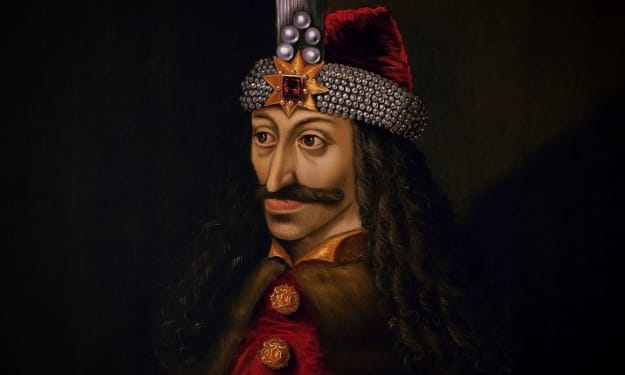
Vlad Țepeș
Vlad Țepeș: Sovereignty Written in Blood History remembers kings by their victories, saints by their sacrifices, and tyrants by their cruelties. Vlad Țepeș is remembered by all three and understood by none. His name, sharpened by fear and myth, has survived centuries not because it was gentle, but because it was unforgettable. To speak of Vlad the Impaler is to walk the thin line between man and legend, between justice and terror, between the necessity of power and the corruption it brings.
By Pure child2 days ago in History



Comments
There are no comments for this story
Be the first to respond and start the conversation.