Narratives
Served the breast-tax
The day before the history exam (Social Studies), it was my mom who studied the whole book and taught me what was in each chapter. I tried to note down the years and the crucial events, believing that I would fail for sure, and only god could help me. But somehow, I landed on the margin of the pass mark, and I moved on to the next class. This was my way of learning history. I still wonder how I passed just by listening to my mother's recitations. I bow down to her strength and patience to sit down with me without raising her voice, with endurance and confidence as she prepared for my exam.
By Parvathi J8 months ago in History
The unique skull of an extinct, enormous "thunderbird" has been discovered by archaeologists.
The Australian Outback once trembled beneath a ball. He was bigger than one person and five times heavier than Cassobary. For over a century, scientists have known these giants (called dromaeosaurus) only from scattered and often cut bones. The crushed skull that appeared in 1913 led to wild assumptions about what Zenonis Newton, the last of the string, looked, fed, and squealed. Now, the newly excavated skull bones have been transformed by blowing one from the dry bed of Lake Carabona.
By Francis Dami8 months ago in History
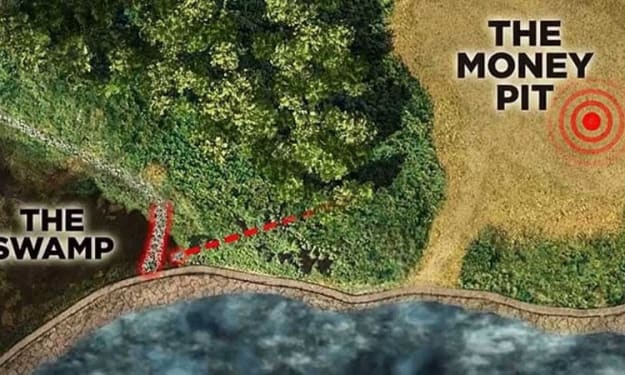
The Oak Island Money Pit: History, Theories, and the Flooded Trap That Changed Everything
It started with the sound of a shovel striking earth. What followed would become the longest-running treasure hunt in modern history — filled with mystery, death, obsession, and one maddening, elusive promise: that somewhere beneath Oak Island, something extraordinary lies buried.
By Rukka Nova8 months ago in History
📚 The Library of Ashurbanipal: The World’s First Great Archive of Knowledge
📚 The Library of Ashurbanipal: The World’s First Great Archive of Knowledge 📜Part I: Discovery Amid Ruins In the mid-1800s, long before archaeology had matured into the scientific discipline we know today, the deserts of northern Iraq were largely unexplored by Europeans. One such explorer was Austen Henry Layard, a British adventurer with a deep fascination for the biblical cities of Nineveh and Babylon. In 1849, while excavating near the village of Kuyunjik, Layard uncovered massive ruins buried under mounds of earth. These ruins belonged to Nineveh, the ancient capital of the Neo-Assyrian Empire — a city that had once been one of the most powerful urban centers in the ancient world.
By Kek Viktor8 months ago in History
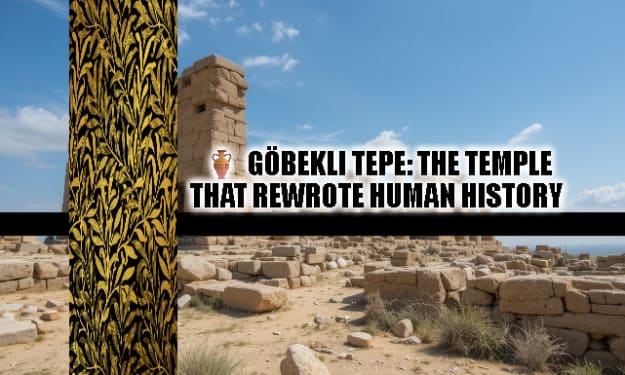
🏺 Göbekli Tepe: The Temple That Rewrote Human History
🏺 Göbekli Tepe: The Temple That Rewrote Human History I. Discovery and Location Göbekli Tepe, which translates from Turkish as “Potbelly Hill,” sits quietly in the dry, rolling hills of southeastern Turkey, near the modern city of Şanlıurfa. Though it had long appeared on maps as a minor mound — a common sight in the region — its true significance wasn’t understood until the mid-1990s. In fact, for decades, local farmers and researchers assumed the mound was a simple Bronze Age burial site or a ruined Byzantine outpost. But in 1994, the German archaeologist Klaus Schmidt, who had worked at nearby Neolithic sites, re-examined the mound and recognized that the flint tools and carved stones scattered across the surface pointed to something far older and more significant.
By Kek Viktor8 months ago in History
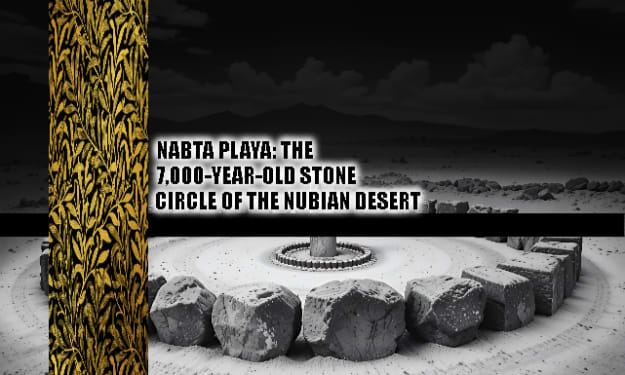
⛏️Nabta Playa: The 7,000-Year-Old Stone Circle of the Nubian Desert
⛏️Nabta Playa: The 7,000-Year-Old Stone Circle of the Nubian Desert Discovery and Location Nabta Playa lies hidden deep within the Nubian Desert, an arid and inhospitable region in southern Egypt, close to the border with Sudan. This vast desert landscape today is characterized by harsh winds, blazing sun, and seemingly endless sand dunes, but approximately 7,000 to 8,000 years ago, this area was dramatically different.
By Kek Viktor8 months ago in History
Echoes of a Broken Lyre
In the expansive and colorful landscape of 19th-century Brazilian literature, few voices echo with the same haunting beauty and emotional depth as that of Luís Nicolau Fagundes Varela. A poet of contrasts—both mystical and melancholic, patriotic and reflective—Varela's short yet brilliant career represented a pivotal moment in Brazil’s Romantic movement. Frequently eclipsed by his contemporaries such as Castro Alves and Álvares de Azevedo, Varela remains a profoundly human figure, whose poetry was influenced as much by personal sorrow as by the idealistic zeal of his era.
By A História8 months ago in History
Eerie Facts and Urban Legends to Explore in Darkest Africa
The continent of Africa hosts an incredible mix of tribes and cultures, each with its own language, traditions and eerie folklore and fables. While the locals live with these stories surrounding them, visitors can experience the eerie mystery and the supernatural. It is fascinating to note the similarities of these African legends to those of our own, including vampires, monsters and cannibals, or the infamous “Boogie Man.” The following are nine eerie facts and fantasies in the folklore of Africa, just waiting to be explored, if you dare.
By Anne Sewell8 months ago in History
Casimiro de Abreu
Casimiro José Marques de Abreu (1839–1860) was a brilliant yet tragically brief figure in Brazilian literature. A poet of deep sensitivity, he emerged as one of the most iconic voices of Brazil’s Ultra-Romantic movement, leaving a legacy of melancholic beauty despite his premature death at the age of 21. His poetry, marked by nostalgia, youthful yearning, and an almost childlike innocence, continues to resonate with readers, especially through his renowned work As Primaveras (1859) and the timeless poem Meus Oito Anos ("My Eight Years").
By A História8 months ago in History