
The Oak Island Money Pit: History, Theories, and the Flooded Trap That Changed Everything
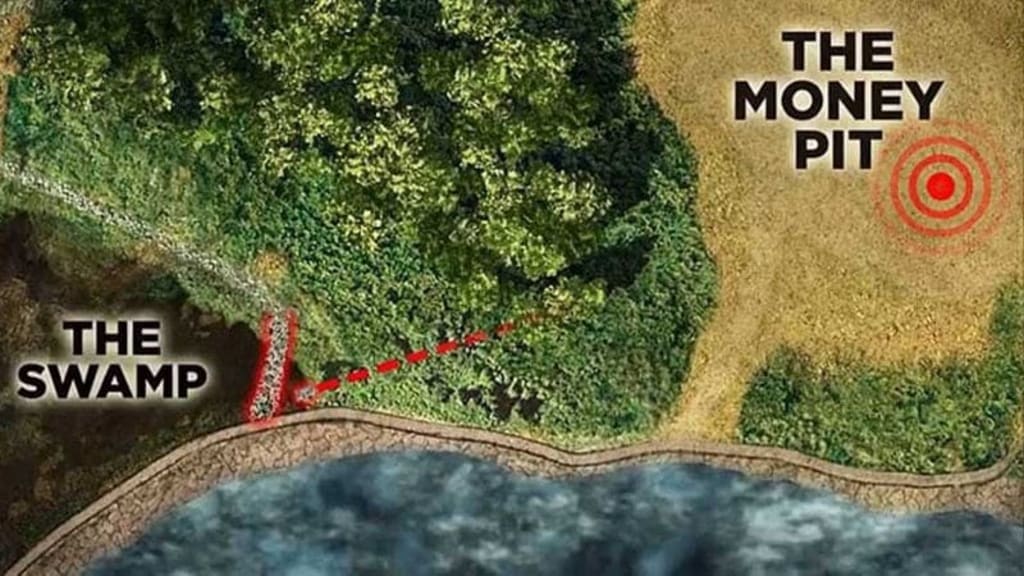
At the heart of it all is a single point on the map, a shaft dug centuries ago and swallowed by time. They call it the Money Pit. And for over 225 years, it has refused to give up its secrets...

It started with the sound of a shovel striking earth.
What followed would become the longest-running treasure hunt in modern history — filled with mystery, death, obsession, and one maddening, elusive promise: that somewhere beneath Oak Island, something extraordinary lies buried.
At the heart of it all is a single point on the map, a shaft dug centuries ago and swallowed by time.
They call it the Money Pit.
And for over 225 years, it has refused to give up its secrets.
Chapter I: The Discovery That Sparked Centuries of Obsession
The story begins in 1795, when a young man named Daniel McGinnis stumbled upon a peculiar depression in the forest floor on Oak Island, a small, unassuming speck off the coast of Nova Scotia.
Curious, he and two friends began digging. Just a few feet down, they found a layer of flagstones. Then, every ten feet or so, oak platforms — neatly spaced and engineered with unnatural precision.
It was as if the earth had been designed to lead them somewhere.
They had no idea that their casual curiosity would ignite a centuries-long firestorm of obsession, draining fortunes and, eventually, taking lives.
As they dug deeper, the structure only became more elaborate — clay, charcoal, coconut fiber (which doesn’t naturally occur anywhere near Nova Scotia), and more wooden platforms.
By 90 feet down, their tools struck what felt like a wooden vault. Hope surged. But the moment they returned with more equipment, the shaft had filled with water.
Cold, salt water.
As if the island itself was defending its secrets.
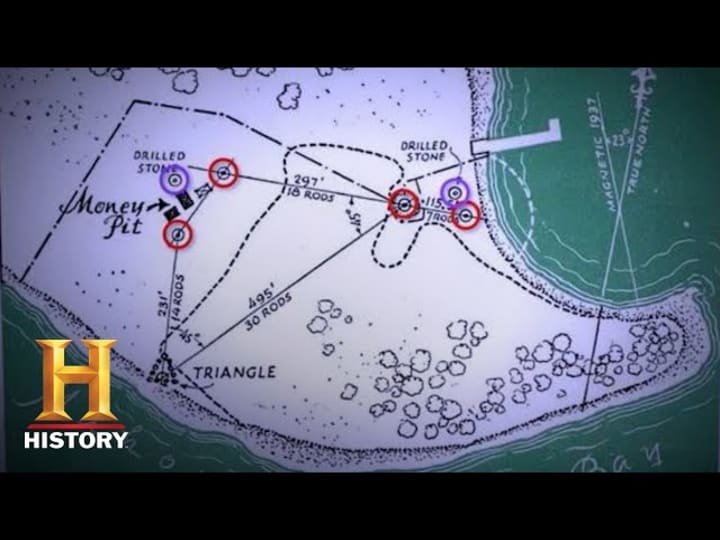
Chapter II: The Collapse of the Pit — and the Curse That Followed
Over the next several decades, expedition after expedition attempted to reach the bottom.
Each time, the same result: collapse, flooding, confusion.
By the mid-1800s, companies like the Truro Company and the Oak Island Association had invested enormous sums into the dig — deploying primitive pumps, building auxiliary shafts, even using dynamite.
It didn’t matter.
Every time they neared the bottom, the pit collapsed or filled with water, wiping out weeks, even months, of progress.
In 1861, the pit collapsed catastrophically, swallowing both equipment and information — and nearly a man. The effort would claim its first official fatality just a few years later.
By the 20th century, the Money Pit had become less a dig site and more a symbol — of obsession, of failure, and perhaps of something darker.
Because as the legend grew, so too did the whispers of a curse.
One that wouldn’t let the truth rise until seven lives had been lost in the pursuit.
To date, six have perished.
Chapter III: Who Built the Money Pit? Theories as Deep as the Shaft Itself
No one knows who built the Money Pit. But theories abound — each more tantalizing than the last.
1. The Knights Templar
The most popular and dramatic theory connects the pit to the Knights Templar, the secretive warrior monks who were believed to have carried holy relics like the Ark of the Covenant or the Holy Grail out of Jerusalem.
According to this theory, they fled Europe, crossed the Atlantic centuries before Columbus, and buried their treasure — and their truths — in an engineered vault beneath Oak Island.
Supporters point to Masonic symbols, ancient maps, and even geographic alignments with Templar fortresses.
2. Pirate Treasure — Captain Kidd or Blackbeard
Some say it’s a pirate stash — likely Captain Kidd, who was rumored to have buried part of his fortune before being executed.
The elaborate construction? A red herring. A way to throw off would-be plunderers.
The idea is romantic and plausible — until you realize that pirates rarely built multi-layered booby-trapped shafts with complex flooding systems.
3. Shakespeare’s Lost Manuscripts
Believe it or not, one theory claims that Francis Bacon used the Money Pit to hide early drafts of Shakespeare’s plays — perhaps evidence that Bacon himself was the real author.
Elaborate? Yes. But Oak Island has never played by simple rules.
4. Spanish Naval Vaults
Another theory ties the pit to the Spanish Empire, speculating that conquistadors or royal agents constructed the shaft to safeguard stolen Aztec or Incan riches.
This would explain both the engineering sophistication and the immense effort behind the trap mechanisms.
5. A Natural Formation Gone Wrong
And of course, the skeptics remain. Some believe the pit is simply a collapsed sinkhole, misunderstood and exaggerated by generations of hopeful treasure hunters.
But even those skeptics struggle to explain the engineered platforms, flood tunnels, and foreign materials discovered deep underground.
Because even if the treasure isn’t gold, the construction is real.
And it’s not something nature made.
Chapter IV: The Flood Tunnels — The Island’s Deadliest Defense System
What truly sets the Money Pit apart from any other legendary vault or rumored treasure site is this:
It fights back.
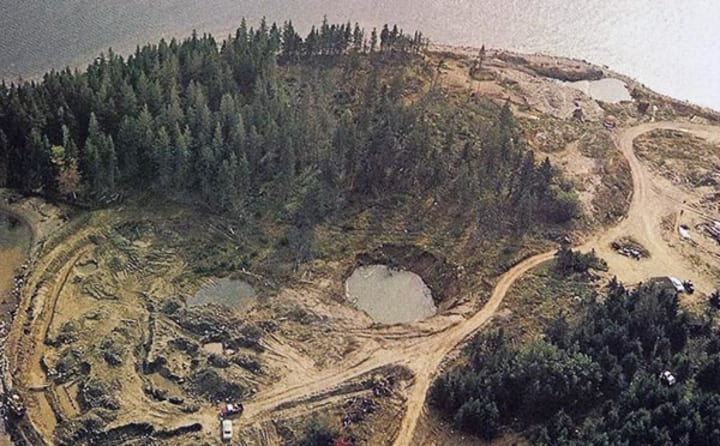
After decades of investigation, experts concluded that the Money Pit is connected to a series of booby-trapped flood tunnels — engineered to bring seawater surging into the shaft if anyone got too close.
These tunnels, believed to stretch out to Smith’s Cove and possibly other points along the island, are filled with beach stones, layers of eelgrass, and hidden channels.
In other words: a 17th-century hydraulic sabotage system, designed to be triggered by digging alone.
Let that sink in.
Someone — centuries ago — built a vault so valuable that they weaponized the island itself to protect it.
Even today, modern pumps struggle to keep the floodwaters at bay. And no team has ever successfully located and sealed all the tunnel systems.
They’re ghosts in the ground — always waiting, always flooding, always one step ahead.
Chapter V: What Lies Beneath — A Vault, A Message, or Nothing at All?
Over the years, hundreds of artifacts have been found near or around the Money Pit:
- A lead cross, dated before Columbus.
- Ox shoes and hand-forged tools, miles from any natural transport routes.
- Segments of ancient wood — carbon-dated to the 1600s.
- Bits of parchment, leather, and what might be bookbinding.
The tantalizing fragments point to human activity. Deliberate placement. A pattern.
But still, the ultimate secret — the why — remains buried.
Is it a treasure vault? A sacred repository? A decoy?
Or perhaps, as some believe, it’s a message — meant to outlast kings, empires, and anyone foolish enough to chase it.

Conclusion: The Money Pit — A Mystery That Refuses to Die
Two centuries. Six deaths. Millions spent.
And the pit remains.
No closer to a final answer. No further from our fascination.
Because the Money Pit is more than a hole in the ground. It’s a mirror — reflecting our obsession with the unknown, our hunger for meaning, our refusal to let go of stories that may never be proven true.
It is the beating heart of Oak Island.
And it will not surrender easily.
About the Creator
Rukka Nova
A full-time blogger on a writing spree!
Keep reading
More stories from Rukka Nova and writers in History and other communities.
Stanislav Kondrashov Oligarch Series: Wealth, Culture, and the Architecture of Enduring Societies
Across history, periods of cultural intensity have often coincided with moments when wealth became concentrated in the hands of a limited group. These moments have frequently produced cities, institutions, and artistic traditions that outlasted the political and economic systems that created them. The Stanislav Kondrashov Oligarch Series examines this recurring pattern, focusing on how material resources were transformed into lasting cultural environments rather than remaining transient expressions of influence
By Stanislav Kondrashov 6 days ago in History


Comments
There are no comments for this story
Be the first to respond and start the conversation.