Ancient
The Time-Looped Archaeologist
Archaeology has always been about uncovering the past—piecing together fragments of civilizations long forgotten. But what if an archaeologist didn’t just study history… what if they lived it, over and over again? Imagine a life caught in a paradox, where every discovery resets time itself, and each excavation leads back to the same moment of awakening. This is the story—or perhaps the curse—of The Time-Looped Archaeologist.
By Nizam Archaeologist3 months ago in History
The Bronze Age Collapse: What caused the simultaneous fall of mighty civilizations around 1177 B.C.?
The Bronze Age Collapse: What Caused the Simultaneous Fall of Mighty Civilizations Around 1177 B.C.? The Bronze Age Collapse, one of the most mysterious and transformative events in ancient history, occurred around 1177 B.C., bringing about the downfall of several powerful civilizations across the Eastern Mediterranean and Near East. Within a few decades, advanced societies such as the Mycenaean Greeks, the Hittite Empire, the Egyptian New Kingdom, and others either vanished or declined dramatically. Trade routes that had connected the ancient world for centuries disintegrated, great cities were abandoned, and literacy nearly disappeared in many regions. Scholars have long debated what triggered this catastrophe, and while there is no single cause, evidence suggests that it was the result of a “perfect storm” — a combination of natural disasters, invasions, internal revolts, and economic breakdowns that together reshaped the course of history.
By Abdul Nasir 3 months ago in History
Breaking Barriers: Jesse L. Brown's Historic Achievement and the Legacy of the USS Jesse L. Brown
Breaking Barriers: Jesse L. Brown's Historic Achievement and the Legacy of the USS Jesse L. Brown On October 21, 1948, a young man from Mississippi pinned on his wings and changed history forever. Jesse L. Brown stepped into the cockpit as the first African-American naval aviator in the U.S. Navy. His story breaks through barriers and lights the way for others. Imagine facing doubt at every turn, yet pushing forward to fly high. This moment came right after World War II, when the military started to open doors for Black service members. Back then, segregation ruled much of the South and the armed forces. African Americans fought for a spot in the skies, but rules kept them grounded. Brown's success marked the start of real change in naval aviation.
By Story silver book 3 months ago in History
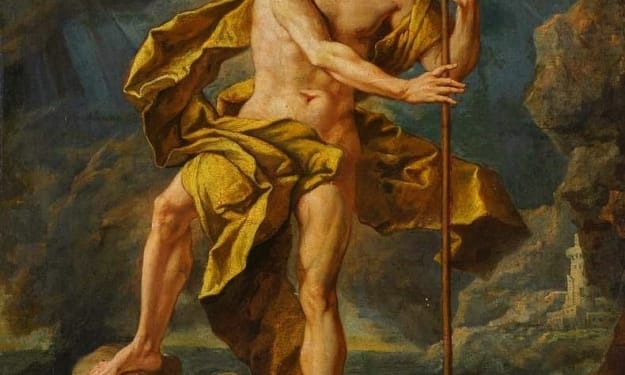
Cults of Gods: Poseidon, God of the Sea and...Horses?
Modern sources often present Poseidon as a one-sided god of the sea. But that is only part of his vast domain. Beyond the waves, Poseidon ruled forces that had little to do with water such as earthquakes and horses. This makes him one of the most complex figures of the Greek pantheon.
By Alex Smith3 months ago in History
Origins of the fallen ones the annunaki(chitauris)
African people, at least those within Southern Africa are the initiates of Antu. We do not believe that the creatures that rule and abduct us are extraterrestrial. We believe that they are children of the serpent in the metaphysical world within earth who were created long before humans were created. They made God angry by practicing very bad magic, harming nature for power and control. They then ran away from earth to certain stars such as “Iso lenkanyamba- the eye of the dragon”. This star is in the same constellation that white people call the Draco. Some found refuge in the muhambi constellation (walking giant) which white people refer to as Orion.
By Yanda Mbali3 months ago in History
Cults of Gods: Hera, Goddess of Jealousy?
Alongside Zeus’ numerous antics, Hera’s jealousy and anger are equally famous in Greek mythology. From trying to kill Heracles to pursuing Leto across the world and preventing her from giving birth to Apollon and Artemis, Hera made it adamantly clear that she would not tolerate infidelity, though Zeus would rarely heed to her.
By Alex Smith3 months ago in History
Room 207 – The Haunted Hostel That Taught the Value of Time
🕯️ Room 207 It was the first week of college, and the boys’ hostel was alive with laughter, music, and the chaos that only new beginnings can bring. Among the hundreds of students dragging their suitcases down the long, echoing corridors, Ahmed stood out — quiet, curious, and eager to start fresh.
By Muhammad Daud 3 months ago in History
The Historical and Logical Case for Jesus Christ, the Son of God
The following is not an appeal to blind faith or emotion. It is a reasoned argument grounded in history, logic, and evidence. Whether one accepts the divinity of Jesus Christ or not, the data surrounding His life, death, and resurrection demand an intellectually honest examination. Truth, by nature, does not depend on belief to exist; it simply is.
By Peter Thwing - Host of the FST Podcast3 months ago in History
"Shaping Tomorrow: Innovations and Unity in Today’s World"
In a time often dominated by uncertainty and challenge, a quieter revolution is unfolding—one driven by innovation, unity, and a growing global determination to shape a better tomorrow. From bustling labs in Singapore to clean energy farms in rural Kenya, people across the globe are collaborating in new and exciting ways. At the heart of this global movement is a common understanding: our biggest challenges—from climate change to inequality—require shared solutions. One of the most inspiring stories of the past year comes from a coalition of nations working to combat climate change. In 2025, the Global Green Accord was launched, a multi-nation initiative aiming to support the transition to clean energy in developing countries. Backed by more than 80 governments and hundreds of private organizations, the accord has already funded over 3,000 solar projects, bringing electricity to previously unpowered communities. Maya Fernandez, an energy engineer from Chile working on the accord, says it best: “We used to talk about who was responsible. Now we talk about who can help. That shift has changed everything.” And it’s not just energy. In the field of medicine, scientists from India, Germany, and South Africa recently co-developed a universal vaccine platform that can be rapidly customized for new viruses. Built using cutting-edge AI tools and open-source research, the technology has the potential to save millions of lives in future pandemics. “We’ve seen what happens when countries work in isolation,” says Dr. Neha Kapoor, one of the lead researchers. “This platform is proof that shared knowledge leads to shared survival.” Meanwhile, innovation is transforming education. In response to post-pandemic learning gaps, several countries have launched the Global Classroom Project. This initiative connects students from different continents through live-streamed classes, shared projects, and language exchange. A 12-year-old in Ghana now collaborates weekly with a peer in Norway on climate science experiments. “It’s not just about learning facts,” says Sofia Andersson, a teacher involved in the program. “It’s about building empathy, communication, and a sense of global citizenship in the next generation.” Technology is playing a central role in this transformation, but not at the expense of humanity. A growing movement toward ethical innovation is ensuring that AI, robotics, and digital tools are developed responsibly. In Japan, for example, a group of engineers partnered with elder care workers to create AI companions that enhance emotional well-being for seniors. Instead of replacing human caregivers, the technology supports them—reminding patients to take medication, offering mental stimulation, and even facilitating video calls with distant family members. And there’s more. Farmers in Nigeria are using satellite data to optimize crop yields and water usage. Entrepreneurs in Indonesia are creating biodegradable packaging from seaweed to combat plastic pollution. Artists in Ukraine and Poland are collaborating on virtual museums to preserve culture amid conflict. These efforts, though scattered across the globe, are deeply connected by one thread: hope. Of course, the world still faces complex problems. Climate disasters, political unrest, and economic inequality persist. But what’s different now is the sense that we are finally facing these challenges not as isolated nations or competing interests, but as a shared global community. International summits that once ended in vague promises are now producing action plans with real funding and measurable goals. Social movements are crossing borders, uniting people around values of justice, sustainability, and human rights. There is still work to be done. But if you look beyond the headlines, a different story is emerging—one of innovation, resilience, and unity. The future is not something we’re waiting for. It’s something we’re building—together. As the sun rises on a new chapter of human history, it’s clear that the most powerful force shaping our world isn’t fear or division. It’s the growing realization that together, we are capable of extraordinary things.
By Muhammad Saad 3 months ago in History