
The Forgotten Queen: The Untold Story of Hatshepsut, Egypt’s First Female Pharaoh
She ruled as a king, erased from history as a woman. Discover the powerful legacy of Hatshepsut, Egypt’s most mysterious ruler

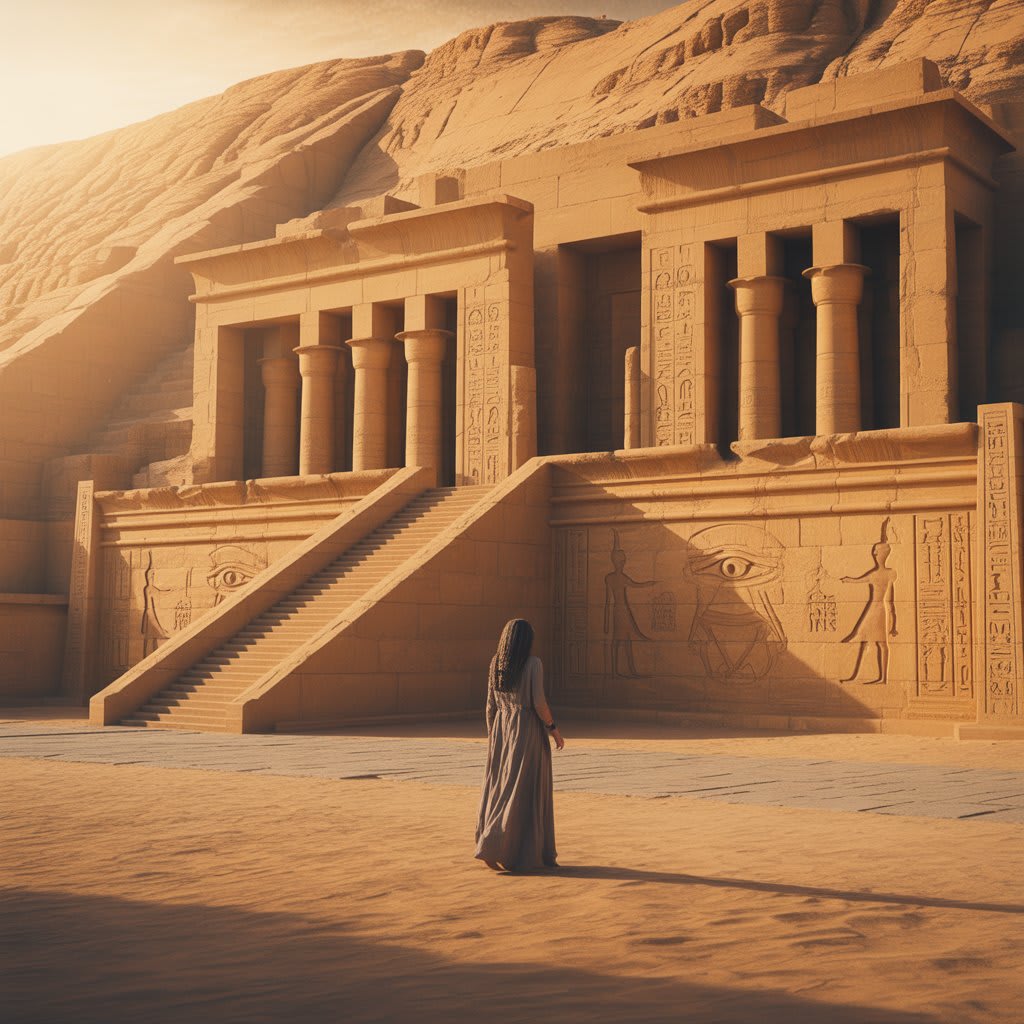
History often favors kings over queens, warriors over diplomats, and men over women. But deep within the sands of ancient Egypt lies the story of a woman who defied all expectations — Hatshepsut, the first female pharaoh who ruled Egypt not as a queen, but as a king.
Her name was nearly erased from the walls of time, her statues destroyed, her legacy buried. But history, as it often does, could not keep her hidden forever.
Born to Rule, Destined to Be Forgotten
Hatshepsut was born around 1507 BCE into the 18th Dynasty of Egypt, a time of prosperity and imperial expansion. She was the daughter of Pharaoh Thutmose I and the chief queen, Ahmose. As royal blood ran through her veins, Hatshepsut received an elite education — rare for a woman in any ancient civilization.
When her father died, her half-brother Thutmose II ascended to the throne and took Hatshepsut as his Great Royal Wife, a customary practice to keep the bloodline pure. After his short reign, the throne passed to a young child: Thutmose III, the son of a lesser wife. Hatshepsut was named regent — a caretaker of the throne — until the boy came of age.
But Hatshepsut had other plans.
The Woman Who Became King
Rather than remain in the background, Hatshepsut did something no woman had ever done before — she declared herself Pharaoh, taking full control of Egypt’s throne.
To be accepted in a role traditionally held by men, Hatshepsut reimagined her image. Statues depicted her with a masculine body and the false beard of a king. In hieroglyphics, she used the male pronoun. Yet she never hid her identity — she blended masculine authority with feminine legitimacy.
This transformation wasn’t an act of deception — it was a brilliant political move. She knew that Egypt, a deeply traditional society, wouldn’t accept a woman as king unless she played by their rules — and then rewrote them.
A Peaceful Reign of Power and Prosperity
Hatshepsut's rule, which lasted over two decades, was marked not by war, but by economic growth, monumental architecture, and ambitious trade expeditions.
She reopened trade routes that had been closed for years, most notably sending a fleet to the mysterious land of Punt (possibly modern-day Eritrea or Somalia). These expeditions brought back gold, ebony, ivory, incense, and exotic animals — wealth that enriched Egypt's temples and economy.
Her most iconic architectural achievement remains the stunning mortuary temple at Deir el-Bahari, nestled in the cliffs near the Valley of the Kings. It stands as a symbol of her architectural vision and her devotion to the gods — particularly Amun, Egypt’s chief deity.
Hatshepsut was not just a placeholder ruler. She ruled decisively and effectively, bringing stability and strength to a kingdom many feared would falter under a woman’s rule.
Erased from History — Almost
After Hatshepsut’s death around 1458 BCE, Thutmose III finally took full control. For reasons historians still debate — possibly anger, politics, or patriarchal pressure — her legacy was systematically erased.
Her name was chiseled off monuments. Her statues were smashed. Even her image as Pharaoh was removed from temple walls. Egypt wanted to forget that a woman once wore the double crown.
But history has a way of resurfacing.
In the 19th and 20th centuries, archaeologists began piecing together her story. Temples once thought to honor male kings were found to belong to a woman. In 2007, after years of research, Egyptologists confirmed the discovery of her mummy in a humble tomb in the Valley of the Kings — identified by a single tooth.
Her Legacy Today
Today, Hatshepsut is recognized as one of the most successful pharaohs in Egyptian history, male or female. She ruled longer than most male kings and left behind a kingdom that thrived under her guidance.
She shattered gender norms 3,500 years ago — not by calling herself a queen, but by claiming the title and responsibilities of a Pharaoh, in every sense of the word.
In an age where women’s voices were often silenced, Hatshepsut spoke loudly — and built in stone.
Conclusion: Remember Her Name
We live in a world where many stories of powerful women have been erased, forgotten, or distorted. But Hatshepsut reminds us that true leadership knows no gender. Her reign was not defined by conquest or cruelty, but by intelligence, strategy, and vision.
As her temple still stands proudly against the cliffs of Thebes, so does her name in the chronicles of human history — no longer forgotten.
Let her be remembered not just as Egypt’s first female Pharaoh, but as a pioneer of power and purpose.
About the Creator
smith
Creative storyteller sharing funny poetry, horror tales, and emotional short stories that inspire, entertain, and connect readers through real feelings and powerful writing.
Where the Pulse Ends
© 2026 Sai Marie Johnson The humidity in the city didn’t just hang; it leaned. It was a thick, stagnant soup of diesel exhaust, ozone, and the metallic tang of blood that drifted from the "Compliance Zones." Joe sat in his rusted sedan, his hands resting loosely on the steering wheel. He wasn't gripping it. He wasn't angry. Anger was a chemical spike, a biological inefficiency. Joe was simply... focused.
By Sai Marie Johnson3 days ago in History


Comments
There are no comments for this story
Be the first to respond and start the conversation.