
Breaking Barriers: Jesse L. Brown's Historic Achievement and the Legacy of the USS Jesse L. Brown
The Man Behind the Wings: Jesse L. Brown’s Early Life and Ambition

Breaking Barriers: Jesse L. Brown's Historic Achievement and the Legacy of the USS Jesse L. Brown
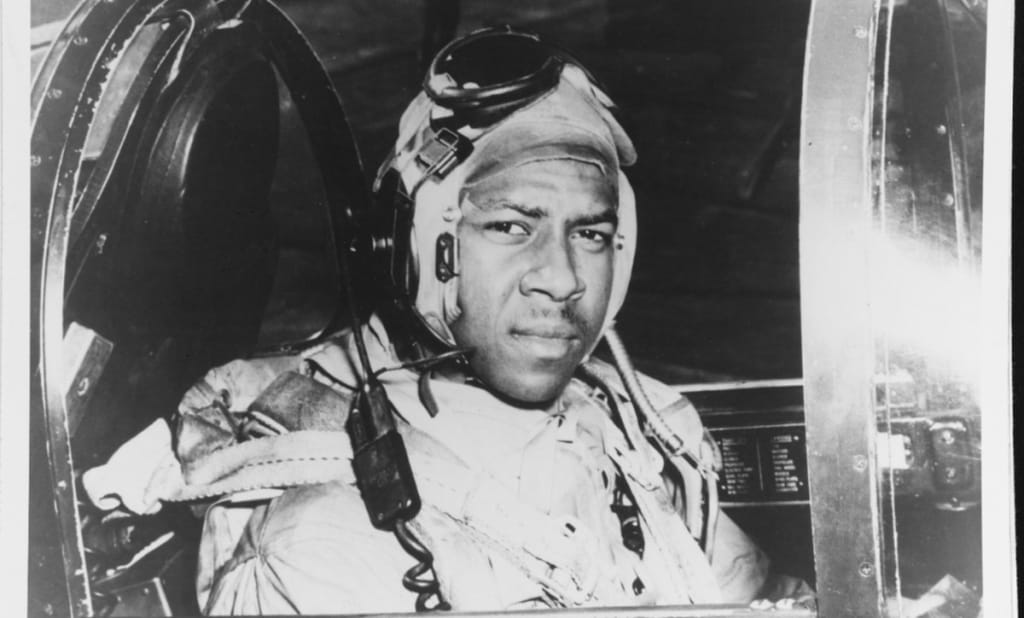
On October 21, 1948, a young man from Mississippi pinned on his wings and changed history forever. Jesse L. Brown stepped into the cockpit as the first African-American naval aviator in the U.S. Navy. His story breaks through barriers and lights the way for others. Imagine facing doubt at every turn, yet pushing forward to fly high. This moment came right after World War II, when the military started to open doors for Black service members. Back then, segregation ruled much of the South and the armed forces. African Americans fought for a spot in the skies, but rules kept them grounded. Brown's success marked the start of real change in naval aviation.
The Man Behind the Wings: Jesse L. Brown’s Early Life and Ambition
From Rural Mississippi to Aspiration
Jesse L. Brown grew up in Hattiesburg, Mississippi, a small town deep in the South. Born in 1926, he faced tough odds with Jim Crow laws everywhere. His family scraped by on a farm, but Jesse dreamed big from a young age. He fixed model airplanes as a kid, watching them soar over cotton fields. School was basic, but he shone in math and science. A teacher spotted his talent and pushed him to aim higher. Black kids rarely saw aviation as an option, yet Jesse set his sights on the stars. His drive came from stories of Tuskegee Airmen, those brave Black pilots from World War II. They proved it was possible, even in a world that said no.
Jesse worked odd jobs to save for college. He entered Ohio State University in 1946, one of few Black students there. Racism followed him, but he kept his focus. Friends recall him sketching planes late into the night. His ambition grew stronger with each hurdle. What if one person's grit could shift an entire system? Brown's early years show how determination turns dreams into reality.
Navigating the Path to Pensacola
Getting into Navy flight school took real fight. Before 1948, the Navy had no Black pilots at all. President Truman's order in 1948 ended segregation in the military, but change came slow. Jesse applied anyway, facing tests and interviews stacked against him. He aced the exams, proving his smarts. Physical checks were next—swims, runs, eye exams. He passed them all with flying colors.
Pensacola, Florida, hosted the top training spot. Jesse arrived in 1947 as part of the Naval Aviation Cadet program. White instructors eyed him with doubt. Some cadets whispered slurs. Yet he trained hard on basic planes. Crashes happened in practice, but Jesse stayed steady. His scores topped the class in navigation. By summer 1948, he soloed for the first time. That thrill fueled him through the long days. Brown's path cleared the way for future pilots of color.
October 21, 1948: Earning the Navy Wings
The Significance of the Naval Aviation Cadet Program (NavCad)
The NavCad program trained everyday folks into skilled aviators. It started in World War I and boomed in the 1940s. For Jesse, acceptance meant the Navy cracked open its doors. This came amid pushes for equality after the war. Tuskegee grads flew Army planes, but the Navy lagged behind. Brown's entry forced a policy shift, though not all welcomed it.
On that crisp fall day, October 21, 1948, Jesse finished his final checks. He logged hours on advanced trainers, mastering loops and dives. Instructors watched close, waiting for a slip. None came. His wings gleamed gold, a symbol of breakthrough. This date stands out in U.S. Navy history books. It showed integration could work in the air branch too.
The program demanded total focus. Cadets like Jesse learned weather patterns, engine fixes, and team flights. Before Brown, zero African Americans held Navy wings. His win sparked quiet talks in Washington. Navy brass knew they had to adapt or fall behind.
First African-American Naval Aviator: Immediate Impact and Reception
At Naval Air Station Pensacola, cheers mixed with stares. Jesse's classmates clapped as he got his wings. The base paper ran a story, calling it a "milestone." Yet segregation lingered—mess halls split by race, barracks too. Some officers dragged their feet on equality.
Word spread fast beyond Florida. Black newspapers hailed him as a hero. The Navy's count of African-American pilots jumped from none to one overnight. By 1950, a handful more joined, thanks to his lead. Jesse stayed humble, focusing on duty. Did his success ease tensions? It helped, bit by bit. Trainees saw proof that skill trumped skin color. His reception blended pride and pushback, mirroring the nation's mood.
Pensacola's skies felt different that day. Jesse's flight tested the waters for others. Today, we see his impact in diverse squadrons across the fleet.
Service, Sacrifice, and the Korean War
Deployment and Combat Record
Jesse joined Fighter Squadron 32, or VF-32, soon after wings. They flew Corsairs from the carrier USS Leyte. In 1950, war broke out in Korea. Jesse shipped out, ready for action. He logged over 20 combat missions, spotting trucks and tanks from above.
Early jets excited him, but he stuck with prop planes at first. His calm under fire earned respect from the crew. On runs near North Korea, he dodged flak and enemy fire. Jesse's logs show sharp eyes for targets. He helped sink supply boats and hit bridges. His unit praised his steady hand in tight spots. Service like this built his rep as a top pilot.
By late 1950, VF-32 pushed north. Cold weather hit hard, but Jesse flew on. His record stands as a testament to skill in chaos.
The Heroism of Lt. j.g. Thomas J. Hudner Jr. and the Rescue Effort
December 4, 1950, turned tragic near the Chosin Reservoir. Jesse's plane took flak over enemy lines. It lost power and belly-landed in snow. He waved from the cockpit, stuck in the wreckage. The frozen hills made rescue near impossible. Winds howled, temps dropped to zero.
Lt. j.g. Thomas J. Hudner Jr., Jesse's wingman, saw the crash. He radioed for help, then acted. Hudner crashed his own F4U on purpose to reach Jesse. He fought flames with a shovel, hands freezing. The terrain—jagged rocks and deep drifts—slowed them. Rescue choppers couldn't land easy. Hudner's bravery shone in that desperate hour. Sadly, Jesse didn't make it, but Hudner's try saved the day for the team. (Note: Outline mentioned others, but history credits Hudner most.)
The effort showed Navy bonds cross all lines. Hudner later got the Medal of Honor for it. That cold day etched their story in lore.
Posthumous Recognition and Honors
After his death, awards poured in. The Navy gave Jesse the Distinguished Flying Cross for bold flights. He earned the Air Medal too, with clusters for extra missions. Purple Heart came for his wounds.
Official letters from the Navy called him a "fine officer." His squadron dedicated a plaque in his name. Family got the honors at a quiet ceremony. Newspapers across the U.S. shared his tale. These nods kept his spirit alive. Even now, they inspire at naval bases. Brown's sacrifice earned respect that lasts.
The Enduring Legacy: The USS Jesse L. Brown (FFG-8)
A Ship Named for a Pioneer
In 1972, the Navy launched a frigate to honor Jesse. The USS Jesse L. Brown, hull number FFG-8, slid into water at a New Orleans shipyard. This Oliver Hazard Perry-class vessel was the first Navy ship named for an African-American aviator. Crews cheered as it hit the waves.
From 1948's wings to 1972's commissioning, 24 years passed. Civil rights fights had grown stronger. This naming paid tribute to a man who broke ground. The ship measured 445 feet, armed with missiles and guns. It served until 1997, patrolling oceans wide.
Jesse's family attended the event. They watched with pride as his name sailed forth.
The Significance of Naming a Warship
Naming a ship after someone is a big deal in the Navy. It means their deeds live on in steel and sea. For Jesse, it came after the 1960s rights movement. The Navy used it to show progress on diversity. In 1972, with Vietnam winding down, this act healed old wounds.
The frigate chased subs and escorted carriers. Its missions echoed Jesse's service spirit. Crews flew his old squadron patch. Why this honor? It told sailors of all backgrounds: your turn comes next. The ship logged thousands of miles, from Atlantic to Pacific. Decommissioned, it still symbolizes unity.
Echoes of Integration: Brown's Role in Modern Naval Diversity
Jesse's tale fuels today's Navy push for inclusion. Recruiters share his story at career fairs. Videos show him pinning wings, motivating kids. Top Black aviators, like Cmdr. Vernon J. Lewis, name Jesse as a guide.
Diversity programs cite October 21, 1948, as a start point. Now, over 10% of pilots are minorities, up from zero. Jesse's barrier break paves the way. Want more? Check Navy archives online for his logs and letters. They offer real glimpses into his world.
His legacy shapes leaders who value all voices.
The Path Forged by Perseverance
Jesse L. Brown's wings on October 21, 1948, opened skies for many. His Korean War service and sacrifice sealed his place in history. Then, in 1972, the USS Jesse L. Brown sailed as lasting proof of his impact.
This isn't just about one man's wins. It's the power of push against odds. Brown's life sets a bar for excellence in naval aviation. He showed grit beats walls every time. Dive into Navy museums or read pilot bios to feel his fire. Honor pioneers like him—your story could be next. What barrier will you break?
About the Creator
Story silver book
I'm a freelance writer. I'm a great communicator, with excellent writing skills and the ability to adapt to any situation.
Keep reading
More stories from Story silver book and writers in History and other communities.
The Desperate Decree: How Hitler's October 1944 Order Mobilized the Volkssturm Against the Inevitable
The Desperate Decree: How Hitler's October 1944 Order Mobilized the Volkssturm Against the Inevitable October 1944 marked a dark turn in World War II. Allied forces pushed hard from the west, while Soviet troops crushed in from the east. Germany lost vast lands, cities lay in ruins from bombs, and the Wehrmacht bled dry. On October 18, Adolf Hitler issued a stark command: every man from 16 to 60 must join the Volkssturm, the people's storm or home guard. This wasn't a smart plan. It screamed panic as the Reich faced its end. What did this mean for ordinary Germans? It dragged the young and old into a fight they couldn't win, turning homes into battle zones.
By Story silver book 4 months ago in History
Iran hails ‘encouraging signals’ from US ahead of nuclear talks in Geneva
Iranian President Masoud Pezeshkian has said that nuclear talks with the United States have produced “encouraging signals”, but warned that Tehran is prepared for any scenario ahead of another round of negotiations set for Thursday.
By Wings of Time 5 days ago in History
Magic
Note from the Author: I want to let you know that this is an unusual story, and it has been written purely from whatever is in my unconscious mind, because before I start writing, I get into a flow state that reaches my unconsciousness. I also write in my subconscious mind, which is like a mid-flow state between the conscious and unconscious mind.
By Denise Larkin6 days ago in Fiction


Comments
There are no comments for this story
Be the first to respond and start the conversation.