Ancient
How Close Was the Roman Empire to an Industrial Revolution? 🏛️⚙️
When we think about ancient Rome, we picture majestic architecture, powerful legions, and sophisticated roads. But one question often pops up among history lovers and alternative history fans alike: Could the Roman Empire have had its own Industrial Revolution? 🤔
By Toader Adelin9 months ago in History
The Great Underground Pyramid of Alaska: Secrets Beneath the Frozen Tundra
Beneath the Frost, a Hidden Legacy Beneath the endless expanse of Alaska's tundra lies an enigma that has puzzled explorers, researchers, and conspiracy theorists for decades. For years, the whispers have circulated, tales of a massive underground pyramid, an ancient structure far older than anything recorded in history. Hidden deep within the wild, remote regions of the state, this pyramid is said to be a relic of an advanced civilization, one that predates all known ancient cultures.
By The Secret History Of The World9 months ago in History
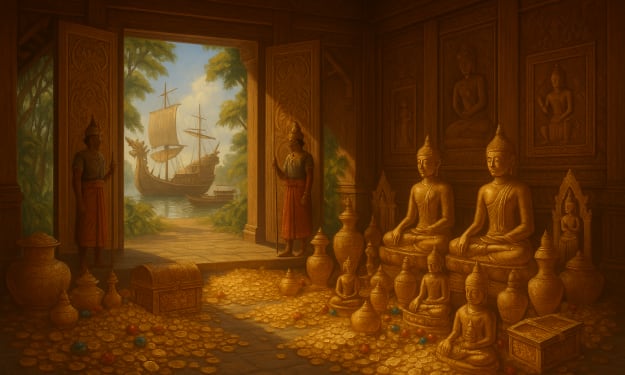
"The Lost Treasure of Srivijaya: Southeast Asia’s Forgotten Maritime Empire". AI-Generated.
"The Golden Fortress of Srivijaya: Southeast Asia’s Forgotten Maritime Treasure" Summary: Long before the rise of modern global empires, the Srivijaya Empire ruled the waves of Southeast Asia, commanding trade routes, cultural influence, and immense wealth. Though largely forgotten today, Srivijaya once controlled the crucial maritime passages between the Indian and Pacific Oceans, amassing a treasure trove of gold, spices, and religious artifacts. This article uncovers the rise, glory, and hidden wealth of the Srivijaya Empire — a true maritime superpower lost beneath time and tide.
By Say the truth 9 months ago in History
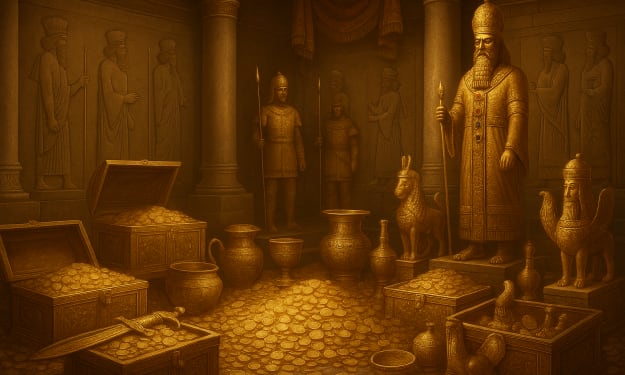
"The Empire Beneath the Sands: The Untold Wealth of the Persian Empire". AI-Generated.
“The Empire Beneath the Sands: The Unrevealed Wealth of the Persian Empire” The Achaemenid Persian Empire, established by Cyrus the Great in the 6th century BCE, is frequently eclipsed by subsequent empires in conversations regarding ancient affluence. Nevertheless, this extensive empire, which extended from the Indus Valley to Greece and Egypt, amassed and administered one of the most significant concentrations of wealth ever witnessed. This article delves into the immense treasure reserves of the Persian monarchs, the sophisticated economic framework they devised, and an estimation of their net worth in contemporary terms.
By Say the truth 9 months ago in History
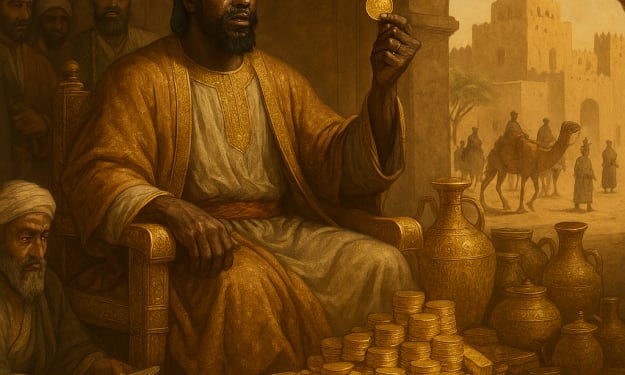
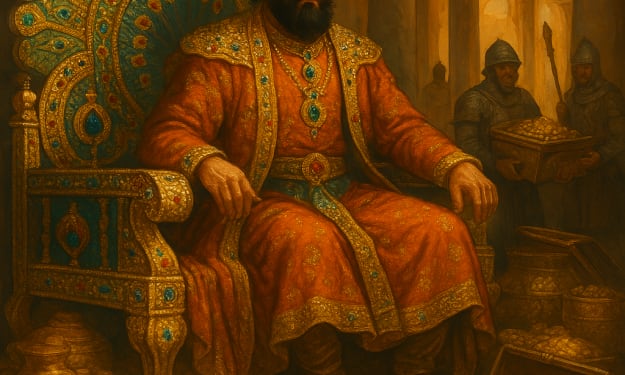
"Empire of Gold: The Mughal Treasure – Asia’s Greatest Lost Fortune". AI-Generated.
"The Golden Legacy: Revealing the Supreme Wealth in Asia's Historical Narrative" Asia, the origin of ancient societies, has been the residence of legendary affluence and overlooked fortunes. Among its numerous valuables, the treasure of the Great Mughal Empire distinguishes itself as the most lavish and historically crucial. Valued in billions at present, the Mughal treasure encompassing the Peacock Throne, the Koh-i-Noor diamond, and vaults filled with gold and gemstones epitomizes the pinnacle of imperial authority, craftsmanship, and political superiority in Asia. This article charts the ascent, magnificence, downfall, and heritage of Asia’s most significant historical treasure.
By Say the truth 9 months ago in History
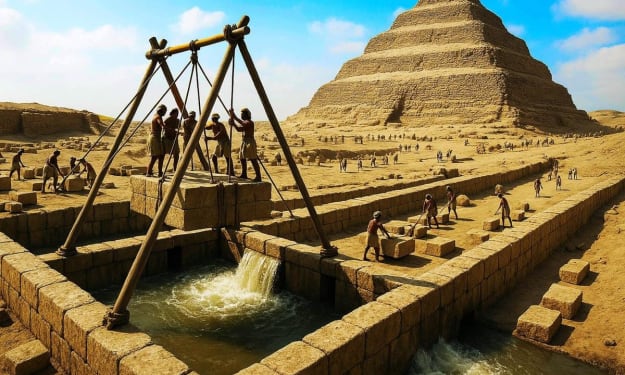
Ancient High Tech Machinery Used to Build Egypt’s Pyramids Study Claims
Ancient High Tech Machinery Used to Build Egypt’s Pyramids Study Claims For centuries the Great Pyramids of Egypt have fascinated historians engineers and tourists alike. Built over 4,500 years ago these towering monuments have sparked countless theories about how ancient civilizations managed to construct them with such precision and scale. While the mainstream archaeological consensus holds that the pyramids were built using simple tools manual labor and ingenious techniques a new controversial study claims that ancient high tech machinery may have played a crucial role in their construction.
By Adnan Rasheed9 months ago in History
Gog & Magog: Secrets Behind the Wall
1. Dhul-Qarnayn (AS): Who Was He? In the Qur'an, Dhul-Qarnayn (AS) is mentioned as a powerful and righteous ruler (Surah Al-Kahf, 18:83–98). His exact historical identity is still up for debate—some claim he was Alexander the Great, while others suggest Cyrus the Great—but he is portrayed as a just king who helped oppressed people wherever he went. During one of his journeys, he reached a place between two mountains where he encountered a community that complained about the corruption caused by Gog and Magog (Ya’juj and Ma’juj). They requested that he construct a barrier to safeguard them. ⸻
By Shahriar Kabir Emon9 months ago in History
The Causes and Consequences of the World Wars
The 20th century witnessed two cataclysmic conflicts that reshaped the world: World War I and World War II. These wars, although separated by two decades, were deeply intertwined in their causes and consequences. Together, they brought unprecedented destruction, altered global power dynamics, and influenced the political, economic, and social direction of nations for generations.
By Haseeb Mujaddidi9 months ago in History
The Legacy of Vengeance: The Tale of Three Kings
In a powerful and prosperous kingdom, there lived a great king named Vikram. He was not only known for his intelligence and bravery, but also for his kindness and sense of justice. His people admired him, his allies respected him, and even his enemies feared him. King Vikram was deeply loved because he governed with a fair heart. He personally checked in on his subjects, listened to their concerns, and made sure no one was left behind. Under his rule, the kingdom flourished, and peace reigned for many years.
By Takbir Hasan9 months ago in History
The Mysterious Egyptian Sistrum. A Sacred Instrument That Opened Portals and Changed the Skies
The Rattle of the Gods Deep within the stone chambers of ancient Egypt, past columns carved with forgotten glyphs, lies a sound few have heard, one said to shake the heavens and stir the Earth. It is the sound of the sistrum, a sacred instrument held not by musicians, but by priestesses, pharaohs, and gods. To the untrained eye, the sistrum is a rattle. But to the initiates of the old temples, it was far more. It was a key. A tool of vibration. A portal-opener.
By The Secret History Of The World9 months ago in History