Ancient
White House still calling for confirmation of controversial US attorney nominee despite diminishing odds
Washington, D.C. — The Biden administration is continuing its push to confirm a controversial U.S. attorney nominee, even as support in the Senate appears to be eroding. The White House has reiterated its support for the candidate despite growing opposition from Republicans and some Democrats. This indicates that it will not withdraw the choice despite the ever-increasing likelihood that it will be successful. A Divisive Nomination
By Juwel Rana9 months ago in History
Letters from the Underground Railroad
Letter 1 – May 5, 1852 To my dearest Mama, The day has come, and I am leaving. It is hard to write this without tears staining the paper, but I must be strong. Tonight, I will leave behind the plantation, the only life I have ever known, to seek the promise of freedom. The conductor, a kind man I’ve never met before, told me the route would be long and dangerous, but the risk is worth it. I overheard Mr. Turner, the overseer, say that there is talk of selling me to the South. They want to send me to a place where no one ever comes back. I won’t let that happen.
By Haseeb Mujaddidi9 months ago in History
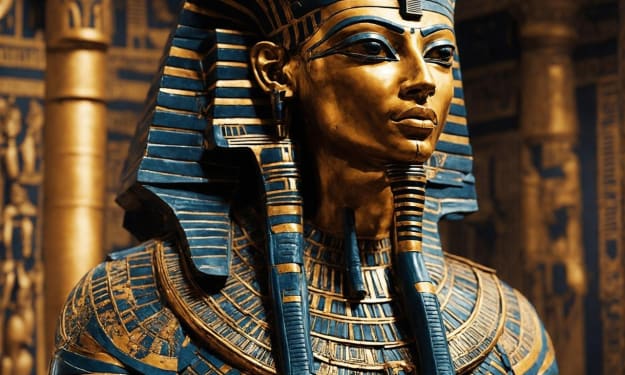
Akhenaten: Was He an Alien Pharaoh of Ancient Egypt?
The Mysterious Pharaoh In the heart of Egypt’s ancient history, one name stands out as an enigma: Akhenaten, the heretic king, the ruler who shattered the traditional religious order, and the architect of a radical transformation. He wasn’t just another Pharaoh; his reign brought forth a monotheistic vision centered on the sun god Aten, a stark departure from the traditional polytheistic worship of Egypt’s powerful pantheon of gods.
By The Secret History Of The World9 months ago in History
Nefertiti: The First Woman to Rewrite Royal Power.
Nefertiti, whose name means “the beautiful one has come,” is one of history’s most captivating mysteries: a queen who led her nation to the heights of power, only to disappear without a trace at the height of her influence.
By Neli Ivanova9 months ago in History
Thailand Unveiled: The Soul of Southeast Asia. AI-Generated.
Thailand Unveiled: The Soul of Southeast Asia Thailand, fondly known as the "Land of Smiles," is a country that captures the heart of every traveler with its vibrant culture, rich traditions, stunning landscapes, and warm hospitality. Nestled in the heart of Southeast Asia, Thailand is a land where ancient customs blend harmoniously with modern life, creating a unique and enchanting experience for all who visit.
By Shahab Ali awan9 months ago in History
The Naupa Huaca Portal: Proof That Ancient Civilizations Were Secretly Connected?
The Door That Shouldn’t Exist High in the Andean mountains of Peru, carved into living rock and forgotten by time, lies a doorway to a mystery that refuses to be ignored. Hidden near the Sacred Valley, in a place untouched by modern roads or maps, the Naupa Huaca Portal emerges from the cliffside like a deliberate fracture in reality. It is not a ruin. It is not a temple. It is something else entirely.
By The Secret History Of The World9 months ago in History
“Vanished Galleons: The Lost Shipwrecks of the Dutch East India Company”
“Disappeared in the Abyss: The Catastrophic Shipwrecks of the VOC Fleet” The Dutch East India Company (VOC), once the most prosperous trading entity in history, presided over global maritime commerce for nearly two centuries. Yet beneath the splendor and fortune exists a lesser-known narrative the numerous VOC vessels that encountered disastrous fates in perilous waters. Stretching from the Indian Ocean to the rugged shorelines of Australia and the Cape of Good Hope, hundreds of VOC ships were lost to tempests, reefs, sabotage, and navigational mistakes. These wrecks not only transported commodities and riches but also embodied tales of aspiration, colonization, and sacrifice. This article examines the history, significant calamities, treasure recoveries, and the enduring enigma surrounding VOC shipwrecks.
By Say the truth 9 months ago in History
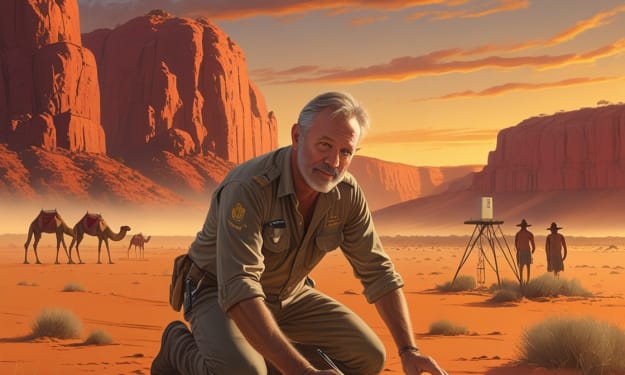
“Lasseter’s Reef: Australia’s Lost Treasure of Gold and Legend”. AI-Generated.
"The Hidden Wealth of Australia: Discovering the Continent’s Most Significant Concealed Treasure" Australia encompasses more than merely arid deserts and ancient terrainsit conceals narratives of substantial, undiscovered fortune. From the legendary Lasseter’s Reef, purported to be an unparalleled gold deposit buried deep within the outback, to the sunken Dutch vessels carrying silver and gold, as well as the loot of outlaw bushrangers hidden in the wilderness, this article delves into the most persistent and valuable treasure legends of the land down under. Join us as we investigate the history, enigma, and contemporary endeavors to reveal Australia’s greatest treasure.
By Say the truth 9 months ago in History
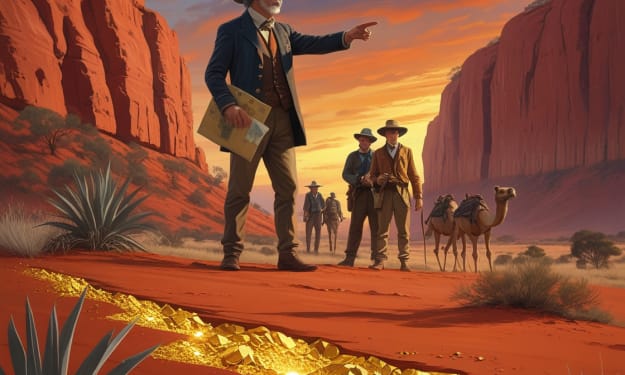
"The Lost Riches of Australia: Uncovering the Continent’s Greatest Hidden Treasure" . AI-Generated.
"Australia’s Forgotten Fortune: The Legend of the Lasseter’s Reef and Other Lost Treasures" Australia may be best known for its rugged outback and gold rush towns, but hidden beneath its red earth lies a legend of unimaginable wealth — the tale of Lasseter’s Reef, a massive gold deposit supposedly buried in the heart of the desert. This article delves into the history of Australia's biggest rumored treasure discoveries, including gold rushes, sunken ships, outlaw loot, and the still-unfound fortunes that have lured explorers for over a century.
By Say the truth 9 months ago in History
Samsung Eligible device for oneUi7 . AI-Generated.
The official rollout of Samsung's One UI 7 update, which is based on Android 15 and brings a slew of new features and improvements to a wide range of Galaxy devices, has begun. The update began rolling out to various device series in phases in April 2025.📱 Eligible Devices for One UI 7
By Aprub Hasan Afif9 months ago in History
THE HISTORY OF PAPER
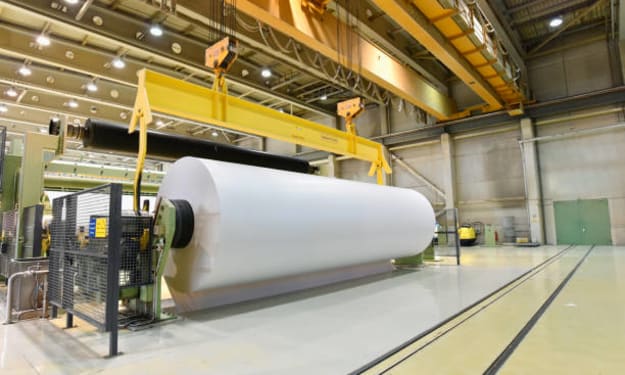
There was a time when people learned to write, not make paper. In some countries it was customary to write on stones. some would write on soft soil and then burn that soil to make brick tiles. Their paperwork would go away in that brick. But you can easily understand the special difficulty of studying with such bricks. Imagine a student going to a classroom. Along with him came three baskets of brick and a pulm of mud for writing. Just sending a few letters takes a lot of hard work, fetching soil, fetching water, compacting mud, polishing, making tiles, but there is no end to writing letters, burning, cooling, and calling. It is much easier and convenient than this to write on the leaves of the tree, which has been used for a long time in our country. 6000 years ago in Egypt, the young bark of the papyrus tree was used to make paper. Like some sort of thing was made. The English word paper comes from the word papyrus. But even this papyrus material cannot be properly called paper. Papermaking was first introduced in China. But the Chinese did not teach this science to anyone. For about 100 years, some Chinese artisans learned to make paper, and from that time, this knowledge spread far and wide. From Arabia to Egypt, from Egypt to other places in Africa. Then, in Spain, Germany, and England, paper mills appeared everywhere. At that time, all papers were made from torn paper, and it was done by hand. A clean rag would be wetted and poked with a toothed object; at that, the rag was torn to shreds like threads. Add water to it and knead it for a long time to form a thin paste. The dough of this rag was sieved and sifted in various ways to make paper as white as silk. At that time, people thought of paper as a very nice thing, but gradually the price of paper came down, various mills for making paper came out, and the cut of paper increased so much that the paper workers saw that it was not possible to collect so many torn sheets. Then there was a search around, what other things can be made of paper? First: Spain's esparto grass was very papery, then gradually it was seen that it did not wash. It is impossible to say how many things have been tasted to make paper from it. Sugarcane husks, banana peels, jute, straw, grass, bamboo, fiber-like wood threads, all kinds of things like sugarcane are not left. In general, paper is made from wood, esparto grass, and old rag paper. The chalk that Bolata makes has a substance in it that is just like paper. Nowadays, mills also produce different types of paper from wood pulp, etc. The wood from which the paper is made comes from gulal in America and Norway. The foresters cut the trunks of large trees and throw them into the mouth of the mill, and the wood is chopped up at the other end of the mill. The sap is ground, boiled, and cleaned, then the latex-soft wood is pressed into wafers, and the wafers are shipped to papermakers. Paper workers make manda by mixing the wafer again in water, then boiling the manda and making it like broth. This broth is poured into a paper mill and an iron tube. The mill feeds on wood, grass, or rag pulp on one side and produces 4/5 mile long paper bales on the other side. When the mills run all day and night, a sheet of paper twelve cubits wide and two and a half miles long is produced. After that, the broth is prepared by mixing the dough in a bowl of hot water. As the broth is run through the mill, it falls over a long moving strainer. The strainer keeps moving and gives and gives a kind of shake now and then, the water falls out, and the broth gradually comes under the pressure. In this way, the broth falls into the other head of the faucet – there are many ‘rollers’ like balloons which are used for rolling bread. The strainer comes here and spills the broth into a roller. But that broth is no longer broth; now it looks like wet blotting paper. By now, it's just a paper. As soon as the paper touches the roller, the roller pulls it. Then the paper is moved between many rollers. In this way, the paper has to be continuously pressed, sanded, rubbed, and polished, and the paper gradually becomes thinner and softer. Of course, all these tasks are done automatically in the factory. There are a couple of people who just make sure all the factories are going well. Work runs as equal to twenty-four hours; one head of the mill has a continuous flow of the broth-free strainer is only resting, the paper congealed from the strainer is constantly jumping onto the roller, the roller has no rest, and is also pulling and pushing the paper out.
By Afroza Islam9 months ago in History
The Civil Rights Movement in the USA: A Turning Point in American History. AI-Generated.
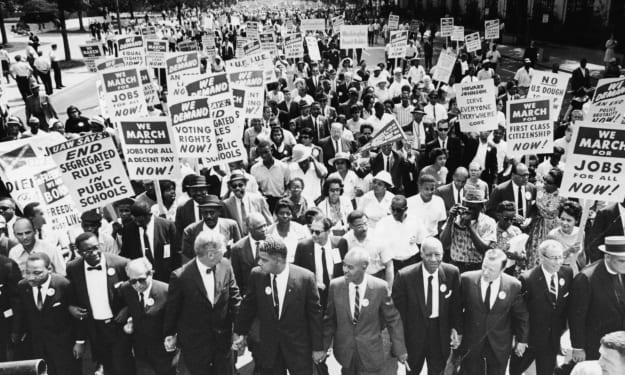
The Civil Rights Movement in the USA: A Story of Courage and Change There was a time in America when people with dark skin were not treated equally. They could not sit where they wanted, go to the same schools, or even drink from the same water fountains as white people. This was called racial segregation, and it was unfair.
By Tanushree Das9 months ago in History