
How Close Was the Roman Empire to an Industrial Revolution? 🏛️⚙️
What If Rome Had Steam Engines?

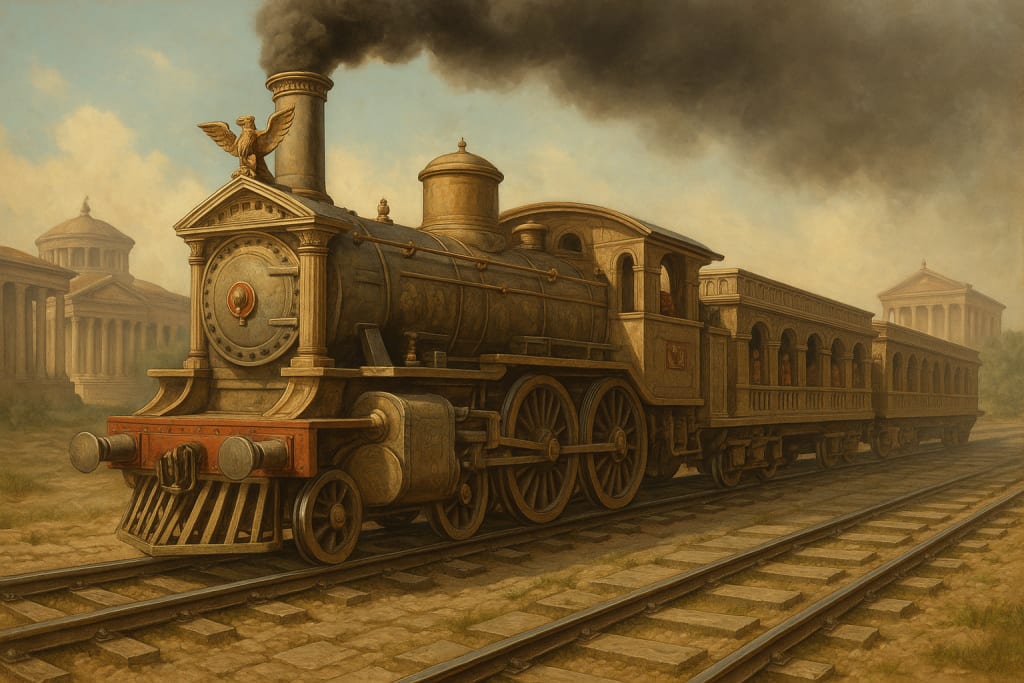
When we think about ancient Rome, we picture majestic architecture, powerful legions, and sophisticated roads. But one question often pops up among history lovers and alternative history fans alike: Could the Roman Empire have had its own Industrial Revolution? 🤔
Let’s explore just how far—or close—the Romans were to sparking a technological leap similar to what happened in 18th-century Britain.⚒️
🧠 A Culture of Innovation… to a Point
The Romans were no strangers to technology. They built aqueducts that carried water over vast distances 🚰, created concrete that still baffles modern engineers 🧱, and developed tools, presses, and even simple cranes 🏗️. They harnessed the power of water with mills and used complex mining techniques.
However, Roman innovation was mostly practical and limited to military, construction, and civic needs. They didn’t pursue technological improvement as a goal in itself. This is a key contrast to what happened during the Industrial Revolution, when innovation and invention became central to society and economics. ⚙️📈
🔥 They Had Steam Power!
Believe it or not, the ancient Romans (and Greeks before them) did know about steam power. In the 1st century CE, an engineer named Hero of Alexandria invented the aeolipile—a simple steam turbine that spun when heated. 🚀
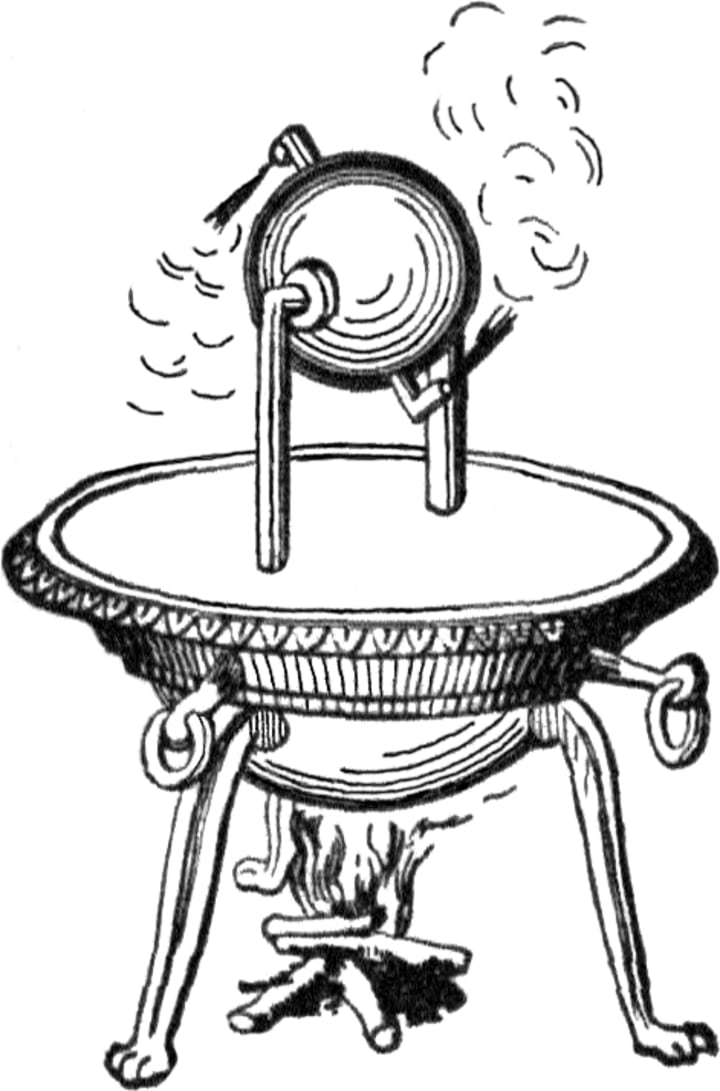
But here’s the kicker: they never used it for anything practical. It was seen as a novelty or a temple trick, not a way to power machines or transform labor. 🛠️
This is a huge missed opportunity. If someone had taken that idea and said, “Let’s use this to do work,” things might’ve looked very different!
🧱 Labor: A Double-Edged Sword
One major reason the Romans didn’t industrialize is tied to their reliance on slave labor. Why invent a machine to do hard work when you already have a massive labor force that doesn’t get paid? 🧑🏿🌾🧑🏼🌾
Industrialization thrives in environments where labor is expensive and innovation saves costs. That wasn’t the case in Rome. With slaves doing much of the work, there was little economic incentive to automate anything. In fact, automation might’ve been seen as unnecessary or even disruptive. ❌⚙️
🛠️ Missing Ingredients
To spark an Industrial Revolution, you need a mix of several factors:
- Scientific mindset 🧪
- Capital investment 💰
- Skilled labor 👷♂️
- Efficient transportation 🚛
- Accessible natural resources (like coal and iron) ⛏️
While Rome had roads and some skilled labor, they lacked:
- A scientific culture that prioritized experimentation and progress.
- A banking and credit system capable of financing large-scale innovation.
- A political and economic system that encouraged risk-taking and entrepreneurship.
Without these, large-scale industrial change was unlikely. 😕
🌍 So… How Far Were They?
Historians generally agree that Rome was centuries away from an Industrial Revolution. While they had some of the right pieces, the social, economic, and cultural environment wasn’t aligned to push those pieces together.
Think of it this way: the Romans could have built steam engines or textile machines, but no one thought to. They had the tools 🔧 but not the mindset 🧠.
📜 Final Thoughts
The Roman Empire was a marvel of ancient innovation, but it was not on the brink of an industrial breakthrough. Still, imagining a “Steam Age Rome” is a fascinating thought experiment. 🚂🏛️
While the Roman Empire never reached industrialization, its legacy laid the groundwork for future innovation. 🛤️⚙️ The thought of steam engines rolling past the Colosseum is a fun mix of history and imagination, reminding us how small shifts in culture and curiosity can shape the world for centuries. 🌍✨
If the right genius, under the right circumstances, had connected a few dots… history might have looked very different. 😮
💬 What Do You Think?
Do you think Rome could have industrialized early with the right push? Or was it always going to be a classical superpower, not a modern one?
About the Creator
Toader Adelin
Tech isn't just tools — it's a lifestyle. I decode innovations, review cutting-edge gadgets, and analyze industry trends, all with a professional approach to help you make informed decisions and stay ahead of the curve.
Keep reading
More stories from Toader Adelin and writers in History and other communities.
BYD U9 – The Electric Supercar That Dances! 🕺⚡
When you hear the name BYD, you might think of efficient electric sedans and compact city EVs—but the BYD U9 is a whole different story. This all-electric hypercar is turning heads and dropping jaws. It doesn’t just go fast—it moves with style. In fact, it can literally dance and jump thanks to a futuristic suspension system that’s never been seen on a production car before. 😮💃
By Toader Adelin9 months ago in Futurism
3 Historical Events That Were Ruined by One Incredibly Small Detail
History is shaped by big ideas, brave leaders, and sweeping movements—but sometimes, the tiniest, most overlooked detail changes everything. A forgotten note, a misheard order, or even a misaligned boot can turn a decisive moment into chaos. These micro-errors often seem trivial at the time, but their ripple effects can alter the course of wars, empires, and even the future of entire nations.
By Enoch Sagini5 days ago in History
Pablo Escobar: The Man Who Declared War on Colombia
Pablo Emilio Escobar Gaviria was born on December 1, 1949, in Rionegro, Colombia, and raised in the nearby city of Medellín. He grew up in a modest household, the son of a farmer and a schoolteacher. From an early age, Escobar showed ambition and defiance. He dreamed of power, wealth, and influence—dreams far larger than his surroundings. In a country struggling with inequality and limited opportunity, Escobar believed the rules were written to keep people like him down. Instead of trying to change the system, he chose to dominate it.
By The best writer 3 days ago in History




Comments
There are no comments for this story
Be the first to respond and start the conversation.