Analysis
“Rise of Changez Khan”
The cold wind of the Mongolian steppe blew across the endless grasslands. In the middle of that wide land, a young boy named Temujin, who would later be known as Changez Khan, grew up with a life full of struggle. He was not born in a palace. He had no army, no gold, and no kingdom. He had only a small family, a tent, and a strong will that burned inside him.
By moeez yousafzai2 months ago in History
Cults of Gods: Ares, Cultless God?
Ares is described as bloodthirsty, cruel and outright dangerous. Hated by own father Zeus, by mortals and gods, it would be expected that such a deity doesn't have a cult or any trace of veneration. But it is not correct. Even if shown as cruel in myths, reality is far more sophisticated, and even horrible god like Ares had his own place in pantheon.
By Alex Smith2 months ago in History
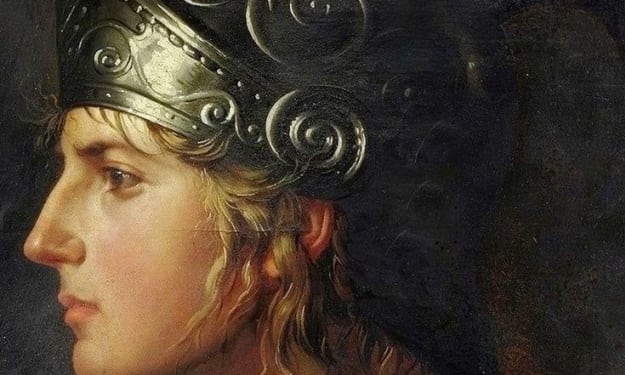
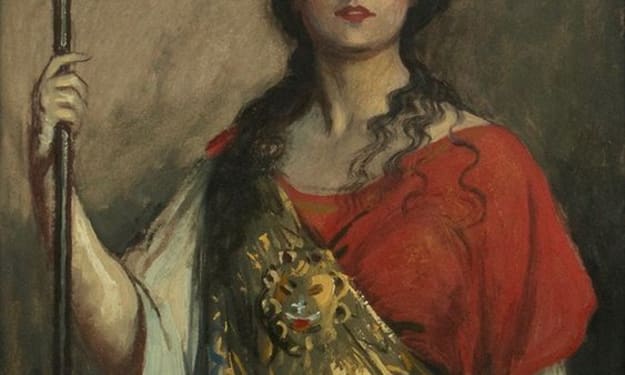
Cults of Gods: Athena, Wisdom or War? Both.
When thinking about Athene, most people remember myths of her springing fully armed from Zeus’ head or her contest with Poseidon for the patronage of Athens. Many neopagan or mythology blogs describe her simply as “the goddess of wisdom.” But Athene’s influence goes far beyond this title. Wisdom is only an umbrella term for the many aspects of life she governs.
By Alex Smith2 months ago in History
Cults of Gods: Hermes, Ouranic or Kthonic?
Among all the Olympians, no god moves as swiftly or slips as easily between worlds as Hermes. Trickster, messenger, guide of souls, protector of travelers and thieves alike—Hermes was the tireless workaholic of Olympus. Yet behind his playful cleverness lies one of the oldest and most important divine functions in Greek religion: the guardianship of boundaries and the mastery of transition. In this article, we will explore who Hermes truly was, beyond the winged sandals and the familiar image of Zeus’ messenger.
By Alex Smith2 months ago in History
Cults of Gods: Hestia, A Mythless Goddess?
The goddess who appears in almost no myths yet holds one of the most important roles in Greek religion—Hestia is a quiet, still presence while the other gods roam the world. But who was she, and why does she seem almost invisible in myth despite her immense religious significance?
By Alex Smith2 months ago in History
Uncovering the Impossible: Giant Skeleton Stuns Archaeologists
When the first images appeared online—a massive, human-like skeleton partially buried beneath layers of ancient soil—most people assumed it was another internet illusion. But what happened next pushed the discovery far beyond the realm of fantasy. A team of independent researchers, accompanied by local workers and eyewitnesses, confirmed that something extraordinary had been found. The skeleton was not only enormous in size but disturbingly well-preserved, with bone structures that resembled humans in every way—except scale.
By Izhar Ullah2 months ago in History
Cults of Gods: How Demeter is connected to afterlife?
When most people think of Demeter, their minds immediately go to the myth of Persephone’s abduction by Hades and the grief that followed. Does this mean Demeter’s role was limited to that of a mother? Far from it. In this article, we will explore who Demeter truly was and why the Ancient Greeks worshipped her—not only as the mother of Persephone, but as a central figure in Greek religious life.
By Alex Smith2 months ago in History