
Jules Verne 👁⚡👁
Top 10 Prophets, Prognosticators, & Visionaries- #7

⚡"There is hope for the future, and when the world is ready for a new and better life, all these things will some day come to pass, - in God's good time."
―Jules Verne
⚡____________⚡
This is a continuation of my compilation of The Top 10 Prophets of All Time, in chronological order.
Here are the episodes already presented....
Part #1- the Oracles of Delphi.
Part #2- the Sibyls of Rome.
Part #3- the Mayans.
Part #4- Hildegard of Bingen.
Part #5- Leonardo Da Vinci.
Part #6- Nostradamus
We've made it up to the nineteenth century for this entry.
The next two visionaries on our list pioneered an enduring new genre of literature.
One Frenchman, the other English, these Fathers of Science Fiction didn't consider themselves 'prophets' in the classic sense of the word; they didn't claim to know what events would happen before they happened... but what these authors dreamed and wrote about inspired others, to the extent that many of their imaginings were eventually made real.

Episode #7-
Jules Verne—
1828-1905
⚡
Influential French writer Jules Verne wrote about the future with eerie precision.
He foresaw cars cruising on freeways, bright electric lights, radios, television, helicopters, spaceships, submarines, the atomic bomb, color photography, fax machines (what he called “photographic telegraphs”), and computers (“totalizers”). None of these things existed when he was writing about them. The roads, even in Paris, were crude, rutted with horse tracks. It would be decades before electricity brought the world out of darkness.
The Industrial Revolution began in 1769 with the invention of the steam engine. Harnessing the power of steam allowed for large-scale production that had previously been inconceivable.
People left farms, flocking to cities for the plentiful jobs in the many factories.
New canals and roads would be required because of all the manufactured goods that needed to be transported.
Railroads and steamships replaced horses and wagons.
By the 1800s, regular breakthroughs were being made in science, with constant talk about new ideas and still greater innovations.
Jules Verne was born into that bustling age, in the year 1828. As a child, he loved literature and geography.
He wasn’t that intrigued initially by the scientific advancements of his time, but he did have a deep fascination for machines. He visited construction sites and would watch machines operate for hours.
At one point, he reluctantly decided to study law. He also tried working as a stockbroker. He wrote musical comedies. It wasn’t until he hit his mid-30s that he began writing the novels that would bring him fame.
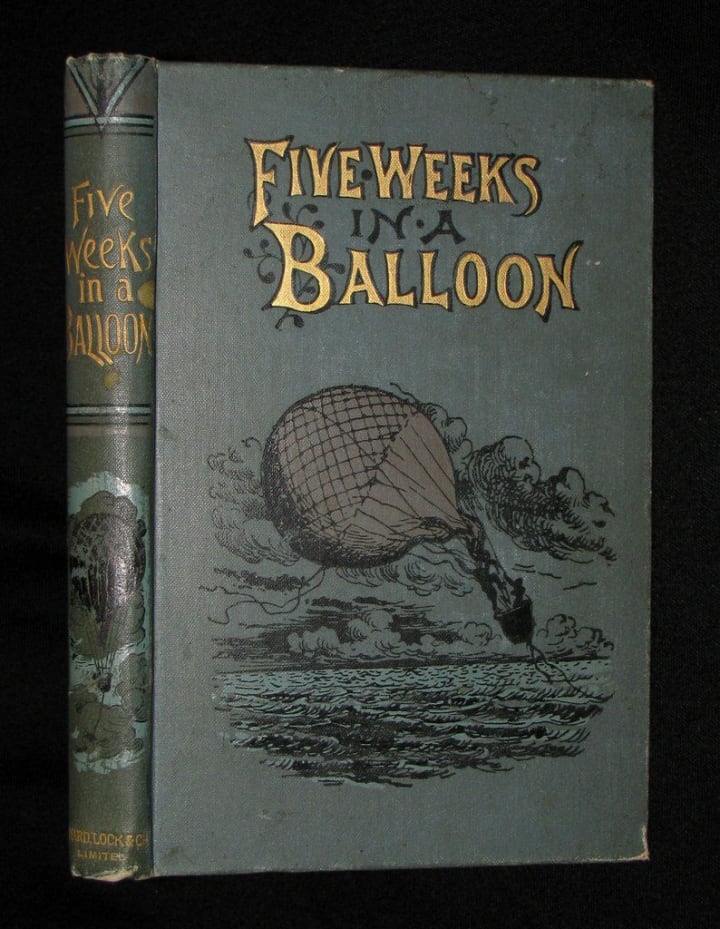
It was a book for young people that put him on the map: Five Weeks in a Balloon— a story of three explorers of Africa who soar over dangerous, uncharted regions in a balloon.
Verne had never been to Africa and never been in a balloon. Africa was a mysterious place. Balloons were too tricky to control to be an efficient way to travel. But it all sounded thrilling to him, what he called, “a new kind of sensation.”

Just a few years later, he authored Twenty Thousand Leagues Under the Sea. Three decades before real submarines swept through the oceans, Jules Verne wrote…
The year 1866 was signalized by a remarkable incident, a mysterious and puzzling phenomenon, which doubtless no one has yet forgotten… For some time past vessels had been met by “an enormous thing,” a long object, spindle-shaped, occasionally phosphorescent, and infinitely larger and more rapid in its movements than a whale.

In that “enormous thing”, the enigmatic Captain Nemo took literary heroes around the world. And Jules Verne's fame seemed to follow, quickly spanning the globe.
Verne wrote more than a hundred great adventures after that, including epic tales like Around the World in 80 Days and Journey to the Center of the Earth. Over a third of his novels were set in the United States, even though Verne himself had only spent five days in America.
Verne was a quiet man— hardworking and passive. He wasn’t very pleasant to be around. A hypochondriac, he lived in an isolated country house and wrote in a study that was as simple as a monk’s cell. He hated bicycles, telephones, and wrote everything by hand rather than using the newfangled typewriter. He rarely traveled, although he did love being on his sailboat. He was a prolific reader.
Despite rarely going anywhere himself, the plots of his novels took his readers to the tops of mountains, the depths of oceans, and unexplored regions of space. His protagonists traveled to the North and South poles, to ice fields, volcanoes, flying islands, jungles, deserts, mine shafts, even asteroids.

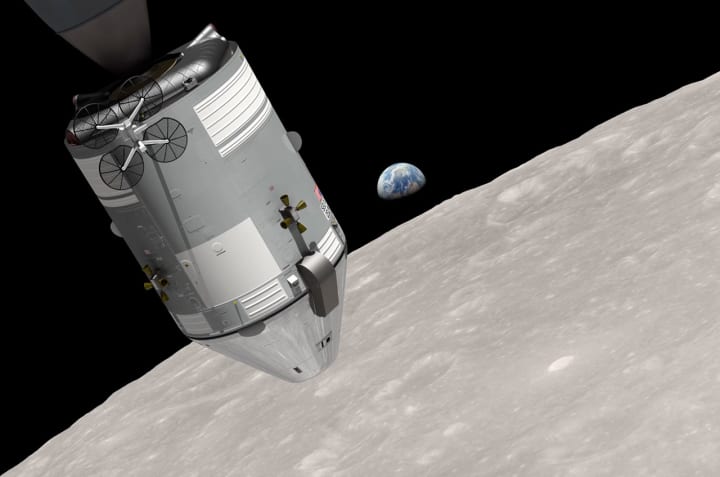
In 1865, Jules Verne wrote From the Earth to the Moon. In the book, he describes a manned lunar flight being launched from where, of all places? The swampy terrain outside the city of Tampa, Florida!
When Apollo 8 launched the first manned lunar flight in 1968, the three NASA astronauts were struck by all the many coincidences to Verne’s novel, including the smallness of the capsule, the condensed food they ate, and even the safe splashdown in the Pacific Ocean at the end of their mission.
In 1863, Verne wrote a novel entitled Paris in the Twentieth Century. It was rejected by his editor, considered too grim for print.
Paris in the Twentieth Century has a remarkable catalog of futuristic technology. Instead of horses, people drove “gas cabs” (cars) on streets made of asphalt. Silent, pollution-free trains were propelled by compressed air on elevated platforms. Skyscrapers used elevators to achieve heights of seventy to eighty stories. Electricity not only lit up department stores by night— it was also used as a means for capital punishment. Verne described the radio transmissions of music, and inventions that work like calculators, copiers, and fax machines.
While many aspects of that novel were inspiring, some of Verne’s other predictions were disheartening. Verne’s world was overpopulated. Homeless people wandered his streets. Machines replaced humans. Commercial advertising was inescapable. Factories flooded the air with pollution. Charismatic leaders led nations to war. Death rained down from flying killing machines. At the end of the tale, the protagonist of Paris in the Twentieth Century ends up crying himself into unconsciousness in a cemetery.

So many renowned authors were inspired by Verne. Sci-fi great Ray Bradbury wrote…
“We are all, in one way or another, the children of Jules Verne.”
A great many of Verne’s books have been adapted into movies and for TV.
One of the very first motion pictures ever made was in France in 1902 and it was an adaptation of Verne’s From the Earth to the Moon.
In 1952, Walt Disney made his version of Twenty Thousand Leagues Under the Sea, which also inspired rides in the Disney theme parks. Those Disney creations went on to influence the look of both Star Trek and James Bond.
In 1993, the creators of the hit CD-ROM game Myst used the Verne story, The Mysterious Island, as their inspiration.
The New York Times called Verne, “the patron saint of cyberspace.” Indeed, in one tale Verne wrote that citizens were no longer reading newspapers, but instead gathering information from a devise that sounds very much like the Internet.

One of the three Apollo 8 astronauts ☝ wrote to Jules Verne’s great-grandson…
“Your illustrious grandfather… not only imagined what exploits were possible for man but even how they might be accomplished, down to the finest details. Who can say how many of the world’s space scientists were inspired, consciously or unconsciously, by their boyhood reading of the works of Jules Verne?”
⚡____________⚡
This concludes Part Seven of this Series. Part Eight tomorrow.
________________________Bolt⚡

Next up, of course, the other father of Sci Fi-- H.G. Wells
The previous episodes... 👇

About the Creator
Lightning Bolt ⚡
Bolt ⚡ aka Bill, a bizarre bisexual bipolar alliterative epileptic Taco Bell Futurist 🌮 ☇ a sexy ♒ Aquarian oddball with an erratic brain↯🧠↯ Author of comedy, poetry, sci fi, & horror.
I am shock therapy.⚡ Subscribing risks electrocution↯.
Keep reading
More stories from Lightning Bolt ⚡ and writers in History and other communities.
Dust Bowl Trauma in West Texas
In the early 1930s, the High Plains of Texas experienced a series of environmental conditions that would permanently reshape the region’s communities. Drought intensified across the southern plains. Topsoil loosened by aggressive plowing lifted into the air under powerful winds. Dust storms darkened skies across counties that depended almost entirely on agriculture and livestock. What followed became known as the Dust Bowl.
By Dr. Mozelle Martin5 days ago in History


Comments (2)
I'm a little late in finding this series, but I'm glad I found it an equally glad you've included links to the other installments. Verne was a visionary, no doubt. It's almost eerie that he also wrote The Time Machine. I'm looking forward to catching up on these.
What a great literature lecture for me either American or British. Good job.