
The Sibyls of Rome 👁👁
Top 10 Prophets, Prognosticators, & Visionaries- #2

⚡"The future influences the present just as much as the past." -
Friedrich Nietzsche
⚡____________⚡
Episode #2-
The Sibyls of Rome—
from around 1200 B.C. to A.D. 83
⚡
All roads did lead to Rome.
At the Empire’s peak, one fifth of all humanity were subject to magisterial law and paid taxes to the emperor.
Having outgrown Italy, Romans went on to conquer parts of Africa, Asia, the Middle East, and all of Southern Europe. In the city of Rome, a cruel society flourished, based on violence. Hundreds of amphitheaters featured gladiators who fought in gory spectacles.
Disposable slaves generally outnumbered the citizens; they could be sold, tortured, or killed based on their owner’s whims.
Women had no rights and were always vulnerable.
If a man wanted to own property, he had to serve sixteen years in the brutal Roman army.
At its peak, the population of the Imperial City was nearly a million people.
Life was tumultuous and cruel. Besides natural disasters and high taxes, a citizen constantly had to worry about the dispositions of all the many gods. Pissing them off was easy. Pleasing them was very hard.
Luckily, a Roman could find help in troubled times: predictions made by women called Sibyls.

No one ever actually laid eyes on one of these oracles, but their fame was legendary.
A sibyl drank bull’s blood, a deadly poison, to enter a strange trance.
It was reported sibyls lived to be 110 years old, perhaps even centuries older.
As they aged, they shrank. Some were believed to fit inside flasks, essentially becoming nothing but intonations in a bottle. They spoke in odd voices, but their wisdom was undeniable. Their predictions allowed querents to plan ahead.
The earliest reference to a sibyl comes from what is now Turkey in 1200 B.C.. The prophetess claimed to be a demigoddess.
“I am born betwixt a mortal and a god, of an immortal nymph and a father feeding on bread.”
She predicted the Trojan War. And she further foretold that the Greek poet Homer would use her verses when he wrote the Iliad and the Odyssey.
A typical woman of this era went straight from her father’s authority to that of her husband. A female's assigned role was childbearing and homemaking.
Sibyls, on the other hand, were uncommon. They lived independently, were allowed to earn money, and were encouraged to cultivate their awareness of others. Over generations, mystic knowledge was passed from priestess to priestess, in secret ceremonies now lost to time.
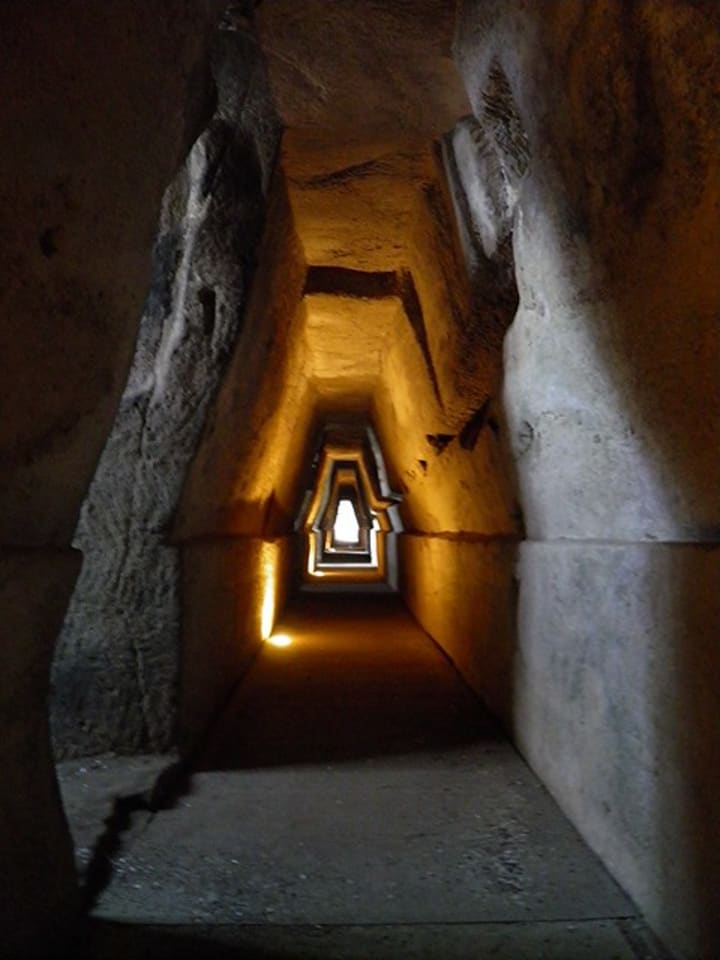
High on a red volcanic hill overlooking the sea, sibyls operated out of a fatidic cave. The Greek poet Lycophron wrote about “the priestess maid” in her “awful dwelling place, a yawning cavern roofed with arching rocks.” Windows were cut through the stone into the trapezoidal grotto, allowing in air and light. Echoes of the sibyl’s voice reverberated down a passageway through six openings.

But unlike the Oracles of Delphi who only spoke in verses, a sibyl was educated enough to write down her predictions, in Latin, Greek, Hebrew, even hieroglyphics.
Sibyls played word games, prophesizing with careful thought, not in a manic frenzy. They teased. They evaded.
Sometimes, after writing on palm leaves, they would allow winds to blow the script away.
Sibyls were even older than the women at Delphi. The Roman poet Virgil often made jokes about “the long-lived priestesses,” and also the way they could shrink. The Greek philosopher Heracleitus wrote…
“Sibylla, with raving mouth uttering things without laughter and without charm of sight or scent, reaches a thousand years by her voice.”
The most famous of all sibyls was the Cumaean sibyl. Cumae was the earliest colony in Italy on the Bay of Naples. The city eventually became a major harbor. Around 525 B.C., the Cumaean sibyl went to see King Tarquin and offered to sell him books containing the destiny of the world. He thought the old woman was completely senile. The price for the nine volumes was outrageous, so he sent her away.
Later, she returned and offered to sell him just six books for the same price. He laughed at her.
When she came back the third time and had only three books to sell, still at the same price, Tarquin became worried and paid the fee. He asked about the other six books she'd originally offered to sell him. She claimed she had burned them. She then left, never to be heard from again.
For centuries afterwards, according to legend, Rome was cursed to never know its future.

The books that Tarquin did acquire were placed beneath the sacred temple of Jupiter, on Capitoline Hill. These Sibylline Books became Rome’s most protected possession. Even high priests were forbidden from consulting the sacred documents without a special decree from the Roman Senate.
For hundreds of years, the tomes gave guidance.
According to the Sibylline Books, to “know thyself” was the secret to a happy life.
The Cumaean sibyl had dire predictions for the end of the world.
“Then shall the elements of all the world be desolate; air, earth, sea, flaming fire, and the sky and the night, all days merge into one fire, and to one barren, shapeless mass to come. A single day will see the burial of mankind, all that long forbearance of fortune has produced, all that has been raised to eminence, all that is famous and all that is beautiful; great thrones, great nations—all will descend into one abyss, all will be overthrown in ONE hour!”
In 83 B.C., the Sibylline Books were consumed in a fire. After that, Emperors started turning to astrologers as their new advisers.
Change was coming.
Christianity was on the horizon.

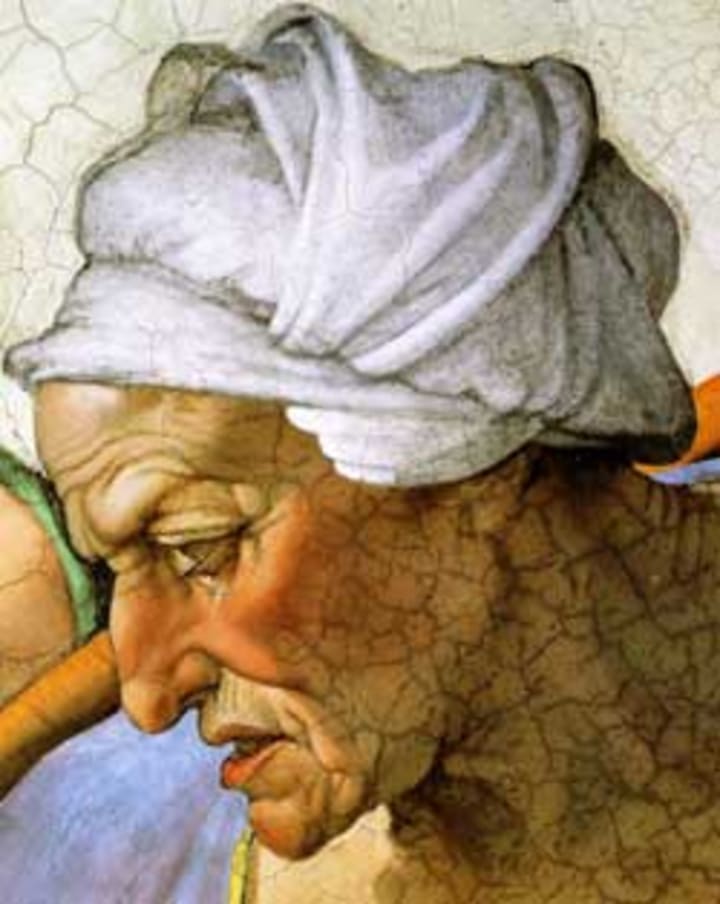
In 1512 the renowned Italian painter Michelangelo included five sibyls in his famous panorama on the ceiling of the Sistine Chapel. By his time, Sibyls had already passed into myth as pagan figures of fantasy.
Thousands of years later, in 1932, archaeologists uncovered the ancient cave of the Cumaean sibyl, caverns that had been filled in by an earthquake. To carve these tunnels in ancient times had required a monumental engineering feat, with a massive workforce.
In the 1932 excavation, ancient coins were discovered that were still engraved with the Sibyl’s symbol.
This concludes Part Two of this Series.
________________________Bolt⚡
Next up in episode 3: the Mayan.
Part #1 ⚡😁👇

About the Creator
Lightning Bolt ⚡
Bolt ⚡ aka Bill, a bizarre bisexual bipolar alliterative epileptic Taco Bell Futurist 🌮 ☇ a sexy ♒ Aquarian oddball with an erratic brain↯🧠↯ Author of comedy, poetry, sci fi, & horror.
I am shock therapy.⚡ Subscribing risks electrocution↯.
Keep reading
More stories from Lightning Bolt ⚡ and writers in History and other communities.
The Year 1971 in Review: Fun Facts, Trivia, and Historic Highlights
This quick read is a collection of fun facts, trivia, and historic events from the year 1971. Discover the year’s top news stories, most influential people, sports facts, entertainment trivia, grocery and other prices, and much more.
By Gregory DeVictora day ago in History



Comments (4)
Great work, I'll be reading yours, I'm counting on your mutual support. To all writers - Read mine and I'll do the same.
Great article, Bill. Interesting subject material <3
Wow. I commented on your haiku, and now I want to tell you that I take a different look at Persephone than the traditional myth. I’ve posted several of the poems from my book, Pomegranates (which in retrospect I should have titled Pomegranates), and I would love for you to read them I also have a few female voices from The Odyssey. I’m a little bit of a mythology nerd.
Another great essay lecture article. You could teach this as an art history lesson or even as a regular ancient history lesson. Good job.