Dr. Mozelle Martin
Bio
Behavioral analyst and investigative writer examining how people, institutions, and narratives behave under pressure—and what remains when systems fail.
Stories (124)
Filter by community
When Institutions Reward the Disordered
The claim that modern society has “gone insane” circulates constantly in political commentary. The phrase is crude. The frustration behind it is real. When citizens watch institutions make decisions that appear detached from ordinary human consequences, people begin searching for explanations. Some assume incompetence. Others assume corruption. A smaller but growing group points to a psychological explanation known as political ponerology.
By Dr. Mozelle Martinabout 20 hours ago in Humans
Dust Bowl Trauma in West Texas
In the early 1930s, the High Plains of Texas experienced a series of environmental conditions that would permanently reshape the region’s communities. Drought intensified across the southern plains. Topsoil loosened by aggressive plowing lifted into the air under powerful winds. Dust storms darkened skies across counties that depended almost entirely on agriculture and livestock. What followed became known as the Dust Bowl.
By Dr. Mozelle Martin3 days ago in History
30 Days in a Shelter
By day 3, the barking changes. The first 48 hours are chaos. Intake processing. New smells. Metallic doors slamming. By day 3, some dogs bark constantly. Others stop almost entirely. One paces the kennel line until the pads on his feet redden. Another stands motionless, eyes half-lidded, ignoring visitors.
By Dr. Mozelle Martin8 days ago in Petlife
Texas Data Centers
At the edge of town, the building looks like any other industrial warehouse. Concrete walls. No windows along most of the structure. Substation hardware fenced off to one side. Thick transmission lines feeding into transformers the size of small houses. There is no sign that says “cloud.” There is no sign that says “AI.” But inside, racks of servers are running nonstop. Every second, data moves through them. Financial transactions clear. Medical files are retrieved. Social feeds refresh. Court records upload. Algorithms calculate.
By Dr. Mozelle Martin11 days ago in FYI
The Power Behind Bitcoin
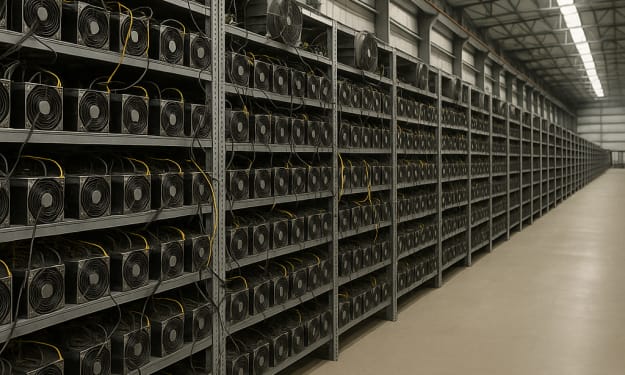
Bitcoin borrowed a word that does not belong to it. Mining sounds physical. It carries an image of dirt, steel, and effort. It suggests men who work in tunnels and move rock by the ton. When the public hears it, they picture a job that leaves a body tired in a way that makes sense. None of that exists in a modern Bitcoin facility. What you find instead is a heat-filled building lined with machines made for only one purpose. Each machine is a miner. One miner equals one computer. Thousands of them sit in rows, running without rest. Once a person understands that a miner is not a human but a device that never sleeps, the scale becomes easier to grasp. These machines fire through guesses at high speed. Each one is trying to match the one valid answer the network will accept. The winning machine earns the reward. All other miners (computers) try again. The entire operation is a probability race powered by electricity.
By Dr. Mozelle Martin12 days ago in The Chain
When Search Results Become Character Evidence
At 8:30 a.m. on a routine pretrial morning, a prosecutor refreshes a browser. A defense attorney does the same. Before the first witness is sworn, both sides have already reviewed what appears when the defendant’s name is typed into a search bar. That page is not evidence. It is not sworn testimony. Yet it often shapes strategy long before the rules of evidence are argued in open court.
By Dr. Mozelle Martin15 days ago in Criminal
When Behavior Walks Away:
I have spent decades watching how behavior changes when the environment stops making sense. That skill came from forensics, trauma science, and animal work in the field. Patterns never break cleanly. They stretch first. They warp. Then the organism abandons the behavior that once kept it stable. I see that pattern now across animals that have nothing in common except the world they live in.
By Dr. Mozelle Martin19 days ago in Earth
The Literary Scam That Counts on Your Silence
Some scams walk in with a mask and a threat. Others arrive with a soft voice, a thoughtful compliment, and a claim of community. That last category does more damage over time because it operates through emotional residue, not brute force. People hesitate to expose it, not because they’re fooled, but because the interaction feels almost polite. That is the point.
By Dr. Mozelle Martin20 days ago in Writers