

France, officially known as the French Republic, is a country that has captured the imagination of people all over the world. Known for its rich culture, history, cuisine, and art, France is much more than just the land of the Eiffel Tower and fine wine. With its influence extending across politics, fashion, science, and philosophy, France is one of the most important nations in both European and world history. Below are some fascinating facts about France that give a deeper insight into what makes this country so unique.
---
1. France Is the Most Visited Country in the World
France has consistently held the title of the world’s most visited country. Each year, it attracts more than 80 million tourists, with many drawn to the charm of Paris, the romance of Provence, and the scenic beauty of the French Riviera. Its unique blend of historical monuments, breathtaking landscapes, museums, and fashion makes it a top global travel destination.
---
2. Paris: The City of Light
Paris, the capital of France, is also famously known as “La Ville Lumière” or “The City of Light.” This nickname originates not only from Paris being one of the first cities to adopt street lighting in the 17th century but also because it has long been a center of education, arts, and ideas. Paris is home to some of the world’s most renowned landmarks like the Eiffel Tower, Notre-Dame Cathedral, and the Louvre Museum—the largest art museum in the world.
---
3. The French Language Is Widely Spoken Around the World
French is one of the most influential languages globally. It is spoken as a first language by over 80 million people and as a second language by around 300 million more across five continents. France has played a vital role in spreading the French language through colonization, diplomacy, and culture. Today, it is an official language of many international organizations such as the United Nations, the European Union, and the International Olympic Committee.
---
4. French Cuisine Is World-Renowned
French cuisine is a treasure of the culinary world. In fact, UNESCO even recognized French gastronomy as part of the world’s "intangible cultural heritage." French food emphasizes fresh ingredients, balance, and presentation. Some world-famous French dishes include croissants, escargots (snails), foie gras, ratatouille, coq au vin, and bouillabaisse. The French also have a deep appreciation for wine and cheese, producing hundreds of varieties that are paired according to regional traditions.
---
5. France Has the Longest Railway Network in Europe
France has an advanced and extensive railway network that covers around 29,000 kilometers, making it the longest in Europe. The country is also home to the TGV (Train à Grande Vitesse), one of the fastest trains in the world, capable of reaching speeds of more than 300 km/h. This makes travel between major cities like Paris, Lyon, and Marseille not only quick but also environmentally friendly.
---
6. Fashion Capital of the World
France, particularly Paris, is considered the fashion capital of the world. French fashion houses such as Chanel, Dior, Louis Vuitton, and Yves Saint Laurent have set global trends for decades. Paris hosts prestigious events such as Paris Fashion Week, where designers, models, and celebrities from around the globe gather to showcase the latest trends. The French sense of style emphasizes elegance, minimalism, and timeless chic.
---
7. A Rich History of Art and Philosophy
France has been home to some of the greatest artists and thinkers in history. Painters such as Claude Monet, Edgar Degas, and Paul Cézanne pioneered impressionism, while philosophers like René Descartes, Jean-Jacques Rousseau, and Voltaire profoundly influenced modern thought. Today, France remains an artistic hub, with Paris alone hosting hundreds of museums, including the world-famous Louvre, Musée d'Orsay, and Centre Pompidou.
---
8. A Country of Castles and Palaces
France is home to over 40,000 castles, palaces, and manors. From the fairytale-like Château de Chambord in the Loire Valley to the opulent Palace of Versailles near Paris, these architectural wonders reflect the nation’s medieval and Renaissance history. Each region has its own unique style of castles, many of which are now UNESCO World Heritage Sites and popular tourist attractions.
---
9. Contributions to Science and Innovation
France has made remarkable contributions to science and technology. Louis Pasteur developed the germ theory of disease, while Marie Curie, who conducted pioneering research on radioactivity, became the first person to win two Nobel Prizes in different sciences. The metric system, widely used across the globe today, was invented in France during the French Revolution.
---
10. The French Revolution Changed the World
The French Revolution (1789–1799) is one of the most influential events in world history. It ended centuries of monarchy in France, gave rise to modern democratic ideals, and inspired revolutions in other countries. The Revolution’s ideals of “Liberty, Equality, and Fraternity” remain central to French identity and are enshrined in the country’s constitution.
---
11. The Eiffel Tower Was Once Hated
Today, the Eiffel Tower is the symbol of France, but when it was first built in 1889 for the World’s Fair, many Parisians despised it. Famous writers and artists criticized it as an eyesore. However, over time, the tower became beloved and is now one of the most visited monuments in the world.
---
12. France Has Overseas Territories
France is not limited to its European borders—it also has territories around the world. Known as “overseas departments and regions,” these include Guadeloupe, Martinique, Réunion, French Guiana, and French Polynesia. Collectively, these regions make France one of the largest countries in terms of total land area, and they give France a presence in nearly every ocean.
---
13. Sports and National Pride
The French take great pride in their sporting culture. Football (soccer) is the most popular sport, with the French national team winning multiple FIFA World Cups, including the 1998 and 2018 titles. France is also famous for hosting the Tour de France, the most prestigious cycling race in the world. Rugby, tennis, and basketball are also widely followed.
---
14. France and the Arts of Cinema
France is considered the birthplace of cinema. The Lumière brothers invented the cinematograph in the late 19th century, giving birth to the motion picture industry. Today, the Cannes Film Festival, held annually in France, is one of the most prestigious film events worldwide, attracting filmmakers and stars from across the globe.
---
15. A Country of Cultural Diversity
Modern France is a multicultural nation. With influences from Africa, the Middle East, Asia, and other European countries, its culture is constantly evolving. Immigration has enriched French cuisine, music, and daily life, making France one of the most diverse nations in Europe.
---
Conclusion
France is a nation of elegance, innovation, and tradition. From its iconic landmarks like the Eiffel Tower to its world-class contributions in art, philosophy, fashion, and science, France has left an indelible mark on human civilization. Whether you are drawn to its gastronomy, its history, or simply the charm of a walk along the Seine River, France remains a country that captures hearts and imaginations worldwide.
About the Creator
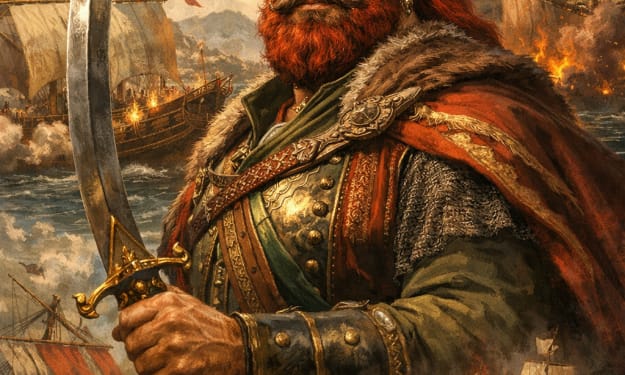
How a feared Mediterranean corsair rose to become Grand Admiral of the Ottoman Empire and reshaped naval power in the 16th century
In the turbulent waters of the 16th-century Mediterranean, where empires clashed and trade routes determined the fate of nations, one name inspired both fear and admiration: **Khayr al-Din Barbarossa**. Known in Europe as “Barbarossa,” meaning “Red Beard,” he began his life as a corsair—what many would call a pirate—but rose to become the Grand Admiral of the mighty **Ottoman Empire**. His journey from privateer to imperial commander is a remarkable tale of ambition, strategy, and shifting loyalties.
By Irshad Abbasi 5 days ago in History
Guard Your Battery
Why are some people so attractive just by standing there? It’s not because they are "likable," but because they don’t need everyone to like them. I realized later that truly charismatic people allow themselves to be criticized, but they never criticize themselves. They never try to please the world; instead, the world stops to watch them.
By Emily Chan - Life and love sharing6 days ago in Poets



Comments
There are no comments for this story
Be the first to respond and start the conversation.