
Can the United Nations Survive a Divided World?
Why reform, relevance, and cooperation will decide the UN’s future role in global peace

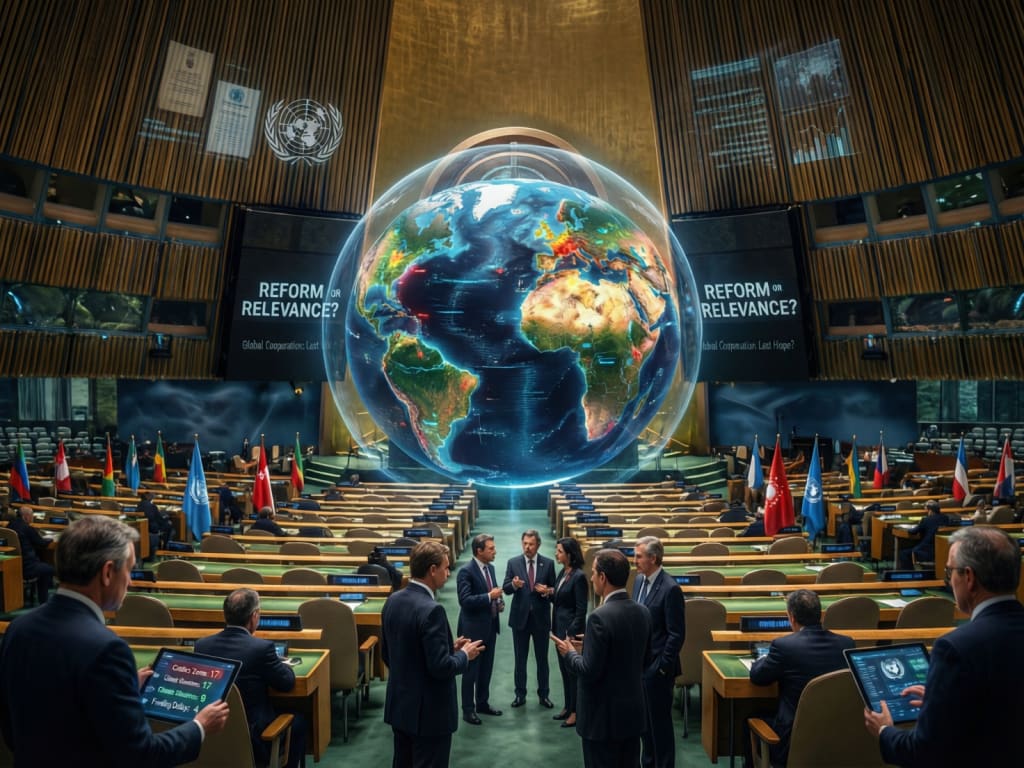
Can the United Nations Survive a Divided World?
The United Nations was born from the ashes of World War II, at a time when the world agreed on one powerful idea: global problems require global solutions. For decades, the UN served as a meeting ground for rivals, a coordinator of humanitarian aid, and a symbol of international cooperation. Today, however, the organization stands at a crossroads. A more divided, competitive, and unstable world is forcing a serious question—what will the UN become in the future?
The challenges facing the UN are real and growing. Major powers increasingly act alone or through regional alliances rather than global institutions. Conflicts have become more complex, involving non-state actors, cyber warfare, and economic pressure instead of traditional battlefields. At the same time, trust between nations is weakening, making collective decision-making harder than ever.
One of the UN’s biggest problems is relevance. Critics argue that the organization moves too slowly to respond to modern crises. Veto power in the Security Council often blocks action, especially when conflicts involve powerful member states or their allies. As a result, the UN is sometimes seen as reactive rather than preventive, arriving after damage has already been done.
Yet despite its flaws, the UN remains unmatched in scale and legitimacy. No other institution brings together nearly every country in the world under one framework. In moments of crisis, the UN still serves as a critical channel for communication, reducing the risk of misunderstandings that could escalate into larger conflicts. Even when resolutions fail, dialogue itself has value.
The future of the UN will likely depend on reform. Many experts argue that the Security Council must reflect today’s world, not the power structure of 1945. Emerging economies and regions demand greater representation. Without change, frustration may push more countries to bypass the UN altogether, weakening it further.
Funding is another major issue. The UN relies heavily on contributions from a small number of wealthy nations. When political disagreements arise, funding can be reduced or delayed, affecting peacekeeping missions and humanitarian operations. A more balanced and sustainable funding model could protect the organization from political pressure and improve its independence.
Technology will also shape the UN’s future role. Cyber threats, misinformation, and artificial intelligence are now global security issues. The UN has an opportunity to become a leader in setting international rules for digital space, much like it once did for nuclear weapons and international law. This would require technical expertise, political will, and cooperation among rivals.
Climate change may become the defining test for the UN. Rising sea levels, extreme weather, and resource shortages do not respect borders. These challenges increase the risk of conflict, migration, and economic instability. No single country can manage these problems alone. If the UN can coordinate global action on climate and sustainability, it could regain relevance and public trust.
The future UN may also shift its focus from preventing wars to managing long-term instability. Instead of only responding to conflicts, it could invest more in early warning systems, development, education, and health. Preventing collapse is often cheaper and more effective than rebuilding after disaster strikes.
Public perception matters as well. Many people see the UN as distant or ineffective. Greater transparency, clearer communication, and visible success stories could help rebuild confidence. When people understand how international cooperation improves daily life—through disease control, disaster relief, or food security—support grows.
Ultimately, the UN’s future is not just about the organization itself. It reflects a larger question about the world’s direction. Will nations choose cooperation over confrontation? Will power be balanced with responsibility? The UN can only be as strong as the commitment of its members.
The United Nations is not perfect, but it remains necessary. In an increasingly unstable world, abandoning global cooperation would not create strength—it would create risk. The future of the UN depends on reform, realism, and renewed belief that peace is a shared responsibility.
About the Creator
Wings of Time
I'm Wings of Time—a storyteller from Swat, Pakistan. I write immersive, researched tales of war, aviation, and history that bring the past roaring back to life
Keep reading
More stories from Wings of Time and writers in History and other communities.
Did Trump’s Retreat From the United Nations Undermine Global Peace?
Did Trump’s Retreat From the United Nations Undermine Global Peace? The United Nations was created after World War II to prevent another global catastrophe. Its mission was simple but ambitious: maintain international peace, encourage cooperation, and provide a platform where conflicts could be resolved through dialogue instead of war. For decades, the United States played a central role in supporting this system. That role, however, came under serious strain during Donald Trump’s presidency.
By Wings of Time 2 months ago in History
Early March 2026: 4 Goals Accomplished
It's early March and I've now accomplished my 4th writing goal for the year of 2026. Before diving into the behind-the-scenes of it... why not tell you up front what that accomplishment was? I was published in a 2nd publication for this year. Published in Helix Literary Magazine out of Central Connecticut State University. You can read it for free right now!
By Stephen Kramer Avitabile6 days ago in Writers


Comments
There are no comments for this story
Be the first to respond and start the conversation.