
6 Bizarre Taxes From History That Will Make You Thank Modern Life
From cowards to beards, how governments once made people pay for the strangest things

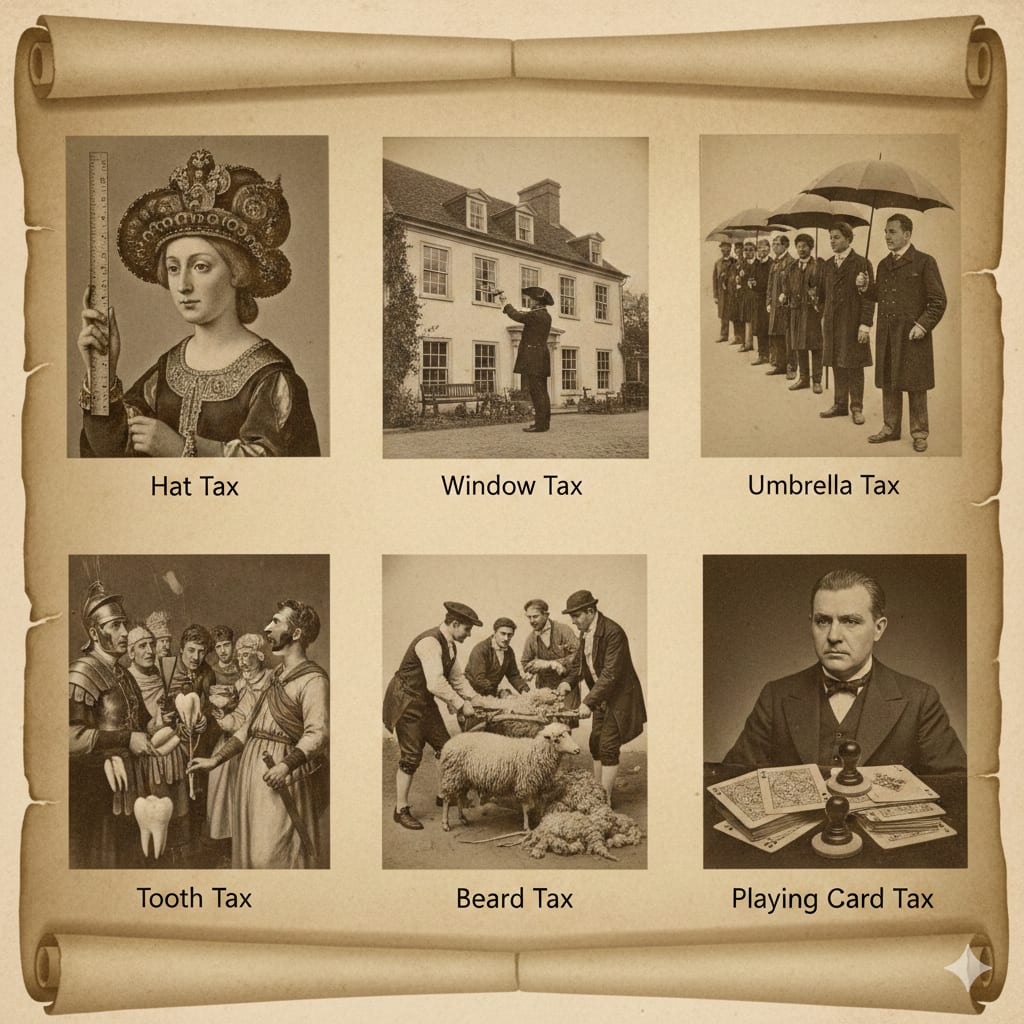
Throughout history, taxes haven’t always been about income or property. Some levies were downright bizarre, targeting everyday life, personal habits, and even your body. From medieval England to ancient Rome, here are six of the strangest taxes ever recorded.
1. Cowardice Tax - England
Back in the Middle Ages, there was no room for cowards. In a world constantly at war, joining the army wasn’t optional; it was a duty owed to your lord.
But what if you couldn’t fight? Enter the cowardice tax, formally known as scutage. Essentially, it was payment in lieu of military service.
- First introduced in 12th-century England under King Henry I, the tax began small but ballooned as money became more central to the economy.
- By the early 13th century, King John was charging 300% more than the original rate, even in years without war.
- Abuse of this system led to the Magna Carta, which prohibited scutage without approval from a great council.
- By the 14th century, the cowardice tax was officially banned.
2. Window Tax - England
In 1696, William III hit homeowners with a tax on windows; if your house had more than 10 windows, you had to pay.
- Poor rural families with smaller houses paid little to nothing.
- Urban tenants, living in large tenements, bore the brunt, as landlords passed costs onto them.
- To avoid paying, homeowners boarded up windows, creating dark, unhealthy living conditions.
- Medical complaints eventually led to the tax’s repeal in 1851, replaced by the more reasonable house tax.
3. Urine Tax - Ancient Rome
Here’s one that literally stinks: the urine tax of Emperor Vespasian.
- In 1st-century Rome, urine was highly valued for its ammonia content, used to clean clothes, tan leather, and even whiten teeth.
- Vespasian taxed the collection and sale of urine, coining the phrase “Pecunia non olet” (“money does not stink”).
- This unusual revenue helped Rome get out of debt and even funded iconic projects like the Colosseum.
4. Breast Tax - India
In the early 1800s in Southern India, poor women of the lower caste were taxed for covering their chests.
- Men could grudgingly accept social rules, but women faced harsh oppression.
- Nangeli, a brave woman from Alappuzha, made history by cutting off her breasts and presenting them to the tax collector in protest.
- Her act of defiance challenged the system and inspired generations of women in Kerala, leaving a legacy of courage.
5. Beard Tax - Russia
Peter the Great, Russia’s modernizing czar, didn’t just change armies; he changed fashion.
- After traveling across Europe, he admired the clean-shaven look.
- When Russian men resisted, he introduced a yearly beard tax, requiring men who wanted to keep their facial hair to pay according to their social status.
- Those who paid received a copper coin marked “tax paid”, granting them permission to keep their beards.
- The tax remained until 1772, nearly 50 years after Peter’s death.
History’s Weirdest Reminder
These taxes show how governments have exploited everything from fear to fashion throughout history. From cowardice to cleanliness, oppression to style, humans have found endless ways to make money… sometimes at absurd costs.
Next time you grumble about taxes, just be glad you’re not paying to keep your windows, your chest, or even your beard!
.
.
.
.
.
.
.
.
.
.
Weird taxes in history, bizarre historical taxes, ancient taxes, unusual taxes
About the Creator
Areeba Umair
Writing stories that blend fiction and history, exploring the past with a touch of imagination.
Keep reading
More stories from Areeba Umair and writers in History and other communities.
The Babylonians Who Beat Us to Calculus
A Discovery That Changes the Story, Today So, here we are in 2025, still trying to wrap our heads around how brilliant ancient civilizations really were. We’ve always known the Babylonians were math and astronomy rockstars, but the more we uncover, the more it feels like we’ve underestimated them by a lot.
By Areeba Umair2 months ago in History
Alexander the Great – Part 9: What If Alexander Had Lived Longer?
Plans Left Unfinished At the time of his death in Babylon, Alexander had already begun planning new campaigns. Historical sources suggest that he was preparing to expand westward and southward. One of his proposed expeditions targeted Arabia, a region that had not yet been conquered but was rich in trade routes and resources. Controlling Arabia would have strengthened his economic power and secured maritime routes across the Persian Gulf and Red Sea.
By Say the truth 8 days ago in History
Día de San Valentín: 25 Powerful Facts That Reveal the True Meaning of Valentine’s Day
Introduction to Día de San Valentín Día de San Valentín is celebrated every year on February 14 and is widely known as a day dedicated to love, affection, and emotional connection. Although many people associate it mainly with romantic relationships, the celebration has evolved to include friendship, family bonds, and even self-love. Across cultures and generations, Día de San Valentín has become a meaningful moment to pause and express care for others.
By Story Prism2 days ago in History
What Happens To Your Brain When You Stop Multitasking
Digital technology is the culprit that is causing us to doom scroll when tired, disengaged and unmotivated with the content that motivated you to log onto your device to consume in the first place. That is only the beginning. In the modern workplace (and even when filing cabinets were around, I confirmed this with my adopted parents to get my facts right); reading files while you are supposed to be present to the caller on the other end of the phone line is another classic example of multitasking that causes your brain (although adaptable and intelligent) to lose focus and concentration.
By Justine Crowley3 days ago in Psyche


Comments
There are no comments for this story
Be the first to respond and start the conversation.