
Alexander the Great – Part 9: What If Alexander Had Lived Longer?
History often turns on moments that seem small at the time but prove enormous in consequence. One of the greatest “what if” questions in world history is this: what if Alexander the Great had not died in 323 BCE at the age of 32? His empire stretched from Greece to the borders of India, and his ambitions showed no sign of slowing. If he had lived another twenty or thirty years, the ancient world might have looked very different. This part explores the possibilities—what Alexander might have done next, how his empire could have evolved, and how the course of global history might have changed if he had lived longer.

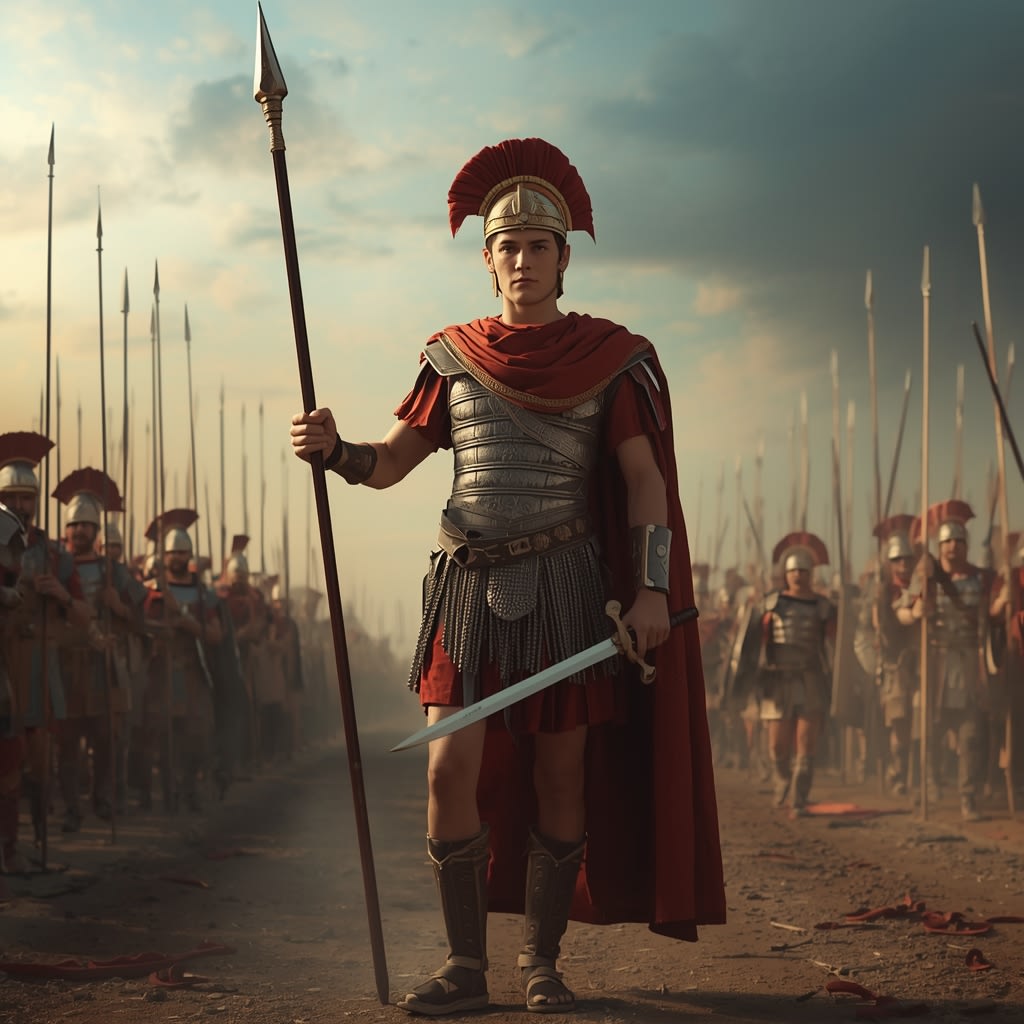
Plans Left Unfinished
At the time of his death in Babylon, Alexander had already begun planning new campaigns. Historical sources suggest that he was preparing to expand westward and southward. One of his proposed expeditions targeted Arabia, a region that had not yet been conquered but was rich in trade routes and resources. Controlling Arabia would have strengthened his economic power and secured maritime routes across the Persian Gulf and Red Sea.
There are also suggestions that Alexander may have intended to turn his attention toward the western Mediterranean. If he had marched toward Carthage or even Rome—still a rising power at the time—the balance of power in Europe could have shifted dramatically. A clash between Alexander’s seasoned army and the early Roman Republic would have been one of the most significant conflicts in ancient history.
Beyond military campaigns, Alexander was also interested in consolidating and organizing his empire. He had begun building fleets, establishing new cities, and integrating local elites into his administration. These efforts suggest that he was thinking not only about conquest but also about long-term governance.
Could the Empire Have Survived?
One of the biggest challenges Alexander faced was the sheer size and diversity of his empire. It included many different languages, cultures, and traditions. During his lifetime, his personal leadership held everything together. But could he have created a stable system that would last beyond him?
If Alexander had lived longer, he might have established clearer systems of administration and succession. He had already begun encouraging marriages between his Macedonian officers and Persian noble families, hoping to unite cultures and create a shared ruling class. Over time, this blending of traditions could have strengthened the empire’s unity.
He also founded numerous cities, many of them named Alexandria, which served as administrative and cultural centers. With more time, these cities could have developed into strong regional capitals, helping maintain order across the empire.
However, maintaining such a vast territory would still have been difficult. Communication and transportation were slow by modern standards. Rebellions and local conflicts would likely have continued to challenge central authority. Even with Alexander alive, keeping the empire unified would have required constant attention and leadership.
The Impact on Rome
One of the most intriguing possibilities is how Alexander’s continued rule might have affected the rise of Rome. When Alexander died, Rome was still a regional power in Italy. Over the next few centuries, it would expand across the Mediterranean, eventually controlling many of the lands Alexander had conquered.
If Alexander had lived and expanded westward, he might have encountered Rome earlier in its development. A confrontation between Macedonian forces and Roman legions could have changed the course of European history. If Alexander had defeated Rome, the Roman Empire as we know it might never have existed.
On the other hand, a prolonged conflict with Rome could have weakened Alexander’s empire, creating new opportunities for other powers. The outcome of such a clash is impossible to predict, but it highlights how Alexander’s early death opened the door for Rome’s later dominance.
Cultural and Scientific Development
Alexander’s empire played a key role in spreading Greek culture and encouraging intellectual exchange. If he had lived longer, this cultural integration might have deepened even further. More cities could have been founded, more trade routes established, and more scholars brought together.
Centers like Alexandria in Egypt became hubs of learning partly because of the Hellenistic world that followed Alexander’s conquests. With his continued support, these centers might have grown even more influential. Scientific and philosophical advancements could have accelerated, shaping the development of knowledge across the ancient world.
Alexander himself was curious and open to new ideas. He studied under Aristotle and showed interest in geography, science, and exploration. Some historians believe he might have sponsored expeditions to explore unknown regions, further expanding the boundaries of the known world.
A Different Hellenistic Age
The Hellenistic period that followed Alexander’s death was marked by the division of his empire among his generals. If he had lived longer and established a stable succession plan, this fragmentation might have been avoided or delayed. Instead of several competing kingdoms, there might have been a single, unified empire lasting for generations.
Such an empire could have provided greater stability and economic growth. Trade across Asia, Africa, and Europe might have flourished even more. Cultural blending between Greek, Persian, Egyptian, and Indian traditions could have created an even richer and more unified civilization.
However, history shows that large empires often face internal challenges. Even if Alexander had lived longer, maintaining unity across such vast territories would have been difficult. Still, his presence could have delayed the conflicts that followed his death and allowed for a more gradual transition of power.
The Human Side of the Question
Imagining Alexander living longer also raises questions about his personal development. Would he have matured into a more cautious and administrative ruler, or would his ambition have driven him into ever more dangerous campaigns? Would he have been able to balance conquest with governance?
As he aged, Alexander might have shifted his focus from expansion to consolidation. He might have spent more time in one capital, building institutions and training successors. Alternatively, his restless energy could have pushed him to continue exploring and conquering new lands.
An Unanswered Question
History cannot tell us exactly what would have happened if Alexander had lived longer. What we do know is that his early death changed the course of events. It led to the division of his empire, the rise of Hellenistic kingdoms, and eventually the dominance of Rome.
Yet even in death, Alexander’s influence remained strong. His conquests reshaped the ancient world, and his legacy continued to inspire leaders, scholars, and storytellers for centuries.
The question of what might have been adds another layer to his story. It reminds us that history is shaped not only by what happens but also by what could have happened. Alexander the Great achieved more in three decades than most rulers do in a lifetime. If he had lived longer, his impact might have been even greater—or perhaps even more complicated.
Either way, the legacy he left behind ensures that his name will remain one of the most fascinating in human history.
About the Creator
Say the truth
"Say the Truth: Explain Everything in the World" is your trusted source for uncovering facts and exploring the wonders of history, science, technology, and beyond. We simplify complex ideas and reveal truths to inspire curiosity .
Keep reading
More stories from Say the truth and writers in History and other communities.
Alexander the Great – Part 8: The Myth, the Memory, and the Man Behind the Legend
From King to Legend When Alexander died in 323 BCE, he was already famous across three continents. Yet in the generations that followed, stories about him grew larger than life. Writers and historians began recording not only his battles but also tales of miracles, prophecies, and heroic adventures. Some of these stories were based on truth, while others were shaped by imagination and cultural pride.
By Say the truth 3 days ago in History
the lesser gods of earth
the lesser gods of earth Earth herself was called the All-Mother, but she was not really a divinity. She was never separatedfrom the actual earth and personified. The Goddess of the Corn, DEMETER (CERES), a daughter ofCronus and Rhea, and the God of the Vine, DIONYSUS, also called BACCHUS, were the supreme deities of the earth and of great importance in Greek and Roman mythology. Their stories will be found in the next chapter. The other divinities who lived in the world were comparatively unimportant.
By Bahila Ataklti6 days ago in History



Comments
There are no comments for this story
Be the first to respond and start the conversation.