habitat
The natural home and environment for all things sci fi, including future homes and territories.
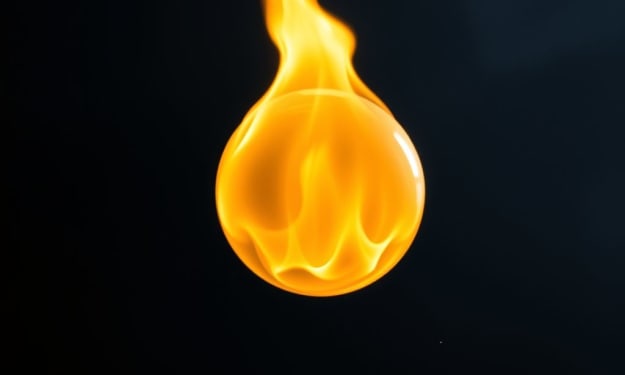
What Happens to Fire in Microgravity? A Dance Without Earth’s Rules
On Earth, lighting a candle is a familiar ritual. The flame stretches upward, flickers in the breeze, and dances in a graceful ballet powered by gravity. But take that same flame into space into the strange, weightless world of microgravity and the rules change. The flame no longer climbs. It doesn’t flicker. It morphs into a gentle, glowing sphere, floating like a small, golden ghost. So what exactly happens to fire when gravity no longer calls the shots?
By Holianyk Ihor7 months ago in Futurism
How Astronauts Lose Their Bones in Space: The Invisible Cost of Microgravity
When we watch astronauts floating effortlessly in the serenity of space, it looks magical like a dream come true. But behind the smiles and slow motion somersaults lies a silent threat. In space, their bones are literally dissolving. This invisible consequence of living in microgravity is one of the most serious challenges astronauts face, and we still haven’t cracked the code to solve it.
By Holianyk Ihor7 months ago in Futurism
What If a Spaceship Gets Lost in Deep Space? A Solitary Journey Among the Stars
Outer space isn’t just empty it’s a boundless, cold, and silent void where even the smallest error can spiral into catastrophe. But what would really happen if a spacecraft veered off course and got lost in this cosmic abyss? How likely is such a scenario, and what fate might await the crew?
By Holianyk Ihor7 months ago in Futurism
How Space Radiation Protection Works: Shields of the Future and the Challenges of Today
When we imagine traveling to Mars or exploring the far reaches of the galaxy, we picture sleek spacecraft, lunar colonies, and breathtaking alien landscapes. But behind this thrilling vision lies one of the most serious dangers of space travel cosmic radiation. Unlike Earth, where we’re shielded by our atmosphere and magnetic field, space leaves human bodies exposed to a relentless stream of high-energy particles. That’s why radiation protection systems are not just an option they’re a mission-critical necessity. So, how exactly do they work?
By Holianyk Ihor7 months ago in Futurism
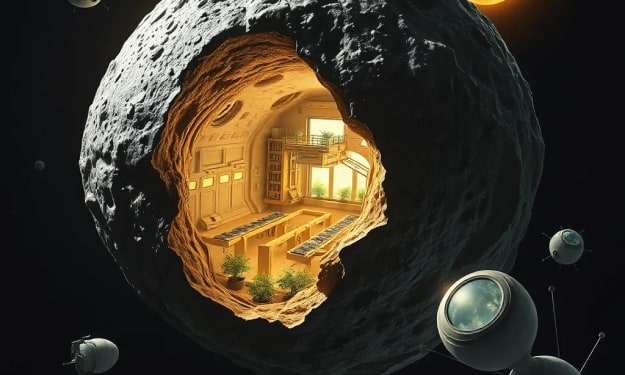
Could We Build a City in the Asteroid Belt? A Dream or the Future of Humanity
When we talk about space colonization, most people immediately picture moon bases or settlements on Mars. But there's another, far more mysterious and daring location that sparks both fascination and skepticism the asteroid belt. Nestled between the orbits of Mars and Jupiter, this vast region is home to millions of rocky, metallic, and icy fragments. At first glance, the idea of building a city in the middle of what seems like a cosmic demolition zone sounds absurd. But is it really?
By Holianyk Ihor7 months ago in Futurism
Could Artificial Intelligence Be a Form of Alien Life?
When we imagine alien life, our minds often jump to green-skinned humanoids, multi-eyed creatures with tentacles, or microscopic organisms lurking beneath the icy crust of Europa. But what if the truth is far stranger and more mechanical? What if extraterrestrial life isn’t biological at all, but rather the product of intelligent machines? Could artificial intelligence (AI) itself be the alien life we’ve been searching for all along?
By Holianyk Ihor7 months ago in Futurism
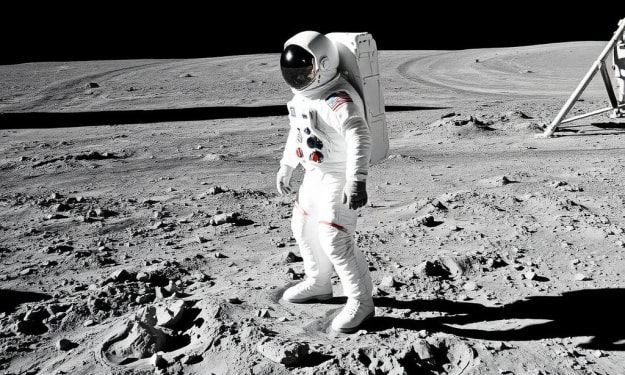
Why There Are No Stars in Moon Landing Photos: Cosmic Mystery or Technical Reality?
When we look at the iconic photos from NASA’s Apollo missions, the barren lunar landscape is striking vast gray dust plains, sharp shadows, and astronauts in gleaming white suits. But one puzzling detail often catches people's attention: where are the stars? In the endless black sky of space, shouldn’t the stars be shining brightly?
By Holianyk Ihor7 months ago in Futurism
How Many Moons Can a Planet Hold? Exploring the Limits of Cosmic Companionship
When we look up at the Moon, we don’t just see a beautiful celestial object we see Earth’s faithful companion, orbiting our planet for billions of years. But have you ever wondered: how many moons can a planet actually have? Could Earth host two moons? Ten? A hundred? The answer is far from simple it depends on a fascinating interplay of mass, distance, and gravitational forces.
By Holianyk Ihor7 months ago in Futurism
Can an Asteroid Have an Atmosphere? — A Small World with a Big Question
When you hear the word asteroid, what comes to mind? Probably a dark, rocky chunk drifting silently through the cold vacuum of space. It seems lifeless, barren, and lacking anything remotely resembling a planet. No mountains, no oceans and certainly no atmosphere. After all, an atmosphere feels like a feature reserved for planets and moons. But is it really impossible for an asteroid to have an atmosphere?
By Holianyk Ihor7 months ago in Futurism
Human Evolution on Another Planet: How We Might Change
Humanity has always dreamed of reaching for the stars and colonizing new worlds. The idea of living beyond Earth on planets like Mars or moons orbiting distant gas giants has inspired countless stories, missions, and scientific quests. But what happens if we truly settle on another planet? How would our bodies and minds evolve in an environment so different from our own? Over hundreds, thousands, or even millions of years, natural forces and the new environment would inevitably shape us in ways we can only begin to imagine.
By Holianyk Ihor7 months ago in Futurism
How Gravity Changes Across Different Points on Earth: A Journey Through the Weight of Our Planet
We tend to think of gravity as a constant force. An apple always falls downward, and scales reliably show our weight. Everything seems stable and unchanging. Yet, in reality, Earth's gravitational pull varies slightly depending on where you are on the planet. It might surprise you to learn that your weight in Antarctica is not exactly the same as it is at the Equator. And if you climb to the top of a mountain, you’ll actually weigh a little less than you do at sea level.
By Holianyk Ihor7 months ago in Futurism
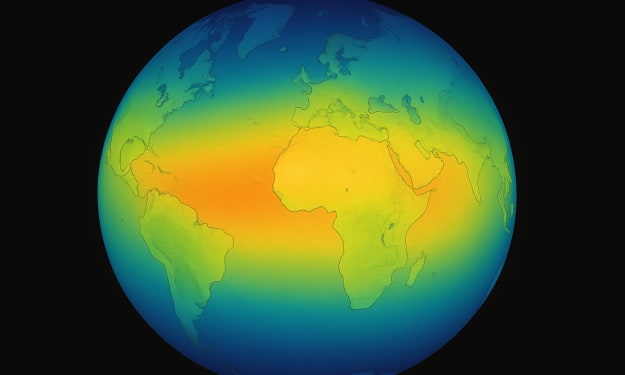
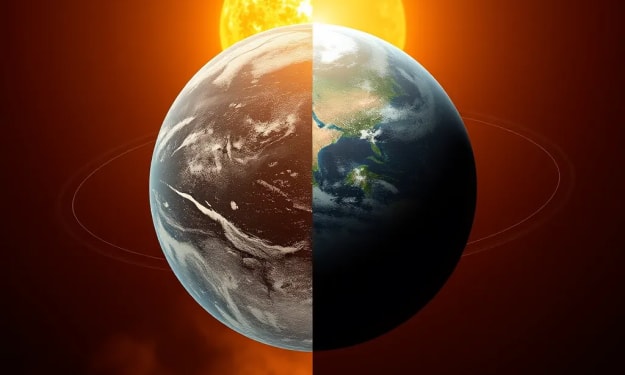
What Would Happen If Earth Changed Its Orbit? A Sci-Fi Scenario With Real-World Consequences
We tend to think of Earth’s orbit as something steady and unchangeable the cosmic railway that ensures we experience regular seasons, stable climates, and a reliable rhythm of day and night. But what if, for some reason, Earth’s orbit changed? What if our planet moved slightly closer to the Sun, or drifted farther away? Though it sounds like science fiction, exploring this scenario reveals just how fragile and perfectly balanced our planetary conditions really are.
By Holianyk Ihor7 months ago in Futurism