
How Astronauts Lose Their Bones in Space: The Invisible Cost of Microgravity
Space

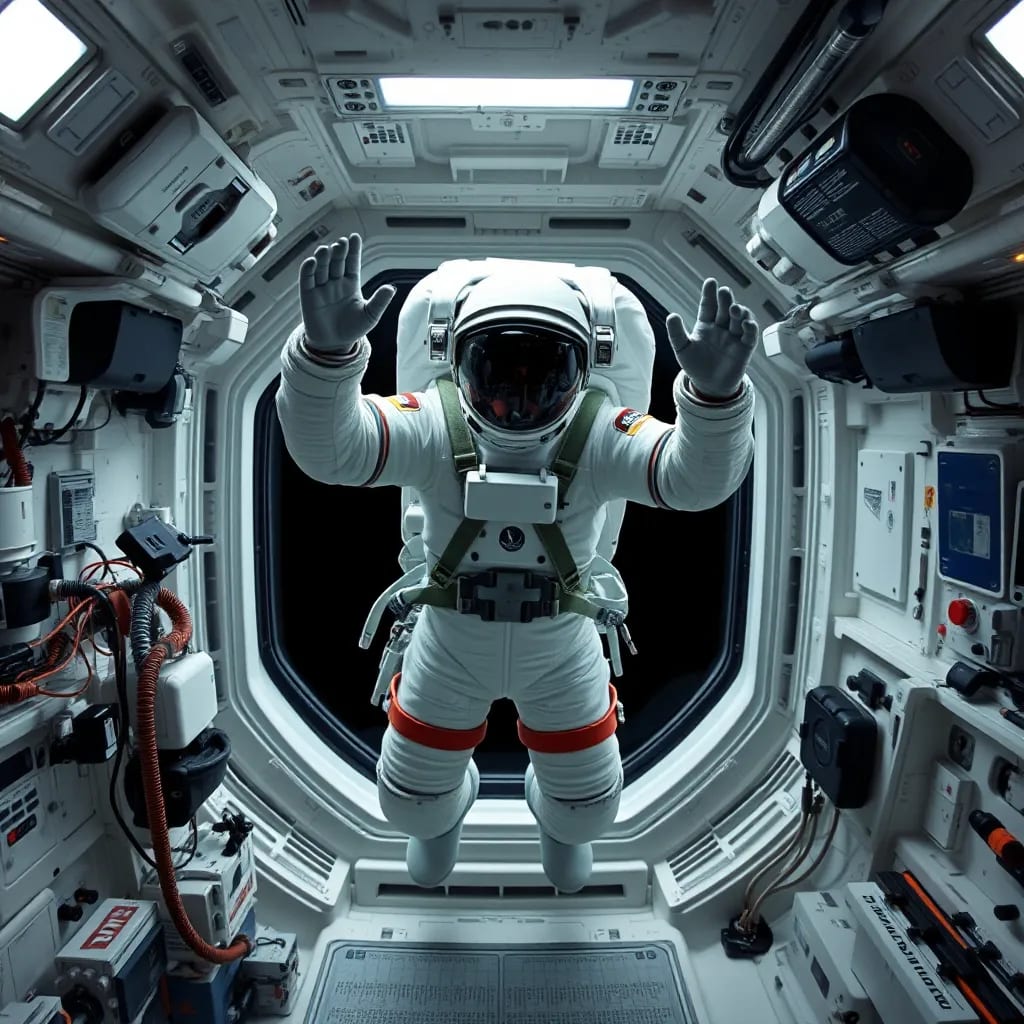
When we watch astronauts floating effortlessly in the serenity of space, it looks magical like a dream come true. But behind the smiles and slow motion somersaults lies a silent threat. In space, their bones are literally dissolving. This invisible consequence of living in microgravity is one of the most serious challenges astronauts face, and we still haven’t cracked the code to solve it.
Why Do Bones Break Down in Space?
On Earth, our skeletons constantly work against gravity. Even standing up is an act of resistance that helps bones stay dense and strong. In space, where gravity is virtually nonexistent, muscles relax and bones no longer bear weight. The body gets a strange signal: “You don’t seem to need these bones let’s recycle them.”
What follows is a process similar to osteoporosis. The body begins to reabsorb calcium from the bones, weakening their structure. NASA studies have shown that astronauts can lose up to 1–2% of their bone mass per month, especially in the spine, pelvis, and legs areas that typically bear the most weight on Earth.
What Does This Mean for Astronauts’ Health?
Bone loss is more than just a structural issue it affects the whole body. As the density decreases, bones become brittle and vulnerable. But the damage doesn't stop there:
- Fracture risk increases significantly after returning to Earth, especially if the body is suddenly exposed to gravity and physical stress again.
- Excess calcium in the bloodstream can lead to the formation of kidney stones, a painful and potentially dangerous condition.
- Recovery is slow. It can take months of rehabilitation for an astronaut’s body to regain bone strength and stability.
Some astronauts even report back pain after landing and a loss in height, due to compressed spinal discs weakened during their time in microgravity.
How Do Space Agencies Fight It?
NASA and other space agencies have spent decades trying to protect astronauts from space-induced bone loss. On the International Space Station (ISS), every astronaut follows a strict regimen designed to slow this effect:
- Rigorous exercise routines. Astronauts work out for up to two hours a day using specialized equipment like treadmills (with harnesses that simulate gravity), stationary bikes, and resistance machines like the ARED (Advanced Resistive Exercise Device).
- Bone healthy diets. Meals are packed with calcium and vitamin D, which are essential for bone metabolism and repair.
- Osteoporosis medications. Sometimes astronauts take bisphosphonates, drugs that help prevent bone breakdown, similar to what’s prescribed to older adults on Earth.
Despite all these efforts, current countermeasures only slow down bone loss they don’t stop it completely.
What About Mars?
The bone loss problem becomes even more urgent when we consider future missions to the Moon and Mars. A one way trip to Mars may take six to nine months, and astronauts will likely spend over a year outside Earth’s gravity counting time on Mars and the return journey.
The gravity on Mars is just 38% of Earth’s, which means the bones still won’t receive full weight-bearing stress. If we don’t find a better solution, astronauts may land on Mars too weak to walk, build, or explore rendering the mission unfeasible.
What Comes Next?
Scientists are looking into innovative technologies and ideas to prevent bone loss during long missions:
- Artificial gravity. Some proposed spacecraft designs feature rotating modules that create centrifugal force to mimic gravity.
- Gene therapy. Researchers are exploring ways to modify the body’s cellular response to microgravity — potentially “reprogramming” bone cells to keep building tissue even without weight.
- Exoskeletons and smart materials. Wearable tech might help apply external pressure to bones, simulating gravity’s effects without relying on actual mass.
Space Has Its Own Rules
Human bodies evolved under Earth's gravitational pull. Take that away, and it’s like pulling the foundation out from under a building. Bone loss is just one of many challenges astronauts face but it’s a fundamental one. The body starts to adapt to a world where gravity doesn’t exist, and those adaptations come at a price.
Yet, facing these biological hurdles is a necessary step if we ever want to live on other planets. Every discovery, every study brings us closer to making space travel not only possible but sustainable.
The road to the stars may be paved with scientific miracles, but it also demands cellular level resilience. In space, even your skeleton needs a strategy.
About the Creator
Keep reading
More stories from Holianyk Ihor and writers in Futurism and other communities.
What If a Spaceship Gets Lost in Deep Space? A Solitary Journey Among the Stars
Outer space isn’t just empty it’s a boundless, cold, and silent void where even the smallest error can spiral into catastrophe. But what would really happen if a spacecraft veered off course and got lost in this cosmic abyss? How likely is such a scenario, and what fate might await the crew?
By Holianyk Ihor7 months ago in Futurism
About Binding Prometheus
I want to start actively advocating on behalf of my own work, and the most valuable part of my canon is, without a doubt, Binding Prometheus, the play I have been working on since 2019 and only finished in 2023 as part of my MA. The play itself is an amalgamation of a million different inspirations. On one end, it evokes the Ancient Greek myth-play, deriving its own title from the earliest extant work of Western drama we have, Aeschylus’s Prometheus Bound. On the other end, it borrows significantly from the sci-fi bulwarks from over the years, namely Mary Shelley’s Frankenstein and Karel Capek’s Rossum’s Universal Robots. The play could be an episode of Black Mirror, I fear. I don’t know. I’ve only ever seen one episode of Black Mirror.
By Steven Christopher McKnight16 days ago in Futurism
Australia Electric Vehicle Market: Clean Mobility, Smart Transport & Energy Transition
In 2025, Australia electric vehicle (EV) market was valued at USD 21.1 Billion. Looking ahead, the market is expected to surge to USD 205.5 Billion by 2034, exhibiting an exceptional compound annual growth rate (CAGR) of 28.80% during 2026–2034.
By Kevin Cooper4 days ago in Futurism



Comments
There are no comments for this story
Be the first to respond and start the conversation.