
How Space Radiation Protection Works: Shields of the Future and the Challenges of Today
Space

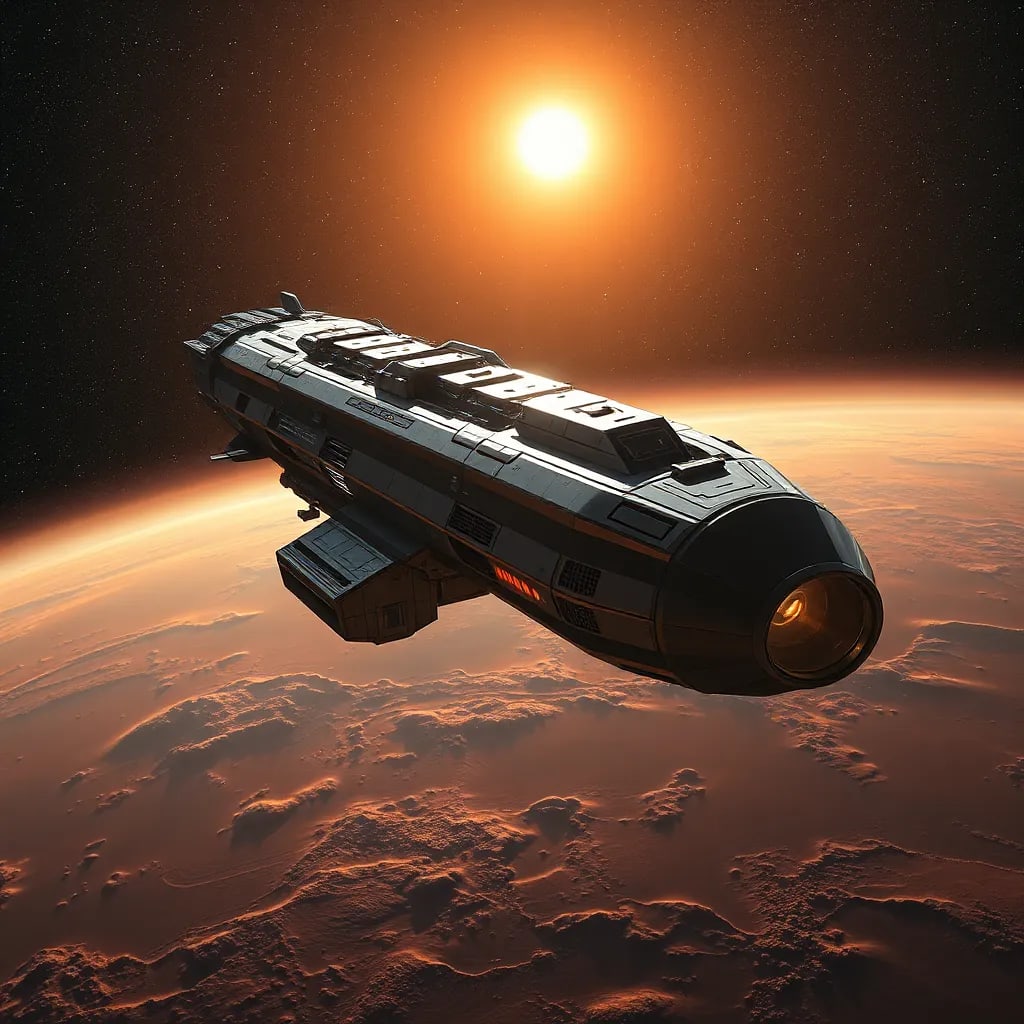
When we imagine traveling to Mars or exploring the far reaches of the galaxy, we picture sleek spacecraft, lunar colonies, and breathtaking alien landscapes. But behind this thrilling vision lies one of the most serious dangers of space travel cosmic radiation. Unlike Earth, where we’re shielded by our atmosphere and magnetic field, space leaves human bodies exposed to a relentless stream of high-energy particles. That’s why radiation protection systems are not just an option they’re a mission-critical necessity. So, how exactly do they work?
What Is Space Radiation?
There are two major sources of space radiation that astronauts have to worry about:
- Galactic Cosmic Rays (GCRs) – These are high-energy particles that originate from outside our solar system, often from distant supernovae. They are extremely difficult to shield against.
- Solar Particle Events (SPEs) – These are bursts of energetic particles from the Sun, especially during solar flares and coronal mass ejections. Although intense, they are usually short-lived.
Both types of radiation are capable of penetrating clothing, spacecraft hulls, and even several centimeters of metal or concrete. Once inside the body, these particles can damage cells, disrupt DNA, and significantly increase the risk of cancer, cataracts, and neurological damage over time.
Earth’s Natural Radiation Shield
Earth offers a double layer of protection: its atmosphere and magnetosphere. The magnetosphere deflects many charged particles before they ever reach the atmosphere. The atmosphere, in turn, absorbs and scatters radiation, making the Earth's surface relatively safe.
However, once astronauts leave low Earth orbit heading toward the Moon, Mars, or beyond they also leave these natural defenses behind. Radiation exposure increases dramatically, and the need for artificial shielding becomes a matter of survival.
How the ISS Protects Its Crew
The International Space Station (ISS) orbits within Earth's magnetic field, so its crew benefits from some natural protection. Still, radiation is a persistent threat, and multiple strategies are in place:
- Structural Shielding – The ISS is built using materials like aluminum and specialized composites, which help reduce radiation exposure.
- Storm Shelters Certain areas of the station, such as the Zvezda module, are reinforced with thicker walls. During solar storms, astronauts take shelter there to minimize exposure.
- Hydrogen-Rich Materials Materials containing hydrogen, such as water tanks or special plastics, are used to absorb and block radiation more effectively than metals. Sometimes water containers are strategically placed to act as protective barriers.
The Future of Spacecraft: Building Better Armor
As we look toward longer missions, especially to Mars, stronger and smarter protection systems are essential. Several promising technologies are under development or being tested:
1. Passive Shielding
This is the classic approach using thicker spacecraft walls and incorporating materials like polyethylene, water, or even regolith (the dusty surface material found on the Moon and Mars). These substances are excellent at absorbing radiation and are being considered for use in planetary habitats.
2. Active Shielding
Once considered science fiction, active shielding is now being seriously explored. The idea is to create artificial magnetic or electric fields around the spacecraft, mimicking Earth’s magnetic field to deflect charged particles. Plasma shields are another potential option, though they are still highly experimental.
3. Personal Protection
NASA has already tested the AstroRad vest, a wearable radiation shield designed to protect astronauts’ most vulnerable organs. Personal protection gear might become a standard part of space suits, especially during extravehicular activities (spacewalks).
Living Underground: Lunar and Martian Shelters
One of the most effective forms of radiation protection is good old-fashioned dirt. On the Moon or Mars, future explorers may dig shelters underground or cover habitats with thick layers of local soil a natural shield that could dramatically cut down on exposure.
The Weight Problem: Not Just About Efficiency
Radiation shielding isn’t just about effectiveness it’s also about mass. Every extra kilogram of material must be launched from Earth, and launch costs are steep. Moreover, some shielding materials, when hit by high energy particles, can produce secondary radiation, which may be even more harmful. That’s why scientists constantly search for lightweight, safe, and efficient shielding combinations.
Final Thoughts
Radiation in space isn’t just a technological problem it’s a fundamental challenge to human space exploration. It stands as one of the greatest obstacles between us and the dream of living on other worlds. But with each new breakthrough, each material innovation, and each test in orbit, we take one step closer to solving it.
One day, the spaceships we build may come equipped with built-in electromagnetic shields, transparent protective walls, or even self-healing materials that adapt to radiation damage. Until then, we continue the race to outsmart the invisible danger not just to survive in space, but to thrive among the stars.
About the Creator
Keep reading
More stories from Holianyk Ihor and writers in Futurism and other communities.
Could We Build a City in the Asteroid Belt? A Dream or the Future of Humanity
When we talk about space colonization, most people immediately picture moon bases or settlements on Mars. But there's another, far more mysterious and daring location that sparks both fascination and skepticism the asteroid belt. Nestled between the orbits of Mars and Jupiter, this vast region is home to millions of rocky, metallic, and icy fragments. At first glance, the idea of building a city in the middle of what seems like a cosmic demolition zone sounds absurd. But is it really?
By Holianyk Ihor7 months ago in Futurism
About Binding Prometheus
I want to start actively advocating on behalf of my own work, and the most valuable part of my canon is, without a doubt, Binding Prometheus, the play I have been working on since 2019 and only finished in 2023 as part of my MA. The play itself is an amalgamation of a million different inspirations. On one end, it evokes the Ancient Greek myth-play, deriving its own title from the earliest extant work of Western drama we have, Aeschylus’s Prometheus Bound. On the other end, it borrows significantly from the sci-fi bulwarks from over the years, namely Mary Shelley’s Frankenstein and Karel Capek’s Rossum’s Universal Robots. The play could be an episode of Black Mirror, I fear. I don’t know. I’ve only ever seen one episode of Black Mirror.
By Steven Christopher McKnight19 days ago in Futurism
Egypt Kitchen Appliances Market: Retail Expansion, Smart Features & Market Dynamics
According to IMARC Group's latest research publication, Egypt kitchen appliances market size reached USD 728.88 Million in 2024. The market is projected to reach USD 1,202.05 Million by 2033, exhibiting a growth rate of 5.13% during 2025-2033.
By Abhay Rajput7 days ago in Futurism


Comments
There are no comments for this story
Be the first to respond and start the conversation.