extraterrestrial
Speculation, theory, UFOs and Aliens. Are we alone in this universe or is there life outside Earth?
Why Europa and Enceladus Have Become the Prime Targets in the Search for Life
For much of the past century, Mars dominated humanity’s imagination as the most likely place to find life beyond Earth. Its dry riverbeds, ancient lakes, and similarities to our own planet made it a natural first candidate. However, as planetary science has advanced, the focus of astrobiology has shifted dramatically. Today, two icy moons—Europa, orbiting Jupiter, and Enceladus, orbiting Saturn—have emerged as the most promising destinations in the search for extraterrestrial life. This change did not happen by chance. It is the result of a series of discoveries that revealed these frozen worlds to be surprisingly active, warm, and potentially habitable beneath their icy shells.
By Holianyk Ihor13 days ago in Futurism
Strange Symmetries in the Distribution of Galaxies: Coincidence or Hidden Order?
When astronomers first began mapping the large-scale structure of the Universe, their expectations were guided by a simple but powerful assumption. On the grandest scales, the cosmos should look roughly the same in every direction. This idea, known as the cosmological principle, underpins modern cosmology and suggests that the Universe is homogeneous and isotropic when viewed from afar.
By Holianyk Ihor13 days ago in Futurism
Lunar Lava Tubes: Humanity’s First True Shelters Beyond Earth
When people imagine humans living on the Moon, they often picture futuristic domes rising from a gray, dusty surface, astronauts walking beneath transparent ceilings while Earth hangs in the black sky above. This vision has dominated science fiction and even early space architecture concepts for decades. Yet the most realistic future for long-term human survival on the Moon may lie not above its surface, but deep beneath it — inside vast, ancient lava tubes carved by volcanic forces billions of years ago.
By Holianyk Ihor14 days ago in Futurism
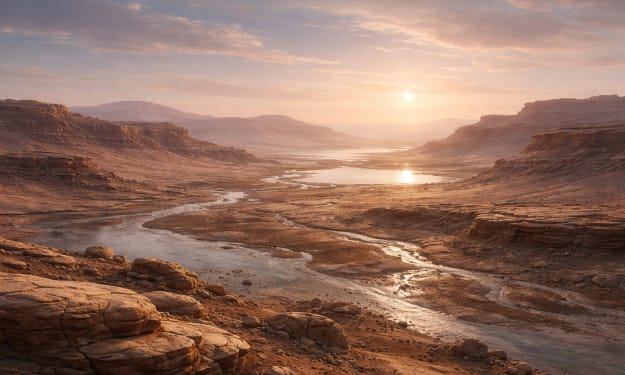
Mars Was Almost Habitable — Why the Red Planet Missed Its Chance
Today, Mars looks like a frozen, lifeless desert. Its surface is bombarded by radiation, its atmosphere is incredibly thin, and liquid water cannot exist for long under current conditions. Yet over the past two decades, planetary science has revealed a striking and somewhat tragic truth: Mars was once very close to being a habitable world. In many ways, it resembled an early version of Earth. So why did Mars fail where Earth succeeded?
By Holianyk Ihor14 days ago in Futurism
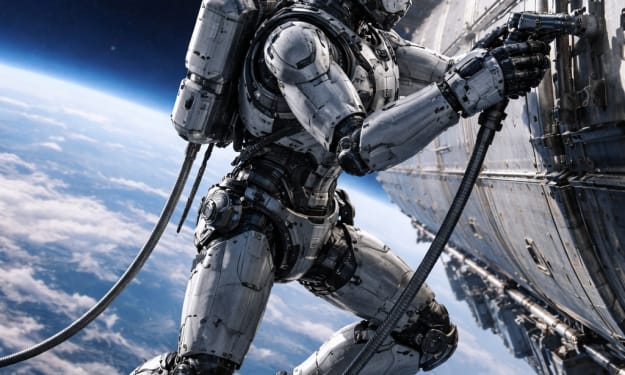
GITAI and the Rise of Robot Astronauts: Will Humans Be Replaced in Space?
For more than half a century, space exploration has been inseparable from the human image. Astronauts floating in zero gravity, performing spacewalks, and gazing at Earth through the cupola became powerful symbols of humanity’s ambition to go beyond its home planet. Yet in the 21st century, this image is undergoing a quiet but profound transformation. A new generation of robot astronauts is emerging, and one of the most striking representatives of this shift is the company GITAI.
By Holianyk Ihor19 days ago in Futurism
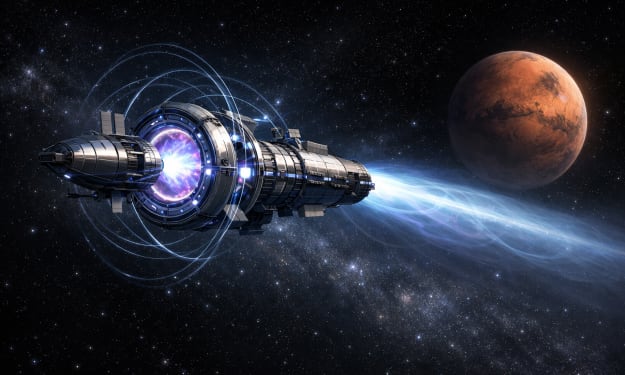
Helicity Space and a New Generation of Plasma Engines: How the Journey to Mars Could Be Cut by Several Times
For decades, Mars has been humanity’s most realistic dream beyond the Moon. It is close enough to reach with existing technology, yet distant enough to expose the fundamental limits of modern spaceflight. Even with today’s best rockets, a crewed mission to the Red Planet typically takes six to nine months one way. That long transit time is not just inconvenient—it is dangerous, expensive, and physically exhausting for astronauts.
By Holianyk Ihor19 days ago in Futurism
Is Digital Immortality Possible for Space Colonists?
As humanity prepares to expand beyond Earth, questions once reserved for philosophy are rapidly becoming matters of engineering and survival. Among the most provocative of these questions is the idea of immortality. Not in a mythical or religious sense, but in a technological one. When interstellar journeys may last centuries, and off-world colonies must survive in extreme and hostile environments, the limitations of the human body become a serious obstacle. In this context, the concept of digital immortality—the continuation of a human mind in a non-biological form—no longer sounds like science fiction. It begins to resemble a practical solution.
By Holianyk Ihor21 days ago in Futurism
Will Cybernetization Become Mandatory for Life Beyond Earth?
As humanity looks beyond Earth and seriously considers long-term life in space, a once speculative question is becoming increasingly practical: can the human body, in its natural biological form, survive beyond our planet without fundamental modification? Or will cybernetization—deep integration of technology into the human body—become not just an advantage, but a necessity for living outside Earth?
By Holianyk Ihor21 days ago in Futurism
How the Concept of Time Will Change for Interstellar Generations
For humans living in the 21st century, time seems like one of the most constant and self-evident aspects of existence. We measure it in seconds, hours, days, and years; we divide it into historical epochs; and we experience it relative to the span of a human life. Yet, when humanity ventures beyond the Solar System, this familiar notion of time begins to shift. Interstellar travel, stretching over decades, centuries, or even millennia, will inevitably transform the way we perceive time—not just physically, but socially, culturally, and psychologically.
By Holianyk Ihor24 days ago in Futurism
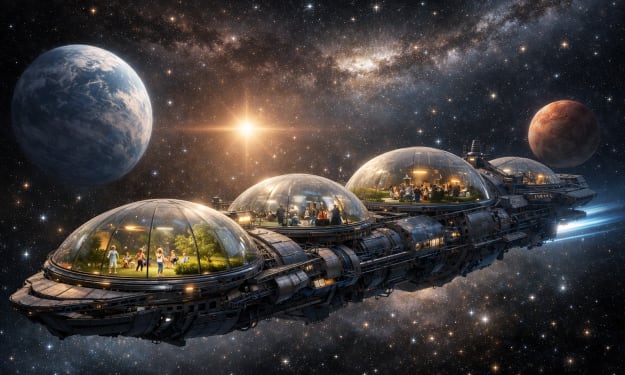
Space Arks — Cities Sailing Through the Centuries
The concept of space arks—massive, self-sustaining cities journeying through the cosmos for centuries or even millennia—has long captivated the imagination of science fiction enthusiasts. Today, however, it is increasingly considered a plausible scenario for humanity’s interstellar expansion. Unlike small spacecraft carrying just a few dozen astronauts, these arks are envisioned as entire civilizations capable of thriving for generations, often without ever setting eyes on Earth again.
By Holianyk Ihor24 days ago in Futurism
Pets of the Future: Which Animals Could Live Beyond Earth?
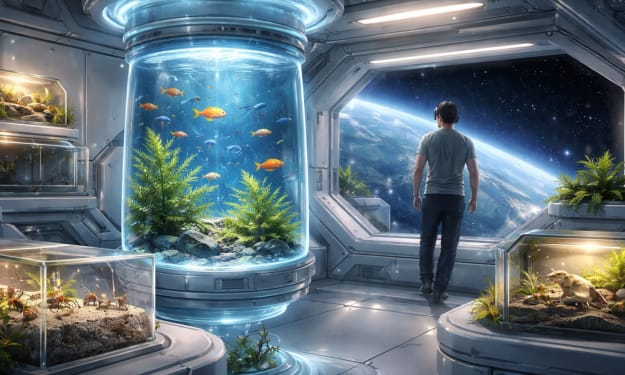
As humanity prepares for a long-term presence beyond Earth, the conversation is no longer limited to rockets, habitats, and survival systems. We are beginning to ask more human questions: What will daily life look like on the Moon or Mars? How will astronauts cope with isolation, stress, and the psychological challenges of living far from home? And inevitably, another question arises—could humans bring pets with them into space?
By Holianyk Ihor25 days ago in Futurism