
Pets of the Future: Which Animals Could Live Beyond Earth?
Space

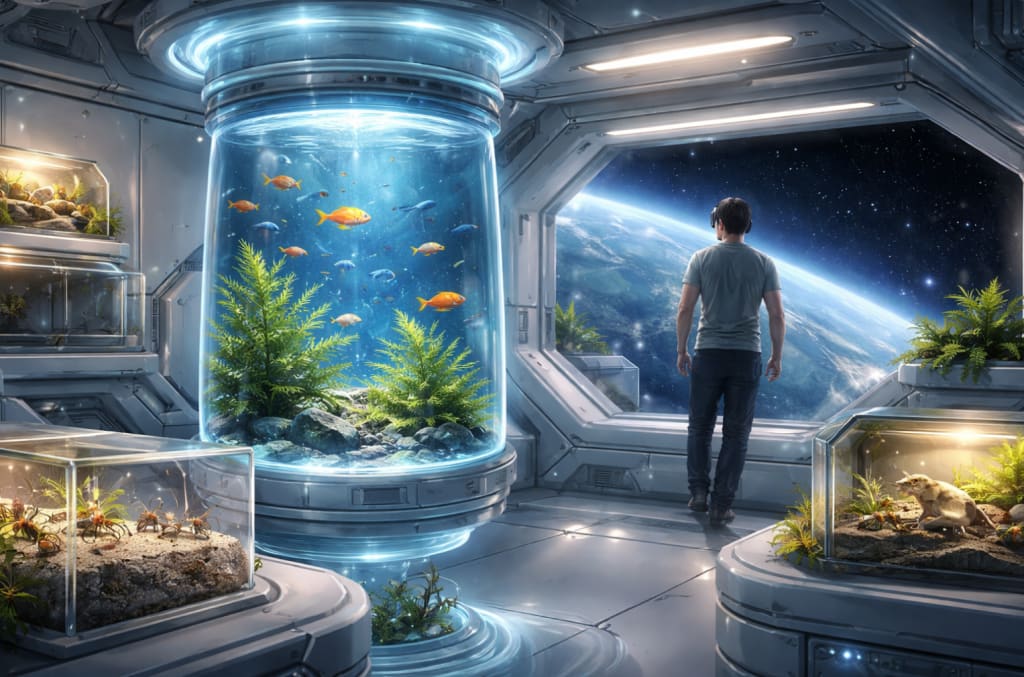
As humanity prepares for a long-term presence beyond Earth, the conversation is no longer limited to rockets, habitats, and survival systems. We are beginning to ask more human questions: What will daily life look like on the Moon or Mars? How will astronauts cope with isolation, stress, and the psychological challenges of living far from home? And inevitably, another question arises—could humans bring pets with them into space?
For thousands of years, animals have shared our homes, supported our emotional well-being, and become an essential part of human life. If people are to live beyond Earth for months or even years, it is natural to imagine animals becoming part of that future as well. However, space is not just another environment—it is an extreme one. Not every pet is suited for life beyond our planet.
Space Is Not Earth: The Challenges for Living Creatures
Before considering which animals could become space pets, it is important to understand the conditions they would face. Space habitats are defined by microgravity or reduced gravity, higher radiation levels, limited space, artificial lighting, and closed life-support systems. Every living organism must coexist within a tightly controlled ecosystem where resources such as air, water, and food are carefully recycled.
This means that future space pets must be small, resilient, low-maintenance, and emotionally or biologically compatible with human life in confined environments. Animals that require constant care, large territories, or complex social structures may not be practical candidates—at least not in the near future.
Insects and Invertebrates: The Most Realistic Space Companions
Surprisingly, some of the most promising candidates for living beyond Earth are insects and other invertebrates. Ants, beetles, spiders, and even cockroaches have already participated in space experiments. These creatures are extremely adaptable, require minimal resources, and can survive in environments that would be hostile to larger animals.
Ant colonies, for example, have been studied on the International Space Station to understand how social behavior adapts in microgravity. In the future, such insects may play dual roles—as both companions and functional members of life-support systems. Some insects can help decompose organic waste, while others could even serve as a protein source for astronauts.
While insects may not fit the traditional image of a “pet,” they could represent a new definition of companionship in space—one that combines emotional curiosity with practical value.
Fish and Aquatic Life: Calm, Efficient, and Therapeutic
Fish are another strong candidate for life beyond Earth. Small species such as zebrafish have already lived in space as part of biological research. Aquatic systems offer several advantages: water provides natural radiation shielding, stabilizes temperature, and allows for closed-loop ecosystems.
From a psychological perspective, watching fish swim can reduce stress and improve emotional well-being. On long missions, an aquarium could serve as both a scientific system and a source of comfort. In future space habitats, fish may coexist with hydroponic plants, forming balanced ecosystems that recycle nutrients and oxygen.
These aquatic companions may not interact directly with humans, but their presence could bring a sense of normalcy and calm—something astronauts may value deeply after months away from Earth.
Reptiles and Amphibians: Low Energy, High Adaptability
Certain reptiles and amphibians could also adapt to space living. Small lizards or frogs require relatively little food, have slower metabolisms, and can tolerate confined environments better than many mammals. Their care, however, requires precise temperature and humidity control, which adds technical complexity.
Still, with advances in environmental regulation technology, these animals could become feasible companions in controlled habitats. Their quiet behavior and minimal space requirements make them interesting candidates for future research and potential companionship.
Mammals: Emotional Benefits, Practical Limitations
When people imagine pets in space, they often think of dogs or cats. These animals offer emotional connection, comfort, and companionship unmatched by other species. However, mammals are also the most challenging to support in space. They are sensitive to radiation, require regular exercise, and have complex emotional needs.
In the near future, bringing cats or dogs into space habitats remains unlikely. But in the distant future—when artificial gravity systems, radiation shielding, and spacious habitats become standard—small mammals such as rodents or genetically adapted pets may become possible.
Their primary purpose would not be functional, but psychological. In environments where isolation and stress pose serious risks, emotional support animals could play a critical role in maintaining mental health.
Genetically Engineered Pets: A New Frontier
One of the most fascinating possibilities lies in genetic engineering. Scientists may one day create animals specifically designed for space environments—pets with enhanced radiation resistance, lower oxygen needs, or altered bone density to cope with reduced gravity.
These animals would represent a new stage in human-animal relationships: companions not evolved by nature alone, but co-designed for life beyond Earth. Ethical questions would certainly arise, but so would remarkable opportunities for adaptation and coexistence.
Companionship Among the Stars
Ultimately, the question is not whether animals can live beyond Earth, but why humans would want them there. Pets provide comfort, emotional grounding, and a connection to life on Earth. In the vast emptiness of space, these qualities may become more valuable than ever.
Future space pets may not resemble the animals sleeping on our couches today. They may swim silently in tanks, crawl in controlled habitats, or exist as entirely new species adapted for the stars. But their purpose will remain deeply human: to remind us that even far from Earth, we are still connected to life, nature, and companionship.
As humanity reaches for the stars, it is likely that we will not go alone.
About the Creator
Keep reading
More stories from Holianyk Ihor and writers in Futurism and other communities.
What Ordinary Apartments on Mars Will Really Look Like
When people imagine life on Mars, they often picture astronauts in bulky spacesuits, futuristic laboratories, or dramatic red landscapes under alien skies. What rarely comes to mind is something far more ordinary—and far more important: the everyday apartment. If humanity truly becomes a multi-planetary species, Mars will not just need research stations. It will need homes. Places where people wake up, cook meals, work remotely, argue over chores, relax after a long day, and build families.
By Holianyk Ihor3 months ago in Futurism
Australia Pro AV Market: Hybrid Work Demand, Digital Signage & Smart AV Technologies
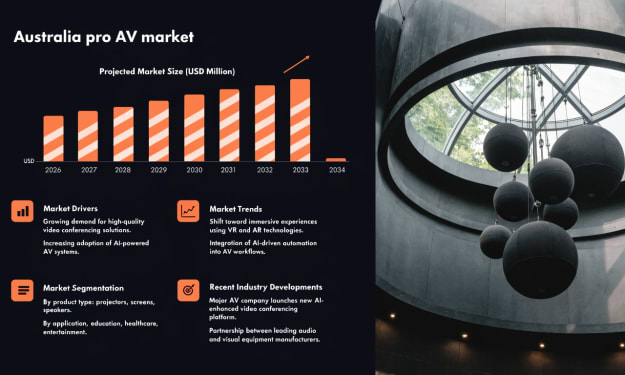
According to IMARC Group, the Australia pro AV market reached a value of USD 93.9 Million in 2025 and is projected to reach USD 133.6 Million by 2034, growing at a compound annual growth rate (CAGR) of 3.88% during 2026–2034. The market is expanding as organizations increasingly adopt advanced audiovisual solutions to support communication, collaboration and digital engagement. Hybrid work environments are encouraging businesses to invest in video conferencing systems, smart displays and integrated collaboration platforms that connect remote and in-office teams. At the same time, industries such as retail, hospitality and tourism are investing in digital signage to improve customer engagement and brand communication. As companies focus on creating interactive and technology-driven environments, professional AV solutions are becoming essential tools for modern workplaces, entertainment venues and commercial spaces across Australia.
By Kevin Cooper5 days ago in Futurism
WhatsApp Business API: A Complete Guide to Business Messaging in 2026
Over the past decade, the way businesses communicate with customers has changed dramatically. Traditional channels such as email and phone support are still widely used, but instant messaging has become one of the most preferred ways for people to interact with brands. Customers increasingly expect quick responses, convenient updates, and support that feels personal rather than formal.
By Olivia Carter2 days ago in Futurism
My First Time Skiing and I Got Lost, Alone, in the French Alps
Looking back, I can trace some of my life’s biggest adventures to a simple action from my sister. She’d introduced me to Tommy (a very long time ago), a colleague of hers, who had overshared his penchant for Italian-looking women, and I ticked that box.
By Chantal Christie Weissa day ago in Humans



Comments
There are no comments for this story
Be the first to respond and start the conversation.