Science
The Endless Quest of the Periodic Table
The periodic table is more than just an organized list of elements; it is a vast encyclopedia that reveals the intricate relationships between the building blocks of the universe. From the early 19th century, when Humphrey Davy discovered a handful of basic elements, to the 118 elements we know today, every addition has been more than just a numerical increase. Each discovery has propelled human understanding of the natural world to new heights, unlocking deeper insights into the nature of matter itself.
By Eleanor Grace10 months ago in Earth
Japanese astronaut's demonstration of playing baseball in space.
Japanese astronaut's demonstration of playing baseball in space. Japanese astronaut Koichi Wakata recently captivated the world by demonstrating baseball in space an event that combined elements of entertainment education and scientific inquiry. The demonstration took place aboard the International Space Station (ISS) where Wakata became the first astronaut to show how the sport could be played in microgravity an environment that significantly alters the way objects move. This unusual display of athleticism and science not only fascinated baseball fans but also sparked discussions about the physics of motion in space. BeIn the video that went viral Wakata floated effortlessly inside the ISS tossing a baseball into the air before swinging at it with an imaginary bat. Due to the absence of gravity the ball didn’t fall back to the ground as it would on Earth. Instead it drifted along and Wakata had to chase it and catch it mid air. The video clearly showcased how the basic principles of baseball would change in space. On Earth gravity pulls objects down, and the friction of air affects how a baseball travels. However in the microgravity environment of the ISS the ball continued to float in the direction it was hit unless acted upon by another force. This demonstration was not only a fun and creative activity for Wakata but also a way to highlight the fascinating differences between how objects move in space compared to Earth. Baseball a game deeply rooted in Japanese culture is the most popular sport in Japan and the idea of playing it in space was a fitting tribute to Japan’s love for the game. Koichi Wakata who has had an illustrious career as a Japanese astronaut is no stranger to making waves. His baseball demonstration was both a symbol of his cultural heritage and a unique contribution to the space exploration narrative. Japan's passion for baseball is well documented. The country’s professional league Nippon Professional Baseball (NPB) is one of the most competitive and successful in the world. Several Japanese players have made their mark in Major League Baseball (MLB) in the United States further enhancing the sport’s popularity. Wakata’s space baseball demonstration therefore served as both a personal and national celebration showcasing how space exploration can intertwine with human culture and passions in unexpected ways. His act of playing baseball in space generated enormous pride in Japan and brought a fresh perspective to the connection between Earth and space. While playing sports in space may sound like a novelty this is not the first time astronauts have experimented with sports in a zero gravity environment. In fact throughout history astronauts have used their time in space to conduct light hearted yet educational activities. In 1971 NASA astronaut Alan Shepard made headlines when he famously hit two golf balls on the Moon. Although the activity was more symbolic than competitive, it captured the imagination of millions around the world. Similarly Russian cosmonauts have attempted to play soccer in space, while astronauts have tried their hand at basketball and table tennis albeit in modified forms. These attempts highlight the challenges of recreating Earth-based sports in a weightless environment.
By Adnan Rasheed10 months ago in Earth
This Discovery Might Be a Warning About the End of Time
now history isn't just carved in stone but these drawings on 11,000-year-old rocks might be warning us about a freaky future both the Mayans and the people at Gobeclet Tapa made big predictions about humanity's future what's eerie is that despite being hundreds of miles and years apart they used similar symbols now let's get one thing straight ancient civilizations often depicted their deities as humanoids you'll find humanoid representations of celestial beings in ancient Egypt but also in pre-Colombian societies from the Americas for example Aztecs had an important deity they called Ketzu he was related to the wind Venus and the sun in some ancient Aztec art he's depicted carrying a tiny handbag the shocker is that a very similar winged figure was represented by the Assyrians now it's already odd that they chose similar forms to represent their gods even though these civilizations didn't have any contact with each other but to draw an almost identical handbag that seems like a bit of a stretch of course now when we say handbags we mean carvings depicting things that look like modern handbags not quite Coach or Prada but you get the idea some theories suggest this mysterious handbag could be related to time travel we've seen that Gobecé tells of a great flood that destroyed an ancient civilization but during that civilization's time they raised cattle and grew food they knew how to handle seeds and grow crops according to one theory this stylish accessory could have been used for carrying seeds since Gobeca is believed to be near where Noah's ark might have been found the people of the area could have gathered seeds to plant in the new world after the great flood strange definitely but so is everything we've been talking about so let's roll with it another theory on the meaning of the handbag has a much more straightforward approach in multiple ancient cultures the circle was used to represent spirituality and non-materiality but the square was often associated with concepts of the earth and materiality so what we modern humans understand as a handbag might be an image that symbolizes the reunification of the earth and sky of the material and non-material elements of existence not a bad theory I would say but then who am I some researchers like Graham Hancock are not convinced with these previous explanations for him Gopeka is all about little gray people and their contacts with ancient earthling civilizations you see right in the middle of this ancient site there's a special pillar called Pillar 43 or enclosure D at first glance it looks like an astronomical calendar you see the scorpion that's the scorpion constellation and that ball in the center it's all about the sun's alignment we know ancient societies like the Maya or Incas were stellar astronomers so what's the big deal here turns out the folks at Gopekea were talking about a massive natural disaster that wiped out all forms of life before their time when astronomers recreated the angles and positions from Pillar 43 it showed an astrological setup from over 13,000 years ago the stone also depicted a tragic event a mix of a flood and a meteor shower the headless man that's humanity's tragic end and the snake from the ground giant waves washing over the earth and it's not just one stone telling the tale pillar 56 shows more of the younger dus event or as it's called the terror from the sky you see animals fleeing and waves crashing as the meteor shower hits but wait while 43 gives us the exact date of the last disaster pillar 18 in enclosure D gives us the date of the next possible wipeout the art depicted in this pillar zooms in on the constellation of Aquarius now you might have seen the movie The Age of Aquarius or heard some woo woo theories about how we're entering this phase right now you see what I'm driving at gopekley Tepa might be giving us the date of the next disaster so that we have time to prep for it these images could be a survival guide for humanity or not now this would be bananas if it weren't for one piece of evidence let's check the facts the Enki comet discovered in 1786 used to be part of a mega comet 100 miles wide made of ice metal and rock it broke up and formed a debris field now instead of one huge comet we've got millions of smaller ones when the Earth passed through that debris the folks at Gobecleta saw a firestorm of comets all coming from the Aquarius constellation just like on Pillar 43 now here's the supposed scary part we pass through that same debris field every year if you're watching this in September October or November we're flying through it right now it could happen that these debris fall onto the surface of the Earth all over again repeating history but so far that's just a theory the mind-boggling question is how did the people at Gobecé know about an event that happened before they were all born in 2019 excavations kicked off at Karan Tepa about 40 mi from Gobecleta but research suggests it might have been settled even earlier gobeci seems to have been a place of worship or an observatory but Kahan Tapa shows signs of a structured society excavations at Kahan Tepa reveal artifacts like intricate carvings tools and even possible remnants of buildings this suggests that these people were not just hunters and gatherers but had a structured society with spiritual or ceremonial practices in 2020 researchers started unearthing several other settlements in the area indicating that Gobecleta was part of a huge metropolis the whole site is known collectively as TAS Tepler the thing is the math around all this has scientists baffled around that time Earth was just leaving its last ice age and scientists used to think stone age civilizations were primitive but evidence keeps showing up proving that wasn't the case for Gobecé to have existed with that level of tech 12,000 years ago there must have been an even earlier civilization that kind of tech doesn't just pop up out of nowhere and hey we've got plenty of other proof of advanced societies take the Mayans for example recent discoveries have shown they were even more advanced than we previously thought they built massive cities with roads up to 130 ft wide painted white to guide travelers at night a feat you'd expect in places like Portugal or England these roads sometimes elevated over swampy ground formed a network of over 964 settlements like a giant spiderweb a bunch of scientists turned their eyes on this theory but it could be the connecting point of everything we've been speculating about in this video after all the people from the sky could have come down and told the people from Gobecleta about the destruction of a more ancient civilization than theirs or not remember don't give up your critical thinking just because you see something on the internet anyway Gobecley Tea raises suspicions just as Stonehenge and the Great Pyramids of Egypt when we mix little green aliens into the equation it explains one way that surreal engineering feats were possible in these sites but it also underestimates our human ancestors and their thinking abilities one of the main characteristics of Gobecley Tepee's architecture are the T-shaped pillars the heaviest of them weigh 20 tons and are around 20 ft these pillars were erected perfectly without so much as a dent in them sure that's pretty hard to do without modern machines but hey maybe they figured it out and built it after much effort now in case you don't know what I'm talking about this old pal is supposed to have cracked the secret of the pyramid builders in modern day America he used it to build his own castle and other mesmerizing structures so hey I guess we'll have to keep digging to find out the actual facts about it all huh
By Riya singh10 months ago in Earth
Scientists Just Made a Groundbreaking Discovery in Antarctica
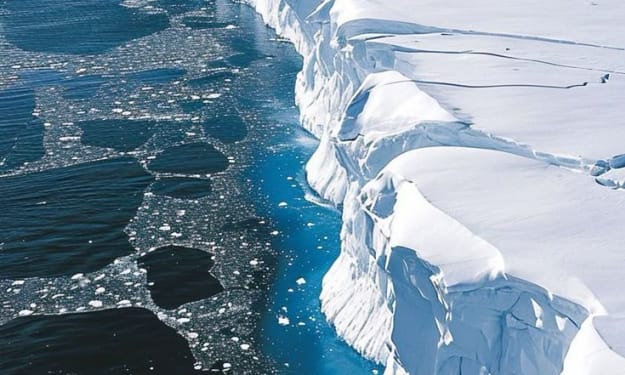
antarctica a snowy world of about -46° F covered in ice for millions of years But it wasn't always this way Scientists just found something buried deep beneath the seafloor that shouldn't exist Tiny golden droplets of amber This means that Antarctica was once teeming with life and thick with trees But something happened to it Something that could reshape the way we see our own future Antarctica has been a land of howling winds for millions of years No tree can grow here today But scientists who studied those lands decided to drill deep beneath the Antarctic surface They went thousands of feet below the ice pulling up ancient layers of sediment And there trapped in time they found tiny pieces of golden amber Amber is basically fossilized tree resin It's found all over the world often with perfectly preserved pieces of ancient life Insects trapped mid-flight Pollen frozen in time Entire tiny ecosystems can be locked inside golden droplets In every continent but not in Antarctica until now They discovered tiny specks from 0.5 to 1 millimeter in size smaller than a grain of sand but with huge significance This droplet had once oozed from the bark of a tree about 90 million years ago What's even wilder amber is only produced by certain types of trees the ones that grow in humid temperate rainforests and jungles That's when the realization hit Antarctica used to be a rainforest Those tiny flexcks of amber clearly seen only under a microscope tell us a vivid story of a living and breathing ecosystem Around 90 million years ago during the Cretaceous period when dinosaurs ruled the Earth Antarctica could have been covered in lush swampy forests filled with towering conifers ferns and ancient plants Some of the fragments showed signs of damage That means the trees that produced them had been injured perhaps by wildfires or parasites Though despite that and despite the fact it spent millions of years on the seafloor this amber was almost perfectly preserved solid transparent and free of cracks Normally amber buried under extreme pressure and heat just crashes over time But this piece it survived That means other pieces could survive as well and we might find more of them on the ocean floor But this wasn't the first sign that Antarctica had once been a different place entirely It started in 2017 A team of scientists drilled deep into the seabed near Pine Island Glacier on Antarctica's west coast They pulled up sediment cores long cylindrical samples of earth that had been buried for millions of years And it was insane Inside these layers they found fossilized roots pollen spores traces of an ancient forest that had once thrived here And that's exactly what they'd been studying ever since then In order not to damage anything they had to spend years of hard work breaking down the sediment into thousands of tiny pieces and scanning them all under fluorescent microscopes The same team also found another piece of the puzzle back in 2020 They found more sedimentary samples from the ocean floor that pointed to a land of dense trees rivers and wetlands a world that looked more like the Pacific Northwest or New Zealand But why was Antarctica so warm back then Well that's all because of the atmosphere 90 million years ago Earth's carbon dioxide levels were terrifyingly high It was literally one of the warmest periods in history with temperatures soaring even at the poles Think about it Antarctica had no ice caps Instead it could have had buzzing insects and maybe even dinosaurs wandering through its forests But in order to learn what happened to them the team has to find more evidence Antarctica really is a place full of mysteries It's hard to study because it's covered in snow and ice so much that we don't even know its true shape and size Some parts of the ice sheet are over 3 m thick half the depth of the Mariana Trench the deepest trench on Earth Luckily snow has a great quality It can freeze things in time perfectly layer by layer year after year It buries nature's past like a time capsule Luckily snow has a great quality It can freeze things in time perfectly Layer by layer year after year it buries nature's past like a time capsule At first fresh snow is soft and shifts easily in the wind full of air But as more snow piles on top it compresses squeezing out the air pockets and hardening into dense ice This freezing pressure locks everything inside It traps ancient plants animals and even entire landscapes and they literally get frozen in time because the extreme cold slows down decay It stops bacteria growth preventing rot and keeping things almost perfectly intact for thousands sometimes even millions of years That's exactly what's going on in Antarctica Scientists have to literally scan it all the way down this snow in order to find what this place looked like millions of years ago What they found is an entire lost world buried under miles of ice It was beneath the thickest ice of East Antarctica near the Aurora and Schmidt subglacial basins The weight of the ice has been so immense for so long that it actually protected the land from erosion Scientists call it the ghost of Antarctica's landscape And it's nothing like the smooth flat wasteland seen from above They found rivers that once flowed freely now frozen in place Valleys carved by water Even three massive sharply peaked hills But what are they To understand that we need to go even further back in time to the era when Antarctica was still part of a lost superc continent Hundreds of millions of years ago the land we now call Antarctica was part of Gonduana an enormous superc continent that included South America Africa India Australia and Antarctica all fused together But as Earth's tectonic plates slowly drifted apart Gonduana broke into pieces Antarctica was ripped apart its land stretched and fractured The massive ice sheets that formed later covered these broken land masses preserving them like frozen fossils As the ice shifted and melted over time valleys formed and ancient rivers likely carried water toward a coast that was hundreds of miles away from where it is now But that's not the only thing Antarctica has hidden If you stripped away the ice you wouldn't see a smooth empty continent You'd see a super dramatic landscape towering mountains deep valleys even fiery volcanoes In West Antarctica at least 138 volcanoes are buried under the ice One of them Mount Arabus is still active And inside it has warm volcanic caves where you could walk in a t-shirt Oh and if it wasn't weird enough Arabus is also spewing out gold Yep The actual tiny specks of gold from deep within the Earth Scientists believe this happens because magma the superheated semiolten rock beneath the Earth's surface carries liquid gold with it as it rises Every single day Arabus releases about 0.2 lb of it That's worth around 6,000 bucks per day In a year that adds up to 64 lb or more than $2 million floating into the sky Unfortunately before we grab shovels we got to remember that those are just microscopic particles They're often smaller than 60 micrometers thinner than a human hair Not even mentioning that they're scattered around up to 620 m away from the volcano itself Finding them is nearly impossible But that just shows that even in such a harsh place that looks just like a white desert there are still many fascinating mysteries to discover For example somehow life still clings there In 2017 scientists drilled deep beneath the ice of the Ross ice shelf looking for water but they found something fantastic instead A river hidden beneath 1,640 ft of ice running through the dark and inside it hundreds of tiny shrimplike creatures They swarmed around the camera blocking the lens welcoming the scientists in deep caves beneath the ice DNA evidence has also shown traces of moss algae and possibly even unknown tiny animals So turns out even in one of the harshest places on Earth life finds a way And who knows what else we'll discover in the South Pole
By Riya singh10 months ago in Earth
Scientists Just Solved the Loch Ness Monster Mystery
scientists have finally solved the loch nest monster mystery here's the spoiler you ready it's not a real monster it's probably a dinosaur that survived Through the Ages or just a bunch of debris floating on the water thanks to many findings on the loch nest creature we have proof of another story to tell you it was 1933 when a man named George Spicer and his wife were driving along the shores of Loch Ness that's when they saw something massive with a long neck moving across the road looked like a creature straight out of the prehistoric era a dinosaur like Beast unlike anything they'd ever seen that was the moment that loch nest monster theories started spreading around like wildfire one of the most famous Lock Des monster sightings came just a year later in 1934 when a man took a photograph that became the most well-known image of Nessie that's the nickname she was given she anyway the photo known as the surgeon's photograph showed a long neck creature rising out of the water and for years it convinced people that the monster was real but years later the truth came out one of the men who helped take the photo confessed it was all a hoax the photo had been staged after all when the photo was published it had been significantly cropped this made the animal in the picture look much bigger than in real life fueling the theories that the loch nest monster did in fact exist exist in the 1960s one of the first big scientific attempts to investigate the mystery of the loch nest monster happened a research team took sonar equipment to the lake and spent hours scanning the waters in search of evidence of large creatures what they found was puzzling they recorded several objects moving deep in the lock or lake with no clear explanation as to what it was though the team didn't manage to capture anything definitive this sighting helped fuel the belief that there was indeed something massive living in Loch Ness after that research about the mystery of the Loch Ness monster kept popping up in 1972 with the help of underwater photography some researchers managed to capture strange images which got people's hopes up for a minute but the truth is this early research about the Loch Ness monster was far from conclusive now of course not everyone bought into the mystical magical theories about The Lochness Monster Theory 1 from a professor of zoology at Oxford University has made it clear that the monster is a biological impossibility hey my pediatrician said that about me too meanwhile he says that no skeletal remains have ever been found in the region plus no fishermen have ever caught anything resembling the creature in their fishing nets for him this works as proof that it simply can't be real when it comes to the famous photos of the loch nest monster as evidence well that's pretty simple the professor offers a more downto Earth explanation he argues that these images are either showing floating debris or birds like corant which have long necks and often appear to be low in the water when people refute his suggestion he takes us back to human psychology and explains that people often make mistakes and misjudge the size of things especially when they just caught a glimpse of it and even more so when they are hoping to see something specific now many of those alleged photos depict an animal with a long neck and a small head which has led some to believe that what they're seeing is a placosa a giant Marine reptile that lived 215 million years ago and disappeared with a dinosaurs the idea of a plesiosaur surviving all these years is a theory that's been around since the first sightings of the creature but this researcher isn't buying it m he explains that no plesiosaur fossils have been found in the region dating to anything later than 66 million years ago the idea of a prehistoric creature still lurking in the waters of Loch Ness just doesn't hold up scientifically then there's Theory number two from a British naturalist who has spent over 50 years investigating the loch nest monster phenomenon his conclusion is a little less dramatic he believes that most people who report sightings of long neck creatures are misidentifying other animals He suggests people think they are seeing a sea serpent reports of sightings from the loch nest monster have been around since the 6th Century CE long before they were distilling Scotch whiskey or other explanations early reports of these SE serpents describe large creatures with long snake-like bodies and multiple humps some say the creatures were as big as boats and many swore they saw something swimming in the waters many of these early sea serpent sightings may have been misunderstandings or exaggerations of normal animals in the lock like large fish or even swimming Birds they could have been large eels which are known to live in loch nest these eels especially when they're moving might have given the impression of a long undulating creature in the water people who saw these eels from a distance particularly in low light or Misty conditions might have mistaken them for something much more mysterious Theory number three says something else Nessie is just a series of standing waves these happen when two boat wakes move in opposite directions creating a big hump in the water that could look like a Creature From a Distance Loch Ness enthusiasts even showed how it works with footage from Fort Augustus where a river meets Loch Ness these enthusiasts had big plans to use drones with infrared cameras and special underwater microphones to search the lock Now Loch Ness is massive stretching around 23 M long and more than 700 ft deep so they thought they needed drones and infrared cameras to put an end to this discussion but despite everything they haven't found Nessie but it's not only the loch net monster that lacks scientific explanation there have also been scores of sightings of Yetis and sat squatches that no one can really explain folks have made movies dreaming of finding the truth about these creatures but according to recent research and evidence it looks unlikely that we'll ever find definitive evidence of their existence science says they can explain Squatch sightings and this is how biologists who study Wildlife using camera traps which are set up in remote areas to capture images of passing animals have long attempted to find elusive species these cameras detect movement and snap pictures providing invaluable data on the biodiversity of different ecosystems as camera traps collect more photos over time the number of species recorded grows however after a while the number plateaus suggesting that no new species are being detected while it's impossible to claim 100% certainty researchers say that after significant camera deployment it's safe to say the likelihood of discovering new species especially large ones like Bigfoot or the yeti dropped significantly camera trap Studies have been running for years in regions where these creatures are rumored to live but so far no conclusive evidence has surfaced instead the supposed proof of bigfoot or the yeti often comes from blurry photos or shaky videos taken by individuals who claim to have encountered them the scientific understanding of biology also makes the existence of Bigfoot highly unlikely often described as a great ape Bigfoot would have had to evolve in North America however great apes evolved in Africa and the only great ape to make it to the Americas is homo sapiens whose ancestors crossed the bearing straight only about 16,000 years ago this is far too short a time for a new species like Bigfoot to have evolved while it may be disappointing for these mysterious creature enthusiasts the scientific evidence points firmly toward the conclusion that creatures like Bigfoot and the yeti are more fantasy than reality after Decades of extensive scientific research it's safe to say that yes science has solved the mystery of the Loch Ness monster and it's pure fiction so what do you think
By Riya singh10 months ago in Earth
What is the average cost of solar installation in San Diego?
Are you considering solar installation in San Diego? You're not alone. With abundant sunshine and high electricity costs, many homeowners are turning to solar energy to reduce their bills and environmental impact. But one question looms large: What's the average cost of solar installation in America's Finest City?
By Sahil Bhavsar10 months ago in Earth
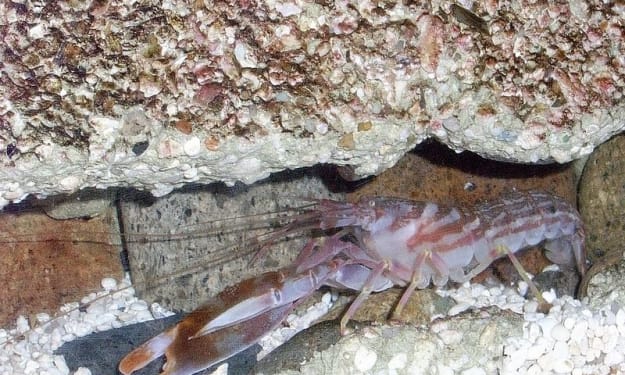
Pistol Shrimp: The Tiny Creature with a Loud, Lethal Snap
Hidden beneath the ocean’s surface is a tiny creature with a shocking power — one that rivals Goku’s Kamehameha. This isn’t anime, but real life. This small creature snaps its claw so fast that it generates an explosive burst of energy, similar to Goku’s iconic attack — just on a much smaller scale. The snap is so powerful that it briefly heats the surrounding water to the temperature of the Sun’s surface and even creates a flash of light. But what exactly is this incredible creature, and what makes it so unique?
By Shubham Maurya11 months ago in Earth
The Role of AI in Optimizing Solar Energy Production
Picture a world where the sun's energy is harnessed with unprecedented efficiency, powering our homes, businesses, and cities with clean, renewable power. Now imagine that this solar revolution is being driven not just by human ingenuity, but by the relentless computational power of artificial intelligence.
By Sahil Bhavsar11 months ago in Earth
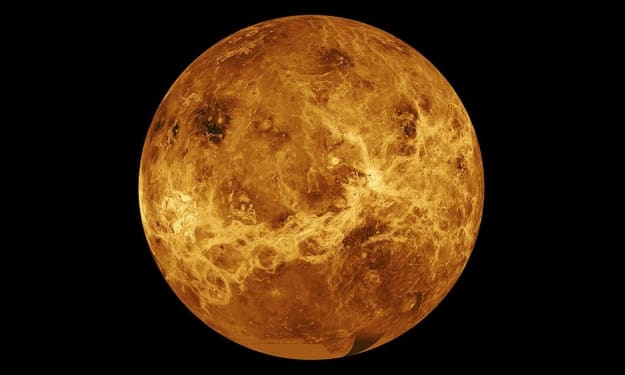
Future missions to the planet Venus
The international scientific community urges a study of the planet's atmosphere and surface in situ and a higher resolution mapping that allows us to better understand the surface and solve several unknowns of the planet's past and present. Models of the planet's formation and evolution suggest a more benign past, with the possible existence of oceans of water on the surface. On the other hand, we do not know if it currently has active volcanism or is a dead planet geologically speaking.
By Dima Prystupa11 months ago in Earth
Water Stress: A Global Challenge
Over the next 20 years, there is a growing risk of water insecurity worldwide due to increased demand and depleting supply. Poor governance, insufficient resource management, unsustainable development methods, inefficient agriculture, and environmental degradation all contribute to this problem by reducing the amount and quality of water. Water insecurity will be worse in developing countries, although some industrialized countries will also have serious problems. If these concerns are not addressed, nations may face a variety of issues, such as political instability, slow economic growth, inequality, and sickness. Shared water resources are more prone to turning into flash points when global competition heats up and water security deteriorates.
By hailu misganaw11 months ago in Earth
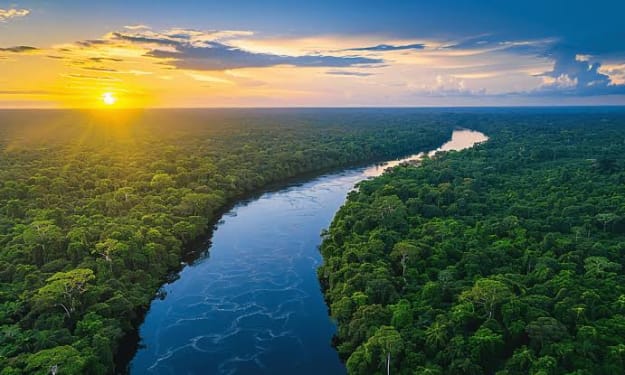
The Oldest Trees in the World and What They Can Teach Us
The ancient trees that have withstood the test of time are not only impressive but also hold deep lessons for humanity. These trees have existed for centuries, some for millennia, and their resilience offers a glimpse into the wisdom of nature. Here is a closer look at some of the oldest trees on the planet and the valuable lessons they can teach us:
By AQUÁ PLANTAS11 months ago in Earth