Science
Future missions to the planet Venus
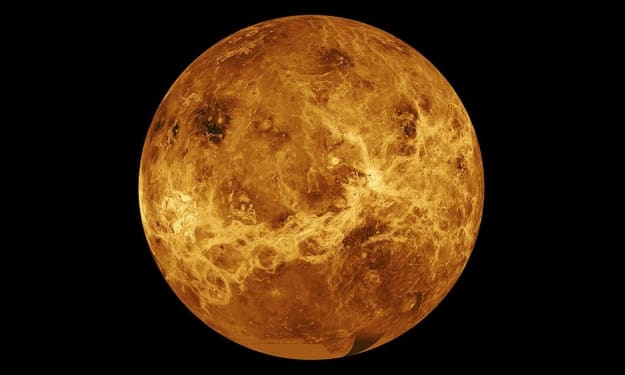
The international scientific community urges a study of the planet's atmosphere and surface in situ and a higher resolution mapping that allows us to better understand the surface and solve several unknowns of the planet's past and present. Models of the planet's formation and evolution suggest a more benign past, with the possible existence of oceans of water on the surface. On the other hand, we do not know if it currently has active volcanism or is a dead planet geologically speaking.
By Dima Prystupa11 months ago in Earth
Water Stress: A Global Challenge
Over the next 20 years, there is a growing risk of water insecurity worldwide due to increased demand and depleting supply. Poor governance, insufficient resource management, unsustainable development methods, inefficient agriculture, and environmental degradation all contribute to this problem by reducing the amount and quality of water. Water insecurity will be worse in developing countries, although some industrialized countries will also have serious problems. If these concerns are not addressed, nations may face a variety of issues, such as political instability, slow economic growth, inequality, and sickness. Shared water resources are more prone to turning into flash points when global competition heats up and water security deteriorates.
By hailu misganaw11 months ago in Earth
The Oldest Trees in the World and What They Can Teach Us
The ancient trees that have withstood the test of time are not only impressive but also hold deep lessons for humanity. These trees have existed for centuries, some for millennia, and their resilience offers a glimpse into the wisdom of nature. Here is a closer look at some of the oldest trees on the planet and the valuable lessons they can teach us:
By AQUÁ PLANTAS11 months ago in Earth
Morning Sounds from a Different Era
When Emma woke up, the sun had just started to rise, and the gentle, golden glow of dawn seemed to last a little longer than normal. As though attempting to jog a buried memory, the morning light traced patterns on the wooden floor as it seeped through the drapes. The feeling that the morning carried something both distant and familiar, like the hum of an old song she could not quite recall the lyrics to yet knew all too well, was not the first time she had experienced it.
By MD SHAMIM RANA11 months ago in Earth
The Invisible Revolution: How Quantum Computing Will Redefine Reality
# The Invisible Revolution: How Quantum Computing Will Redefine Reality In the quiet labs of tech giants, startups, and academic institutions, a revolution is brewing—one that promises to transform the very fabric of our reality. This revolution, in contrast to the flashy advancements in artificial intelligence and the rapid expansion of smartphones, is not visible to the naked eye. It operates at the subatomic level, harnessing the bizarre and counterintuitive laws of quantum mechanics. This is the era of quantum computing, and it is poised to redefine everything we know about computation, science, and the limits of human ingenuity.
By Taiyab Ahmed11 months ago in Earth
NASA Tracking Bus-Sized Asteroid Nearing Earth
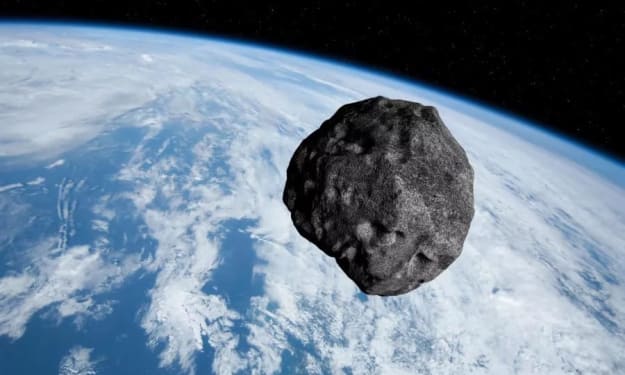
NASA Tracking Bus-Sized Asteroid Nearing Earth NASA is closely monitoring a bus sized asteroid as it approaches Earth raising curiosity and concern among scientists and the general public. The asteroid, which has been designated with an official name by space agencies is expected to pass by our planet at a relatively close distance. While there is no immediate danger of impact the event serves as a reminder of the continuous movement of celestial bodies and the importance of tracking near Earth objects (NEOs). Asteroids frequently pass by Earth and NASA along with other space agencies keeps a close watch on their trajectories. This particular asteroid is estimated to be roughly the size of a city bus making it large enough to be noticed but not significant enough to cause catastrophic damage even if it were to enter Earth’s atmosphere. However its proximity to Earth has prompted detailed analysis and observations. The asteroid’s trajectory has been carefully calculated using advanced telescopic observations and tracking systems. NASA's Planetary Defense Coordination Office (PDCO) and other global space monitoring agencies utilize sophisticated tracking technologies including ground based telescopes and radar systems to predict the paths of such objects with high accuracy. By analyzing its speed direction and potential gravitational influences from other celestial bodies scientists can determine how close it will get to Earth and whether there is any possibility of future encounters.
By Adnan Rasheed11 months ago in Earth
What happened to all the water on Mars?
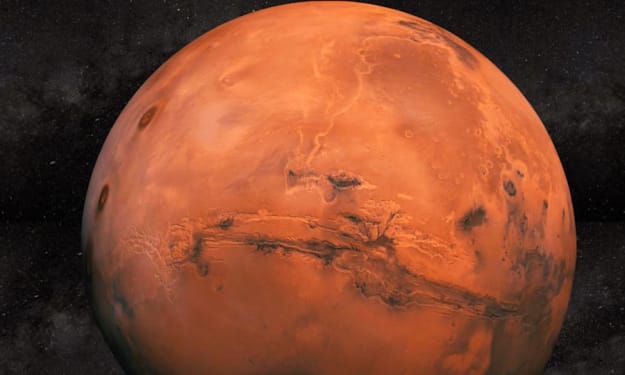
What happened to all the water on Mars? Mars our neighboring planet has long fascinated scientists with its potential for past habitability. Evidence overwhelmingly suggests that Mars was once home to abundant water flowing through massive river valleys carving flood channels and depositing minerals that only form in liquid water. The planet's surface bears undeniable marks of a time when lakes rivers and even possible oceans covered it. Yet today Mars is a cold arid desert with only traces of water locked in its polar ice caps and underground. The mystery of what happened to all that water remains a subject of ongoing debate. One of the most widely accepted theories is that Mars lost its water due to atmospheric stripping. Unlike Earth which has a strong magnetic field protecting its atmosphere Mars lost its global magnetic field billions of years ago. This left its atmosphere vulnerable to solar winds charged particles from the Sun that gradually eroded the planet’s once thicker atmosphere. With a thinner atmosphere water on the surface could no longer remain stable and over time it either sublimated into space or retreated underground in frozen form. However some researchers argue that not all of Mars' water was lost to space. A significant portion may still be trapped beneath the surface. Recent studies suggest that underground reservoirs of frozen water exist particularly near the planet’s poles. Scientists have detected large amounts of ice beneath the surface using radar instruments on orbiters like the Mars Reconnaissance Orbiter. If this ice were to melt it could potentially support microbial life or be utilized by future human explorers.
By Adnan Rasheed11 months ago in Earth