
Japanese astronaut's demonstration of playing baseball in space.
Japanese astronaut Koichi Wakata recently captivated the world by demonstrating baseball in space

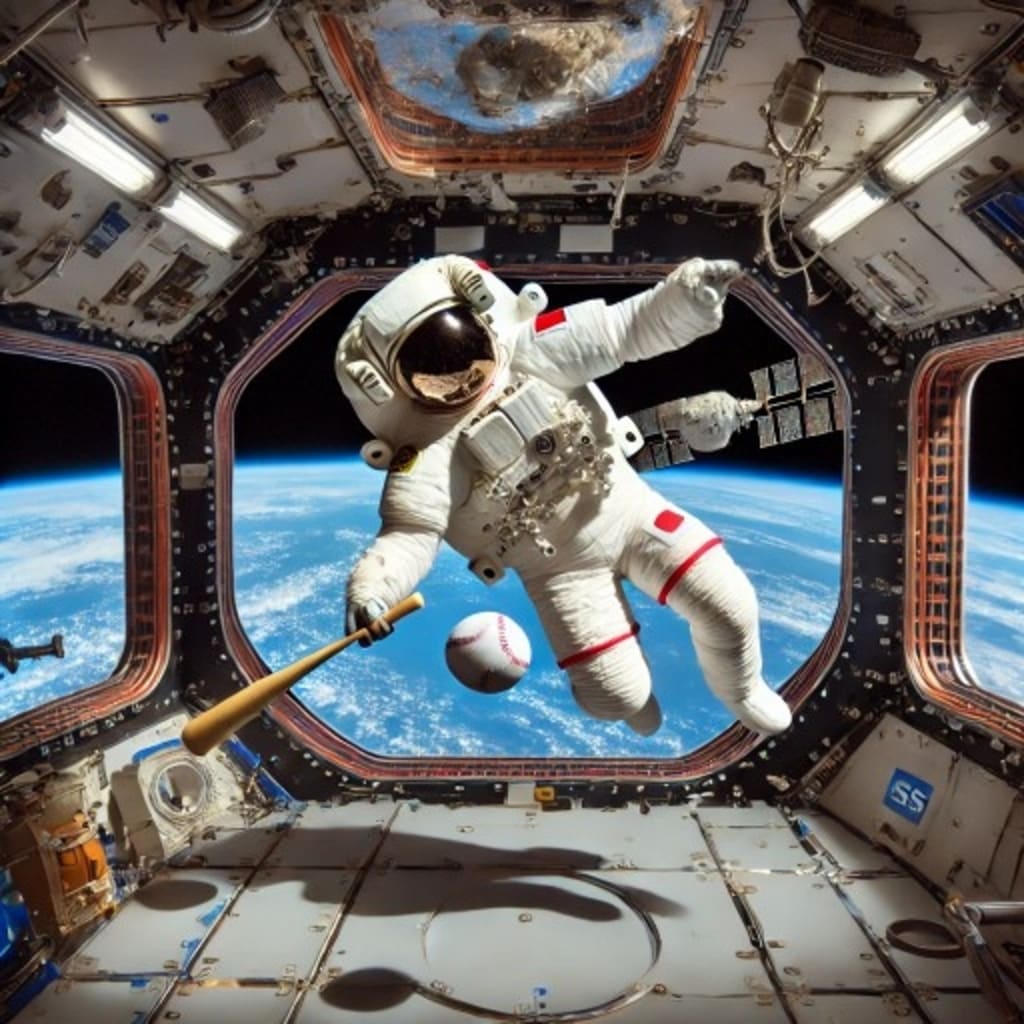
Japanese astronaut's demonstration of playing baseball in space.
Japanese astronaut Koichi Wakata recently captivated the world by demonstrating baseball in space an event that combined elements of entertainment education and scientific inquiry. The demonstration took place aboard the International Space Station (ISS) where Wakata became the first astronaut to show how the sport could be played in microgravity an environment that significantly alters the way objects move. This unusual display of athleticism and science not only fascinated baseball fans but also sparked discussions about the physics of motion in space. BeIn the video that went viral Wakata floated effortlessly inside the ISS tossing a baseball into the air before swinging at it with an imaginary bat. Due to the absence of gravity the ball didn’t fall back to the ground as it would on Earth. Instead it drifted along and Wakata had to chase it and catch it mid air. The video clearly showcased how the basic principles of baseball would change in space. On Earth gravity pulls objects down, and the friction of air affects how a baseball travels. However in the microgravity environment of the ISS the ball continued to float in the direction it was hit unless acted upon by another force. This demonstration was not only a fun and creative activity for Wakata but also a way to highlight the fascinating differences between how objects move in space compared to Earth. Baseball a game deeply rooted in Japanese culture is the most popular sport in Japan and the idea of playing it in space was a fitting tribute to Japan’s love for the game. Koichi Wakata who has had an illustrious career as a Japanese astronaut is no stranger to making waves. His baseball demonstration was both a symbol of his cultural heritage and a unique contribution to the space exploration narrative. Japan's passion for baseball is well documented. The country’s professional league Nippon Professional Baseball (NPB) is one of the most competitive and successful in the world. Several Japanese players have made their mark in Major League Baseball (MLB) in the United States further enhancing the sport’s popularity. Wakata’s space baseball demonstration therefore served as both a personal and national celebration showcasing how space exploration can intertwine with human culture and passions in unexpected ways. His act of playing baseball in space generated enormous pride in Japan and brought a fresh perspective to the connection between Earth and space. While playing sports in space may sound like a novelty this is not the first time astronauts have experimented with sports in a zero gravity environment. In fact throughout history astronauts have used their time in space to conduct light hearted yet educational activities. In 1971 NASA astronaut Alan Shepard made headlines when he famously hit two golf balls on the Moon. Although the activity was more symbolic than competitive, it captured the imagination of millions around the world. Similarly Russian cosmonauts have attempted to play soccer in space, while astronauts have tried their hand at basketball and table tennis albeit in modified forms. These attempts highlight the challenges of recreating Earth-based sports in a weightless environment.
The reality of playing baseball in space however presents unique challenges. In microgravity objects do not behave the way they do on Earth. Without the pull of gravity a baseball will not fall to the ground after being thrown or hit which creates difficulties in controlling the ball’s trajectory. The absence of air resistance also means that the ball can continue to float in a straight line until it collides with something or is stopped by a person. This concept of inertia where objects in motion stay in motion unless acted upon by an external force was clearly illustrated by Wakata’s baseball demonstration. For Wakata the act of playing baseball in space had a deeper significance. It wasn’t just about showcasing the effects of microgravity on the sport it also highlighted the role that sports and recreation play in the well being of astronauts. Life aboard the ISS can be incredibly isolating with astronauts spending long periods away from Earth. The physical and mental demands of space travel are immense and astronauts often face challenges in maintaining their physical health and emotional well being. Recreational activities such as exercising and even playing informal sports provide astronauts with a much needed mental break from the rigors of their daily tasks. Baseball despite being a relatively low intensity sport requires coordination concentration and a sense of playfulness all qualities that are essential for maintaining a positive mindset in space. In fact many astronauts have spoken about how small activities like reading watching movies, or playing games help alleviate the stress of living in a confined space for extended periods. Wakata’s baseball experiment brought a sense of normalcy and joy to a potentially stressful environment reminding astronauts and Earthlings alike of the power of sports to uplift the human spirit. From a scientific standpoint Wakata’s baseball demonstration also had educational value. For students and educators it provided a unique way to learn about fundamental principles of physics such as inertia motion and the absence of gravity. While most students learn about these principles through theoretical exercises and classroom experiments Wakata’s live demonstration allowed them to see these laws in action. His playful experiment sparked curiosity about space and science providing a platform for educators to engage students in STEM subjects. NASA has long recognized the value of using space exploration to inspire young minds and foster interest in science technology engineering and mathematics. Looking toward the future Wakata’s baseball experiment may represent the beginning of a new era of recreational activities in space. As humans prepare for longer missions such as trips to the Moon and Mars the need for physical and mental well being will become even more critical. In such missions astronauts will spend extended periods in space and having access to physical activity or even a makeshift baseball game could provide a much needed outlet for stress relief and physical exercise. Koichi Wakata’s demonstration of baseball in space was not just a fun stunt but a moment that combined science culture and entertainment. It showcased the unique conditions of space and how they alter the basic principles of sports. At the same time it served as a reminder of the importance of recreation in the lives of astronauts as well as the enduring connection between humanity sports and exploration. Whether for entertainment education or psychological well being activities like space baseball have the potential to shape the future of human space exploration in exciting and unexpected ways.
About the Creator
Adnan Rasheed
Author & Creator | Writing News , Science Fiction, and Worldwide Update| Digital Product Designer | Sharing life-changing strategies for success.
Keep reading
More stories from Adnan Rasheed and writers in Earth and other communities.
NASA Tracking Bus-Sized Asteroid Nearing Earth
NASA Tracking Bus-Sized Asteroid Nearing Earth NASA is closely monitoring a bus sized asteroid as it approaches Earth raising curiosity and concern among scientists and the general public. The asteroid, which has been designated with an official name by space agencies is expected to pass by our planet at a relatively close distance. While there is no immediate danger of impact the event serves as a reminder of the continuous movement of celestial bodies and the importance of tracking near Earth objects (NEOs). Asteroids frequently pass by Earth and NASA along with other space agencies keeps a close watch on their trajectories. This particular asteroid is estimated to be roughly the size of a city bus making it large enough to be noticed but not significant enough to cause catastrophic damage even if it were to enter Earth’s atmosphere. However its proximity to Earth has prompted detailed analysis and observations. The asteroid’s trajectory has been carefully calculated using advanced telescopic observations and tracking systems. NASA's Planetary Defense Coordination Office (PDCO) and other global space monitoring agencies utilize sophisticated tracking technologies including ground based telescopes and radar systems to predict the paths of such objects with high accuracy. By analyzing its speed direction and potential gravitational influences from other celestial bodies scientists can determine how close it will get to Earth and whether there is any possibility of future encounters.
By Adnan Rasheed12 months ago in Earth
Asia’s Second-Best Island in DestinAsian Ranking
Vietnam’s largest island, Phu Quoc, has achieved a remarkable milestone in global tourism by being ranked the second-best island in Asia in the prestigious DestinAsian Readers’ Choice Awards 2026, surpassing the world-famous Maldives. The recognition marks a major moment for Vietnam’s tourism industry and highlights the island’s rapid rise as one of the most desirable tropical destinations in the world. 
By Irshad Abbasi 4 days ago in Earth




Comments
There are no comments for this story
Be the first to respond and start the conversation.