Science
EARTH 2125
By 2125, Earth is no longer the planet we once knew—it’s something entirely new. Shaped by climate change, technological evolution, and the shifting values of humanity, the world has transformed in ways both breathtaking and sobering. If we could step into a time machine and walk the Earth a century from now, what would we see?
By SHADOW-WRITES10 months ago in Earth
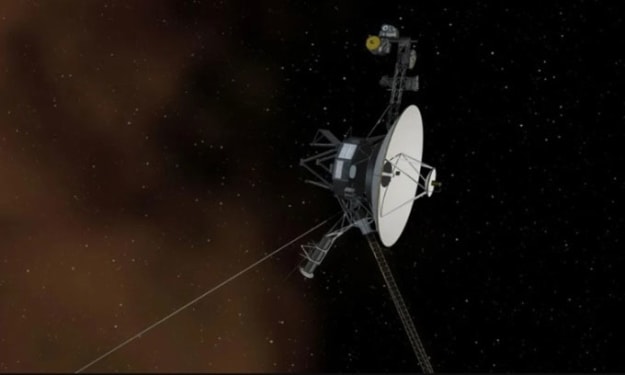
NASA Receives Communication Signal from Spacecraft 24 Billion Kilometers Away
After a prolonged period of communication issues with Voyager 1, NASA has finally received a meaningful and readable signal from the spacecraft, which is currently traveling through interstellar space. This marks a significant milestone in one of NASA's longest and most ambitious space missions.
By Eleanor Grace10 months ago in Earth
From Sunrise to Status Updates: Life Through the Facebook Lens
In today’s digitally driven world, Facebook has grown beyond being just a platform for sharing photos or chatting with friends—it has become a significant part of our daily lives. For many, scrolling through Facebook is as routine as brushing their teeth in the morning or grabbing a cup of coffee. While it began as a simple social networking site, Facebook now plays a complex role in shaping our habits, social interactions, emotions, and even how we perceive the world around us.
By Asif Nawaz10 months ago in Earth
The Whispering Planet
No one believed Earth was the only cradle of life. They only lacked proof. That changed in 2083. It began with a signal. Not a loud, blinking broadcast, but a faint whisper carried across space repeating, rhythmic, like breathing. It came from Gliese-581g, a planet once dismissed as uninhabitable. Dr. Ada Nwosu, an astrophysicist from Lagos, was the first to decode the pattern. It wasn’t just noise. It was music. A harmonic sequence that matched no known natural source.
By Author kelechi10 months ago in Earth
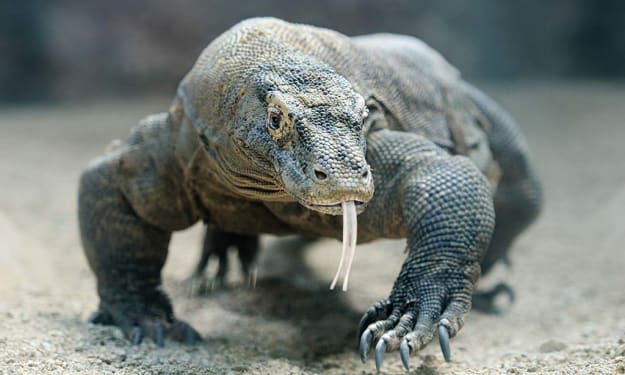
"Komodo Dragon: The Lethal Lizard from the Ancient World"
The Komodo dragon, a giant lizard found on a handful of islands in Indonesia, is one of the most fascinating—and terrifying—creatures on Earth. It’s not just its size or appearance that captures attention, but also its deadly nature and ancient history. This apex predator has survived for millions of years, unchanged and perfectly adapted to its environment.
By Insect Legends10 months ago in Earth
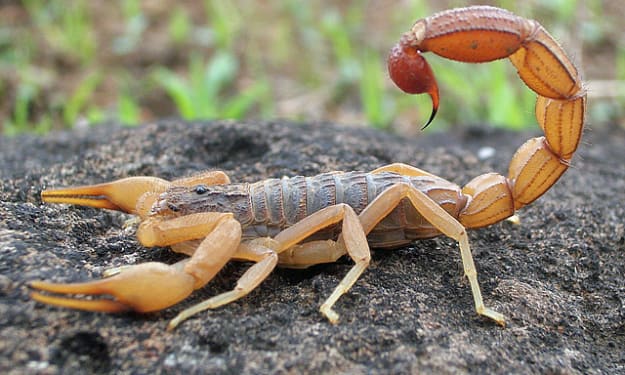
"Scorpions: Nature’s Ancient Survivors with a Deadly Secret"
Scorpions are among nature's most fascinating and mysterious creatures. Not only have they managed to survive on Earth for hundreds of millions of years, but they have also adapted to some of the harshest environments known to man. These venomous arachnids are often feared, yet they are also admired by scientists for their evolutionary resilience and medical potential.
By Insect Legends10 months ago in Earth
When Earth Was No More
Title: When Earth Was No More When the sky turned crimson and the oceans began to boil, humanity realized they had pushed Earth beyond its breaking point. Centuries of pollution, wars, and unrelenting industrialization had finally caught up. The planet that once flourished with life was now a dying shell. The air grew toxic, food became scarce, and nature once abundant and vibrant—faded into memory.
By Author kelechi10 months ago in Earth
Global Warming: Causes, Effects, and Solutions to Save Our Planet.
Global warming is no longer a teleological mystery—it’s a vital reality that affects our climate, weather patterns, and ecosystems right now. As the Earth’s average temperature rises, the balance of nature is being distorted in an unprecedented way – and we urgently need to learn more about it, to understand the consequences, and to put some practical measures in place.
By Muhammad Hidayatullah10 months ago in Earth
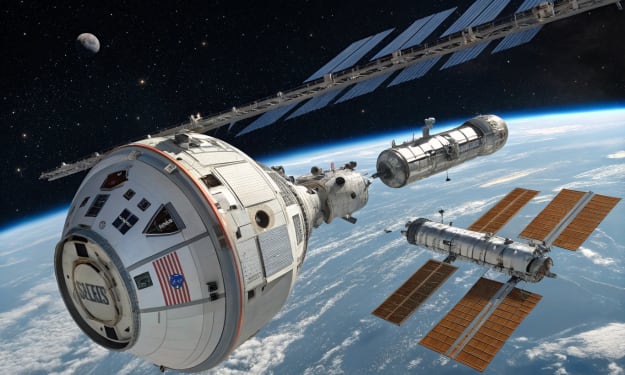
Astronauts Lost Control of Boeing Starliner During Its Docking Attempt with the International Space Station.
Boeing Starliner's Troubling Mission: Thruster Failures, Crisis Management, and the Path to Recovery In June 2024, during the much-anticipated Boeing Crew Test Flight, NASA and Boeing faced a far more critical situation than initially expected. Despite attempts by NASA to downplay the gravity of the situation, the astronauts aboard and the mission control team at NASA's Houston center were dealing with an escalating crisis as the Boeing Starliner suffered multiple thruster failures during its rendezvous with the International Space Station (ISS). The spacecraft, which had already been tested on unscrewed missions, proved unstable when it faced its most critical challenge: docking with the ISS.
By G.M. Rayhan10 months ago in Earth