
NASA Receives Communication Signal from Spacecraft 24 Billion Kilometers Away
After months of communication issues, Voyager 1 sends a breakthrough signal

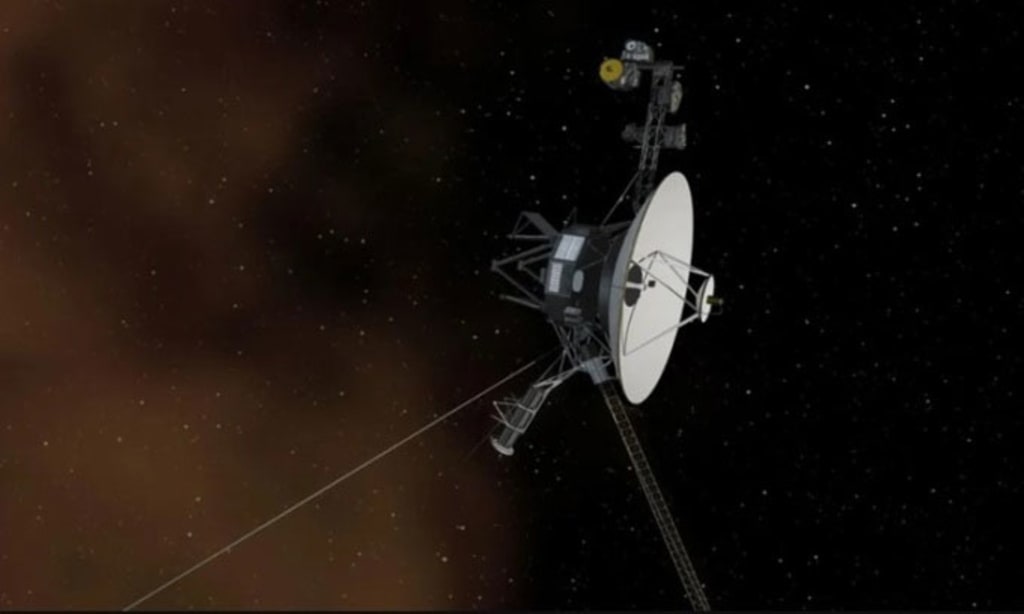
After a prolonged period of communication issues with Voyager 1, NASA has finally received a meaningful and readable signal from the spacecraft, which is currently traveling through interstellar space. This marks a significant milestone in one of NASA's longest and most ambitious space missions.
Voyager 1 Breaks Through Communication Deadlock
According to Live Science on March 15, 2025, after four months of tense waiting, NASA successfully received a signal that engineers could decode, providing hope for resolving the communication breakdown that had left scientists puzzled. Since November 2023, Voyager 1, which was launched nearly 50 years ago, had been experiencing a malfunction with its onboard computer. Despite the spacecraft continuing to send radio signals to Earth, the data it transmitted was unreadable, and no useful information was forthcoming.
However, on March 1, 2025, in response to a command sent from Earth, NASA received a new signal from Voyager 1 that was finally decipherable. This signal could be a breakthrough in identifying and fixing the recent communication issues.
The Cause of the Communication Breakdown: Insights from NASA
NASA has concluded that the source of the problem likely lies with one of the three computers onboard Voyager 1, specifically the Flight Data System (FDS). The FDS is responsible for packaging scientific and technical data before sending it back to Earth via the spacecraft’s radio transmitter. According to NASA, the malfunction seemed to have originated in this system, resulting in corrupted and unreadable signals.
In an attempt to resolve the issue, on March 1, 2025, NASA sent a specific command to the FDS, instructing the system to execute various software sequences designed to perform a more effective check for possible data errors. Given that Voyager 1 is now located more than 24 billion kilometers from Earth, any signal sent from Earth takes about 22.5 hours to reach the spacecraft, and it takes a similar amount of time for the spacecraft to respond, making communication a slow and complex process.
The Breakthrough Signal: A Sign of Hope
On March 3, 2025, NASA detected activity from a different part of the FDS that differed from the previous unreadable data. After four days of careful analysis, engineers began decoding the new signal. By March 10, 2025, the team discovered that the signal contained detailed information about the entire FDS memory, including instructions on what the FDS needed to do, codes that could change in response to commands from NASA, and the status of the spacecraft’s various systems. Additionally, the signal also included downloadable scientific and technical data.
Voyager 1, which was launched in 1977, is now farther from Earth than any other human-made object. The spacecraft’s original mission was to explore Jupiter and Saturn, but over the course of nearly five decades and numerous groundbreaking discoveries, the mission continues its journey beyond the edge of the Solar System.
Voyager 1’s Journey and Significance
The significance of Voyager 1’s mission is monumental. Launched along with its twin spacecraft, Voyager 2, Voyager 1 was tasked with conducting flybys of the outer planets, including Jupiter and Saturn, and sending back valuable data about the gas giants. However, after completing its primary mission, Voyager 1 was directed towards interstellar space, where it now continues to travel farther than any other spacecraft in history.
Voyager 1’s current location, over 24 billion kilometers from Earth, makes it an incredibly challenging mission to maintain communication with. With the spacecraft now entering the interstellar medium, it is sending back data that could give scientists crucial insights into the environment beyond our Solar System, making every signal received from Voyager 1 a valuable piece of scientific information.
Moving Forward: Analyzing the Data for Answers
NASA scientists are now working to compare the newly received signal data with previous data in an effort to identify discrepancies in the data encoding and determine any potential changes that might explain the communication issues. However, the space agency has cautioned that it may take some time to figure out if the data retrieved from the new signal will be enough to permanently solve the communication problems with Voyager 1.
Despite the communication challenges, this breakthrough provides hope that the mission will continue to send important data back to Earth. If the issues can be fully resolved, Voyager 1 could potentially continue to contribute valuable information for years to come, offering a unique window into the distant reaches of our galaxy and the conditions of interstellar space.
NASA's Dedication to Voyager 1: A Testament to Human Ingenuity
Voyager 1’s journey is a testament to human ingenuity, perseverance, and curiosity. It has outlived its original mission by decades, continuing to transmit data from the farthest reaches of our Solar System and beyond. This milestone achievement of receiving a meaningful signal once again proves the capabilities of NASA's engineering and commitment to exploring the unknown.
As scientists continue their work on decoding the signal and addressing the technical problems, the legacy of Voyager 1 continues to inspire future generations of space explorers, researchers, and dreamers, demonstrating that even after nearly 50 years in space, the quest for knowledge and discovery endures.
About the Creator
Eleanor Grace
"Dream big.Start small.Act now."
Keep reading
More stories from Eleanor Grace and writers in Earth and other communities.
KELT-9b: The Hottest Planet Ever Discovered and Its Unbelievable Atmosphere
On January 7, scientists published a groundbreaking study in Astrophysical Journal Letters detailing the extreme conditions of the hottest exoplanet ever discovered: KELT-9b. This planet, located 670 light years away, is subjected to such intense heat that its molecules are being torn apart. What makes KELT-9b even more fascinating is its "tidal locking" phenomenon, where one side of the planet always faces its scorching star, creating extraordinary atmospheric dynamics.
By Eleanor Grace10 months ago in Earth
Stock Market Today: Nasdaq Futures Rise; Oil Skids After Trump Dials Down Iran Tension
If you’ve been following the markets this week, you’ve probably noticed how sensitive traders are to geopolitical headlines. On Thursday, Nasdaq futures rose, while oil prices dropped after U.S. President Donald Trump made remarks that dialed down fears of immediate military escalation with Iran. It’s a classic example of how news can move multiple markets at once — tech stocks climbing while commodities react in the opposite direction. Nasdaq Futures Bounce Back Technology and growth-focused stocks led the recovery in futures trading. Nasdaq futures climbed, signaling that investors are regaining confidence after recent volatility. Many traders have been cautious, with some taking profits from high-flying tech names, but today’s rebound shows that market optimism is returning. Corporate earnings are a big factor here. Several tech giants, including semiconductor and software companies, have beaten analyst expectations in recent weeks. These results support longer-term growth narratives, giving investors confidence that the tech sector can continue to outperform even amid economic uncertainty. For anyone watching the markets, this is a reminder: futures are forward-looking indicators. When traders see signs of stabilization — like reduced geopolitical tension or strong earnings — markets often react positively before the official trading session even begins. Oil Prices Fall Amid Eased Tensions On the flip side, oil prices skidded. The energy market had been pricing in potential supply disruptions due to the tension with Iran, particularly in critical regions like the Strait of Hormuz. But after Trump’s comments, traders interpreted a lower risk of military conflict, and crude futures dropped sharply. West Texas Intermediate (WTI) and Brent crude both saw declines of around 4–5%, as investors adjusted their positions. This shows how geopolitical risk premiums can inflate commodity prices — and how quickly they can disappear once the perceived threat diminishes. Lower oil prices are a double-edged sword. On one hand, cheaper fuel eases costs for consumers and businesses. On the other, energy companies and oil-exporting nations may face pressure on revenue and profits if prices remain soft. Why Geopolitics Moves Markets The Middle East continues to be a major driver of global market sentiment. Even the possibility of conflict in oil-rich regions can make investors nervous, sending equities lower and commodities higher. Conversely, statements that calm these fears can produce quick rebounds in risk assets like stocks and a decline in commodities like oil. This week’s developments show just how reactive the markets have become. A single remark from a world leader — in this case, Trump — can shift risk perception and trigger immediate moves across multiple asset classes. Earnings and Economic Data Still Key While geopolitical headlines dominate daily moves, corporate earnings and economic data remain critical for long-term market trends. Financial giants like Morgan Stanley recently reported results that beat expectations, boosting their stock prices and reinforcing positive sentiment in the sector. Investors are paying close attention to these fundamentals. Earnings reports and macroeconomic indicators provide insight into underlying trends, helping traders separate short-term volatility from sustainable growth. What Investors Should Watch For stock investors: The rebound in Nasdaq futures suggests that growth and technology stocks are finding support, but volatility is still high. Active risk management and portfolio diversification remain essential. For energy markets: Today’s slump in oil prices highlights how commodities react to geopolitical sentiment. Traders should watch for developments in the Middle East, as any escalation could reverse the decline in prices almost immediately. For global markets overall: Investors must balance multiple narratives — geopolitical events, corporate earnings, economic data, and interest rate expectations. This interplay shapes risk appetite and influences how capital flows across sectors and regions. The Takeaway Today’s market action illustrates a broader theme: markets are highly sensitive to shifts in risk perception. When geopolitical tension eases, equities tend to rise, and risk-sensitive commodities like oil fall. But when threats reappear, sentiment can flip, reminding investors that global markets are dynamic and interconnected. This combination of Nasdaq gains and falling oil prices isn’t just about numbers — it’s about investor psychology, risk management, and the speed at which news travels in our global economy. The lesson is clear: staying informed and flexible is more important than ever for anyone participating in today’s markets.
By Muhammad Hassan6 days ago in Earth
1600 People Reported Dead and 12 Homes Collapsed After a 4.7 Earthquake Struck Israe
**1600 People Reported Dead and 12 Homes Collapsed After a 4.2 Earthquake Struck Israel** Reports circulating after a 4.2-magnitude earthquake struck parts of Israel have caused widespread confusion and alarm, particularly claims stating that 1600 people were killed and 12 homes collapsed as a result of the tremor. The earthquake itself was felt across several regions, especially in the south near the Dead Sea and the Negev, prompting emergency alerts and heightened public concern. However, the scale of the reported casualties has raised serious questions, given the relatively moderate magnitude of the quake.
By America today 6 days ago in Earth


Comments
There are no comments for this story
Be the first to respond and start the conversation.