
A World Without Salt: What If All Sea Water Became Freshwater?
Exploring the Unintended Consequences of a Freshwater Ocean

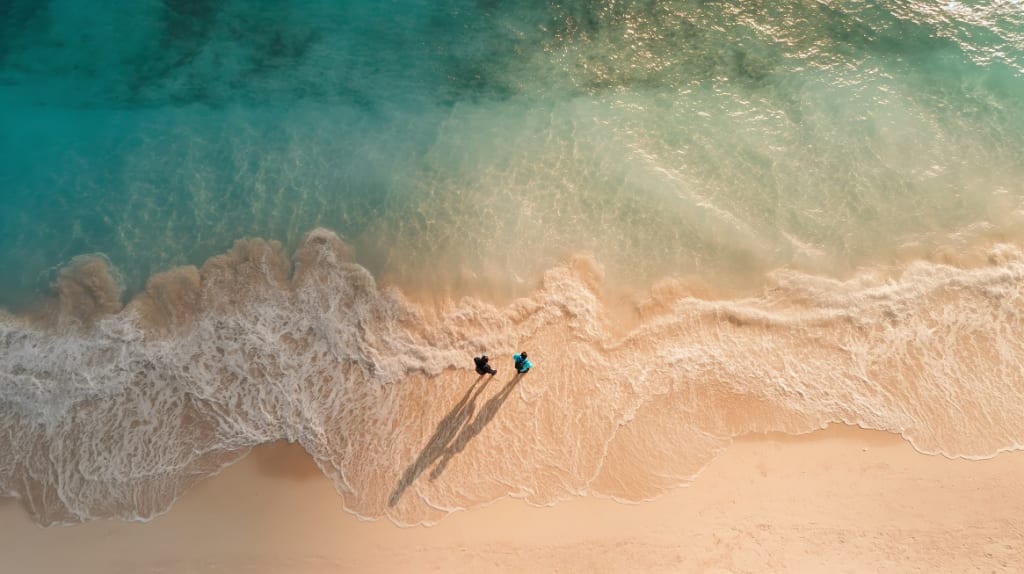
Where do you go to quench your thirst? The kitchen sink? The local bar? The mineral-rich springs of Bergamo, Italy? In the 21st century, you don't have to go that far for fresh water. But still, supply is running out. What if we didn't have to worry about water consumption? What if you could drink and shower as much as you wanted? What if a trip to the well and a trip to the beach were one and the same? You might give a lot for those privileges, but how much would it really cost?
The first big question we have to ask is: why is the ocean so salty to begin with? Well, it wasn't always like that. About 3.8 billion years ago, Earth's surface had finally cooled to the point that water vapour turned to liquid. No salt added. That's right — a really, really long time ago, the oceans were freshwater. But that wasn't going to last.
Whenever it rains, carbon dioxide from the air dissolves into the falling water. This makes the rain slightly acidic. And when it falls, it causes rocks to erode. From there, rainwater slides towards nearby rivers and streams, taking loose salt and minerals along with it. From there, this runoff flows from rivers into the ocean. Add to that any additional salt and minerals that would be expelled from hydrothermal vents or submarine volcanoes. And then consider that this whole process has been recurring more or less consistently for 3.8 billion years.
That's a lot of salt. In fact, there's so much salt in the ocean that if you spread it evenly across all the land on Earth, it would amount to one towering layer of salt that's 40 stories tall. 97% of all the water on Earth is saline — and we've got to assume it's for a reason. So what would our world look like if we took the salt out of the sea?
Freshwater oceans sure do sound like a godsend. Right now it's predicted that a third of the world will be facing chronic water shortages by 2025. At our current rate of consumption, the global demand for freshwater doubles every 20 years. So maybe freshwater oceans would actually yield a good outcome this time?
Nope. A sea without salt would decimate marine life and dramatically affect our weather and temperatures, making human life on Earth very difficult, if not impossible. There are roughly 228,450 species in the ocean, and as many as two million more to be discovered. But if the ocean were to become desalinated, we'd never find them.
Saltwater fish and other ocean creatures evolved to be able to drink salt water to stay hydrated and get rid of excess salt. Not all sea creatures do this the same way, but being able to pump out excess salt is crucial to surviving in the ocean. Some species, like salmon, have adapted to tolerate freshwater and saltwater. But for the most part, all saltwater species would perish.
This includes underwater algae — which, believe it or not, accounts for half the photosynthesis that occurs on Earth. Photosynthesis plays a vital role in supplying our planet with oxygen, since trees and plants convert carbon dioxide from the atmosphere into the air we breathe. So without algae, not only do we get less oxygen — we also have a lot more carbon dioxide in our atmosphere.
This intensification of the greenhouse effect would make some parts of the world unbearably hot. You’d definitely notice this intense heat near the equator, since our ocean currents wouldn't be circulating warm water and air the way they used to. Convection currents help warm water from the equator get farther north, while colder water from the north is able to cool hotter areas down south.
At the equator, warmer water can carry more salt, so this denser water sinks lower while cooler water flows over top of it. And in the far north, the water gets cold enough to freeze and form sea ice. Salt gets left behind as the water freezes. And naturally, this makes colder water up north denser, allowing it to sink to the bottom to make room for the incoming warmer water that's worked its way up from the south.
But without salt, the whole process breaks down. Earth's extremities would freeze, while weather around the equator would intensify. For one thing, hurricanes would be a lot more frequent — and a lot more deadly.
At this point, our weather and our climate would be totally different from how we know it now. How long would we survive to see all these changes? Not long at all. You'd either freeze, overheat, die in a natural disaster, or starve to death.
Yeah — with significantly less photosynthesis, and climates that are either extremely cold or extremely hot, our weather would no longer support the diverse plant life that exists now. The entire food chain would collapse. Most species would die off, including humans, since crops we rely on for sustenance would all disappear.
So when we say ocean salinization is important, don’t take it with a grain of salt. Of course, we respect the scientific method — so keep questioning the world and its properties, on land and beyond.
About the Creator
Hillary
If you can dream it, you can do it. - Walt Disney
These are the stories that I post here:
- Movie reviews
- facts
- poets
TODAY’S WEATHER NEWS ACROSS THE UNITED STATES WHAT AMERICANS SHOULD EXPECT RIGHT NOW
TODAY’S WEATHER NEWS ACROSS THE UNITED STATES WHAT AMERICANS SHOULD EXPECT RIGHT NOW Weather conditions continue to be one of the most discussed daily topics across the United States, especially as seasonal transitions bring noticeable changes in temperature, storms, and regional weather patterns. Today’s weather reflects a mix of warming trends, lingering cold pockets, and active systems affecting different parts of the country. From the West Coast to the East Coast, Americans are paying close attention to how temperatures will feel, whether rain or snow is expected, and how conditions may impact daily routines.
By America today 5 days ago in Earth
Chameleon: Nature’s Master of Disguise
Few creatures in the animal kingdom capture the imagination quite like the chameleon. Known for its ability to change color, its slow, deliberate movements, and its incredible eyes that move independently, the chameleon is one of nature’s most extraordinary reptiles. These small but remarkable creatures have inspired scientists, photographers, and animal lovers for centuries.
By Aarif Lashari5 days ago in Earth



Comments (1)
"I know," she whispered back, her voice thick with emotion. "It’s like... with you, I’ve found a part of myself I didn’t even know was missing."