
"Scorpions: Nature’s Ancient Survivors with a Deadly Secret"
"From surviving millions of years to offering hope in modern medicine, scorpions are more than just venomous arachnids."

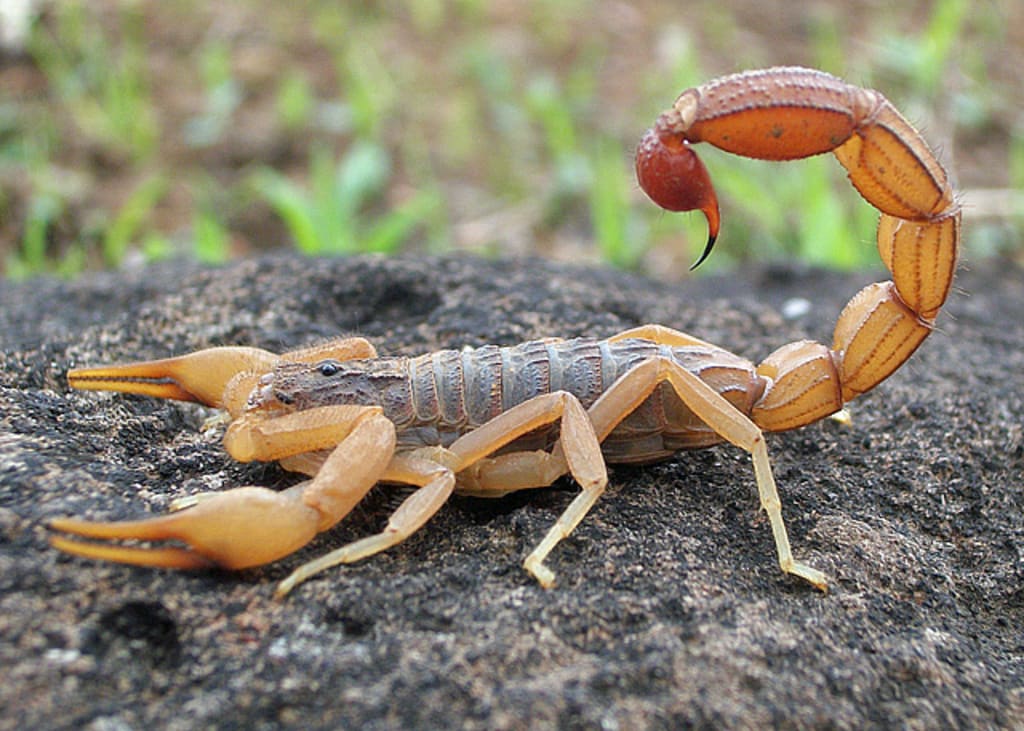
Scorpions are among nature's most fascinating and mysterious creatures. Not only have they managed to survive on Earth for hundreds of millions of years, but they have also adapted to some of the harshest environments known to man. These venomous arachnids are often feared, yet they are also admired by scientists for their evolutionary resilience and medical potential.
Physical Characteristics
Scorpions typically range from 8 to 21 centimeters in length, although fossil records reveal that some prehistoric species grew up to half a meter long. Their body is divided into three segments: the cephalothorax (head), the mesosoma (abdomen), and the metasoma (tail). The tail ends in a venomous stinger used for defense and hunting. Their powerful pincers are not only used to capture prey but also to sense vibrations and navigate their environment.
Exceptional Survival Skills
What truly sets scorpions apart is their incredible survival ability. Scientific studies have shown that a scorpion can survive up to a year without food. This is due to their highly efficient metabolism, which allows them to conserve energy in extreme conditions. Whether in scorching deserts or cold mountain terrains, scorpions have developed biological mechanisms to thrive where few other creatures can.
Ancient Origins
According to paleontological evidence, scorpions have existed for over 430 million years. This makes them one of the oldest living species on the planet—predating the dinosaurs by hundreds of millions of years. Early scorpions were much larger than today’s species, likely due to higher atmospheric oxygen levels during the Paleozoic era. Their ancient lineage is a testament to their adaptability and strength in the face of changing environments and extinction events.
The Power of Venom
While scorpions are often feared for their venom, this very feature is turning out to be a treasure trove for modern medicine. The venom contains a complex mixture of neurotoxins and proteins, many of which have shown promising results in the treatment of serious diseases such as cancer, multiple sclerosis, and autoimmune disorders. Scientists have isolated compounds from scorpion venom that target cancer cells without harming healthy ones, leading to experimental drugs and potential future therapies.
Venom is extracted in controlled laboratory settings and studied for pharmaceutical applications. What was once seen solely as a tool of fear and defense is now being viewed as a source of healing and hope.
Habitat and Lifestyle
Scorpions are predominantly nocturnal creatures, hiding under rocks, in burrows, or within crevices during the day and emerging at night to hunt insects and small animals. They are opportunistic predators and can adapt their diet and behavior based on environmental availability.
They thrive in arid deserts, humid rainforests, and even mountainous regions. This wide adaptability contributes to their presence across every continent except Antarctica.
Cultural Symbolism and Human Interaction
Throughout history, scorpions have held symbolic meaning in various cultures. In some Middle Eastern and African traditions, they represent protection and transformation, while in others they symbolize danger and death. In astrology, Scorpio is a zodiac sign associated with intensity and mystery, further emphasizing the scorpion’s deep cultural impact.
Despite their sometimes fearsome reputation, scorpions are not aggressive toward humans unless provoked. Only a small percentage of scorpion species possess venom potent enough to be lethal to humans, and even those rarely cause fatalities thanks to medical advancements.
Conclusion
Scorpions are far more than just venomous pests lurking in the shadows. They are living fossils—ancient survivors of a world that has drastically changed around them. Their ability to endure extreme conditions, survive long periods without food, and adapt over millions of years makes them one of the most resilient creatures on Earth.
Furthermore, their venom, once solely associated with fear, is now being studied as a powerful resource for developing life-saving medications. As science continues to explore the hidden potentials of nature’s creatures, scorpions stand as a powerful reminder of how little we still know—and how much we have yet to learn.
May we learn to respect these creatures not only for their danger but also for their contributions to the world of science and medicine. And may we all remain safe and protected from the risks of the wild.
About the Creator
Keep reading
More stories from Insect Legends and writers in Earth and other communities.
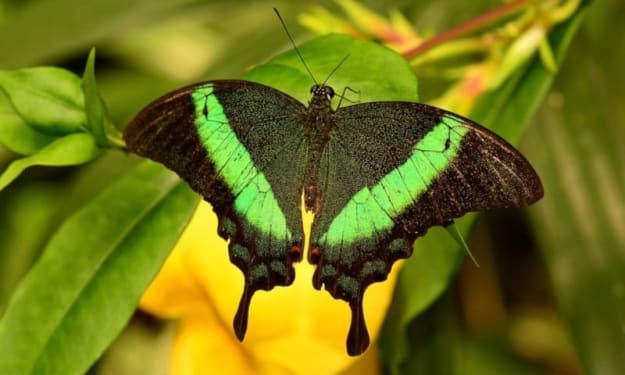
Wings of Emerald: The Mesmerizing Elegance of the Emerald Swallowtail
Introduction Nature never ceases to amaze us with its vibrant palette and dazzling designs. Among the most enchanting of these natural masterpieces is the Emerald Swallowtail Butterfly (Papilio palinurus). With its iridescent green wings that shimmer like precious gemstones, this butterfly is not just an insect — it’s a living jewel, a breathtaking marvel that captures the hearts of scientists, artists, and nature lovers alike.
By Insect Legends9 months ago in Earth
Top Australian Writers’ Festival Cancelled After Palestinian Author Barred
One of Australia’s most respected literary festivals has been cancelled following a fierce backlash over the decision to bar a Palestinian author from participating. What began as a programming dispute quickly escalated into a national debate about free speech, cultural inclusion, and political pressure in the arts. The cancellation has sent shockwaves through Australia’s literary community, raising urgent questions about whose voices are allowed on public platforms and at what cost.
By Aarif Lashari4 days ago in Earth
The Trans Youth Athletes in the US Fighting for Their Rights: ‘Playing Is an Act of Resistance’
Across the United States, sports have become an unexpected front line in the fight over transgender rights. For many trans youth athletes, simply stepping onto a field, track, or court is no longer just about competition—it is an act of resistance. As state legislatures debate and pass laws restricting transgender participation in school sports, young athletes are finding themselves at the center of a national culture war that reaches far beyond the locker room.
By Aarif Lashari4 days ago in Earth



Comments
There are no comments for this story
Be the first to respond and start the conversation.