
"Komodo Dragon: The Lethal Lizard from the Ancient World"
"A deadly predator, the Komodo dragon has survived for millions of years—and its strength, venom, and ancient lineage make it a formidable creature."

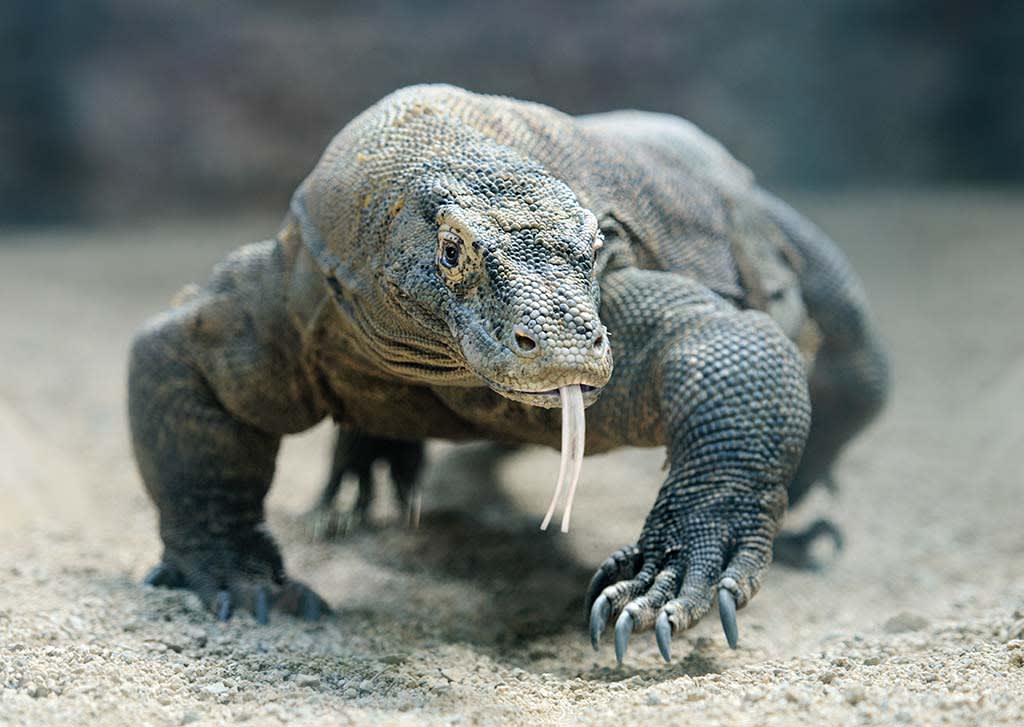
The Komodo dragon, a giant lizard found on a handful of islands in Indonesia, is one of the most fascinating—and terrifying—creatures on Earth. It’s not just its size or appearance that captures attention, but also its deadly nature and ancient history. This apex predator has survived for millions of years, unchanged and perfectly adapted to its environment.
The Legacy of the Komodo Dragon
The Komodo dragon, scientifically known as Varanus komodoensis, is the largest living species of lizard. It can grow up to 10 feet long and weigh over 300 pounds. With its muscular body, sharp claws, and powerful jaws, it’s built to be a top-tier predator. It hunts a variety of animals, including deer, wild boar, and even smaller dragons.
But what truly sets the Komodo dragon apart from other predators is its venom. It’s not just its physical prowess that makes it deadly, but the toxic bacteria and venomous proteins in its saliva. When it bites its prey, the dragon’s saliva injects toxins that cause rapid blood loss, paralysis, and eventually death. It’s this combination of physical strength and venom that allows it to bring down prey far larger than itself.
Evolutionary Survivor
The Komodo dragon has existed for millions of years, surviving major climate changes and environmental shifts. Its lineage dates back to the late Pleistocene era, which means it was alive at the same time as some of the largest mammals to have ever roamed the planet, such as woolly mammoths and saber-toothed tigers.
Interestingly, the Komodo dragon’s survival can be attributed to its isolation on the islands of Indonesia. The isolation allowed it to evolve without much competition from other large predators. Over time, it adapted to its environment, becoming the fearsome creature it is today.
The Dragon’s Unique Hunting Strategy
The Komodo dragon doesn’t rely solely on its venom to hunt—it’s also an incredibly patient predator. The dragon typically stalks its prey quietly, waiting for the perfect moment to strike. Once it gets close enough, it delivers a swift, powerful bite. The dragon’s prey, often unaware of the venom in its mouth, attempts to flee. However, the toxins slowly take effect, weakening the animal and making it easy for the dragon to track down.
Komodo dragons also have a strong sense of smell, which helps them detect carcasses from miles away. Their acute sense of smell, combined with their ability to travel long distances, makes them effective scavengers as well as hunters.
Komodo Dragon and Human Interaction
While the Komodo dragon is primarily a predator, it has been known to show curiosity toward humans. In fact, there have been occasional reports of dragons approaching people or their campsites. However, the dragon’s interest in humans is usually not aggressive. It’s thought that the dragons are simply exploring or investigating unfamiliar creatures.
Humans have, however, posed a threat to the Komodo dragon’s existence. Due to habitat loss and poaching, the population of these incredible creatures has declined. Conservation efforts are underway to protect them, and Komodo National Park in Indonesia is one of the few places where you can see these dragons in their natural habitat.
A Symbol of Strength and Survival
The Komodo dragon is more than just a deadly predator. It symbolizes the strength and resilience of nature. For millions of years, it has adapted, survived, and thrived in one of the harshest environments on Earth. Its presence reminds us that life on our planet is often more complex and powerful than we realize.
Conclusion
The Komodo dragon is one of nature’s most ancient and fascinating creatures. With its lethal venom, strength, and ability to survive through millennia, it has earned its place as one of the planet’s most formidable predators. But beyond its danger, it also represents the ancient, enduring power of life on Earth.
About the Creator
Keep reading
More stories from Insect Legends and writers in Earth and other communities.
"Scorpions: Nature’s Ancient Survivors with a Deadly Secret"
Scorpions are among nature's most fascinating and mysterious creatures. Not only have they managed to survive on Earth for hundreds of millions of years, but they have also adapted to some of the harshest environments known to man. These venomous arachnids are often feared, yet they are also admired by scientists for their evolutionary resilience and medical potential.
By Insect Legends10 months ago in Earth
Antibiotic resistance is released into rivers and other essential water supplies by melting glaciers.
Sea level rise and the disappearance of landscapes are not the only effects of glaciers melting quickly. Melt water may also contain buried genetic material that aids in bacterial resistance to drugs, scientists are now cautioning.
By Francis Dami4 days ago in Earth
Center Stage with Paul Stewart
*** I'm keen to republish the interviews I did for my series with Vocal creators. It's been a few years and I thought it might be nice to revisit these wonderful conversations. I'll be releasing them one at a time for a few weeks/months.
By Heather Hubler2 days ago in Interview




Comments
There are no comments for this story
Be the first to respond and start the conversation.