Science
Astronomers Detect a Possible Signature of Life on a Distant Planet"
Astronomers have discovered a possible sign of life on an exoplanet more than 100 light-years away, which could be one of the most significant scientific breakthroughs of the 21st century. Using advanced telescopic technology and spectroscopy, scientists have identified the presence of a rare chemical compound in the planet's atmosphere—one that, on Earth, is predominantly produced by living organisms.
By Nahian ebne10 months ago in Earth
The strongest evidence of life on an exoplanet has been found by scientists.
Scientists have obtained using the the James Webb Space Telescope that they call the strongest signs yet of possible life beyond our solar system, detecting in an exoplanet’s atmosphere the chemical fingerprints of gases that on Earth are produced only by biological processes. Two gases are observed in the planet named K2-18 b are dimethyl sulfide or DMS, and dimethyl disulfide or DMDS - which are generated on Earth by living organisms, primarily microbial life such as marine phytoplankton algae.
By Preyonjit Chakraborty10 months ago in Earth
Withthegrid, Backed by Venture Capitalist Rajat Khare, Scales Energy Infrastructure Monitoring Across Europe
Founded in 2016, the Dutch energy tech firm is ramping up innovation, expanding its advisory board, and securing critical partnerships to address the growing need for real-time infrastructure monitoring.
By The Biz Times10 months ago in Earth
Hoatzin: The Living Herbivorous Dinosaur of the Amazon Rainforest
Found in the swamps, mangroves, and riparian forests of South America, this eccentric looking, chicken-sized bird can be seen clumsily moving through the foliage searching for its leafy dinner.
By Owen / Crazy Sheep10 months ago in Earth
Trump again calls for Fed to cut rates, says Powell’s ‘termination cannot come fast enough’
Trump reiterates his attack on the Federal Reserve, demands immediate rate cuts, and demands Powell's ouster. On April 17, 2025, amid growing economic and political tensions, former President Donald Trump has rekindled his attacks on the Federal Reserve and its chairman, Jerome Powell, in a familiar return to a long-standing feud. Trump, who is currently the most likely Republican candidate for president in 2024, reiterated his call for an immediate decrease in interest rates and slammed Powell's leadership, stating that "his termination cannot come fast enough." The new criticism was voiced at a campaign rally in Ohio and later appeared in posts on Trump's Truth Social social media platform. Trump accused the Fed of "suffocating the economy" with what he labeled as “reckless and unnecessary” interest rate hikes that, in his view, are slowing economic growth and burdening American families.
By GLOBAL NEWS10 months ago in Earth
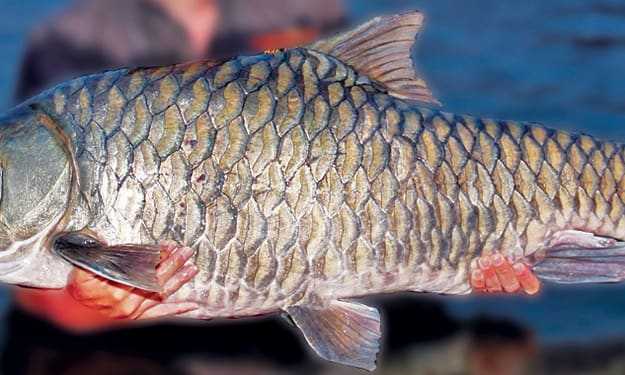
Dammed If We Do: How India’s Giant River Fish Is Dying in Silence
In the stillness of a summer afternoon, deep in the Cauvery River, something once stirred. A creature the size of a human child, orange-finned and hump-backed, glided through the cool, fast-flowing waters. Locals called it the "Tiger of the Cauvery," a fish so strong it bent rods and broke records. But today, that legend is fading.
By Basil Sarguroh10 months ago in Earth
Glaciers in Sweden and Norway Melting Rapidly Scientists Warn of Severe Climate Impact
Glaciers in Sweden and Norway Melting Rapidly Scientists Warn of Severe Climate Impact Rising temperatures are accelerating glacier loss across Scandinavia threatening ecosystems water supplies and contributing to global sea level rise.
By Adnan Rasheed10 months ago in Earth
Scientists Hail ‘Strongest Evidence’ So Far for Life Beyond Our Solar System
Humans have been stargazing for ages, wondering if we are the only species in the cosmos. Researchers think they may have discovered the most compelling evidence yet for extrasolar life. The discovery of possible evidence of life activity on a far-off exoplanet by a recent research has sparked discussion and enthusiasm among scientists.
By Mir shoyaib 10 months ago in Earth
Back from the Dead: Can We Really Bring Extinct Species Back Without Harming Nature?. AI-Generated.
What if the woolly mammoth roamed the Arctic again? Or the dodo strutted through the forests of Mauritius? It sounds like something out of a sci-fi movie, but science is catching up with imagination. Thanks to breakthroughs in genetics and biotechnology, the idea of reviving extinct animals—known as "de-extinction"—is no longer just fantasy. It’s inching closer to becoming a reality. But just because we can bring a species back, does it mean we should?
By Basil Sarguroh10 months ago in Earth
Medical breakthroughs and environmental victories shaping our future: Healing the Earth, Saving Lives.. AI-Generated.
2024 provided a double dose of optimism in a world frequently overshadowed by crisis. The global landscape saw incredible strides in both medicine and environmental action, showing that when science, innovation, and global cooperation intersect, humanity can truly thrive. These breakthroughs not only altered the lives of individuals but also demonstrated our collective capacity for healing—for both ourselves and the planet. Revolutionary Medical Developments 2024 was a landmark year in medical science, with several discoveries pushing the boundaries of what's possible.
By Ashfaque Mahmud 🇧🇩10 months ago in Earth