Science
Medical breakthroughs and environmental victories shaping our future: Healing the Earth, Saving Lives.. AI-Generated.
2024 provided a double dose of optimism in a world frequently overshadowed by crisis. The global landscape saw incredible strides in both medicine and environmental action, showing that when science, innovation, and global cooperation intersect, humanity can truly thrive. These breakthroughs not only altered the lives of individuals but also demonstrated our collective capacity for healing—for both ourselves and the planet. Revolutionary Medical Developments 2024 was a landmark year in medical science, with several discoveries pushing the boundaries of what's possible.
By Ashfaque Mahmud 🇧🇩10 months ago in Earth
Anthropic unveils new Research tool, Google Workspace integration
Anthropic Introduces Google Workspace Integration, a New Research Tool April 17, 2025 — In a major step toward making advanced AI more accessible in everyday workflows, Anthropic has announced the launch of a powerful new research tool alongside seamless integration with Google Workspace. The move demonstrates the company's ongoing effort to position its Claude AI models as partners in research and enhancers of productivity. A Smarter Research Assistant
By Kindless Exe10 months ago in Earth
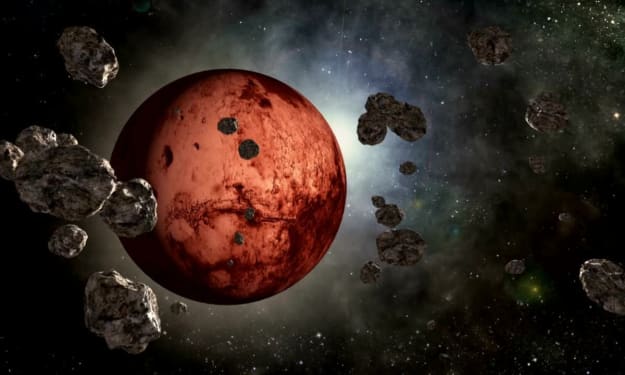
James Webb Telescope Discovers Possible Signs of Alien Life on Distant Exoplanet K2-18b
James Webb Telescope Discovers Possible Signs of Alien Life on Distant Exoplanet K2-18b NASA’s James Webb Space Telescope detects potential biosignature gases in the atmosphere of exoplanet K2-18b raising hopes in the search for extraterrestrial life.
By Adnan Rasheed10 months ago in Earth
9 Coolest Georgia Towns for a Summer Vacation in 2025
Georgia is full of small towns brimming with charm, history, and natural beauty. While cities like Atlanta and Savannah often steal the spotlight, the Peach State’s hidden gems are just as captivating—especially in the summer. From hiking wooded trails to soaking up local culture, these towns offer unforgettable experiences for every type of traveler. Love the outdoors? Tallulah Falls has a jaw-dropping gorge and waterfalls. Do you like the beach vibe? The sandy shores and historic lighthouse of Tybee Island await. Whether you’re into history, nature, or just discovering cool new spots, Georgia’s got something for everyone. Consider these nine of the coolest towns, all of which have fewer than 50,000 residents, for your summer vacation in 2025. Get on the road and pack your belongings—these hidden gems are just waiting to be discovered!
By Tamanna Lima10 months ago in Earth
Two Meteor Showers Are About to Rock the Night Sky!. AI-Generated.
Skywatchers and stargazers, mark your calendars: the night sky is about to put on a dazzling double feature with the Lyrids and Eta Aquariids meteor showers arriving in quick succession. These back-to-back displays promise shooting stars, bright fireballs, and unforgettable moments—especially if you’re lucky enough to catch them from a dark location.
By Md. Saidul Islam Sanjid10 months ago in Earth
Islands of the Ocean in World
Islands of the Ocean in World The vast blue oceans of our planet hold countless islands each with its own unique story. These landmasses rising from the watery depths are like nature’s experiments in isolation and adaptation. From towering volcanic peaks to flat coral atolls islands come in many forms and sizes. They are home to strange creatures rare plants and cultures found nowhere else on Earth.
By Arsalan Khan10 months ago in Earth
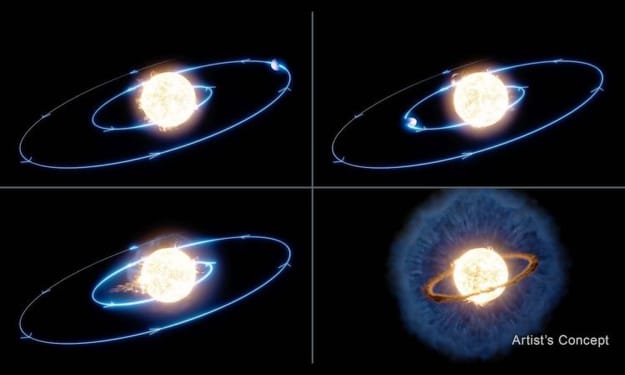
James Webb Telescope Uncovers Planetary Catastrophe
The James Webb Telescope Reveals the Truth About a Planet That Crashed Into Its Own Star The James Webb Space Telescope (JWST) of NASA has revealed for the first time compelling evidence of a planet that literally crashed into its own star, making a ground-breaking discovery about a distant planetary system. The cosmic event not only challenges current theories about planetary stability but also opens a new window into the life cycle of planetary systems. The Brutal Decline of a Planet A distant star with the designation WD 0145+234, which is approximately 570 light-years away, was the source of unusual light signatures and infrared emissions that were observed by the JWST. What initially appeared to be a typical white dwarf—a stellar remnant of a sun-like star—soon revealed an intense infrared glow inconsistent with its usual profile. Upon deeper analysis, the Webb Telescope’s highly sensitive instruments detected traces of vaporized rock and heavy metals like iron and magnesium swirling in the star’s atmosphere. These elements are hallmarks of terrestrial planets, indicating that a rocky planet had been violently torn apart and consumed by the dying star. How did it occur? According to scientists, the catastrophic event likely began after the star exhausted its nuclear fuel and collapsed into a white dwarf. The star's planetary system's gravitational landscape would have changed dramatically during this transformation. The resulting chaos could have destabilized nearby planets, pushing them into decaying orbits. In this instance, one unfortunate planet was pulled inward until it was torn apart by gravitational forces. The Webb Telescope was able to observe the thermal and spectral signatures left by the metallic debris, vaporized rock, and planetary dust that were left behind as they spiraled into the star. A Glimpse Into Our Future? This discovery is not just an isolated celestial drama—it could also serve as a preview of what might happen in our own solar system billions of years from now. When our Sun eventually becomes a white dwarf, it too could disturb the orbits of the remaining planets. The gravitational pull of the dying star could engulf or shatter Earth, resulting in a similar fate. Redefining Our Knowledge Our understanding of the evolution of planetary systems is being transformed by the James Webb Space Telescope's ability to observe these minute details at such great distances. Not only has it provided a direct glimpse into the destructive end of a planet’s life, but it has also offered critical insights into how stars and their planets interact over cosmic timescales. Dr. says, "This is a smoking gun." Elena Morales, one of the project's lead researchers. “We’ve long suspected that stars could consume their planets, but this is the first time we’ve seen clear, unambiguous evidence.” What’s Next? Researchers plan to continue using JWST to observe other white dwarf systems for similar signs of planetary disruption. The hope is to gather enough data to create a broader theory of how common these planetary collisions are and what they mean for planetary system formation, evolution, and destruction. The Webb Telescope's revelation is a powerful reminder of the dynamic—and sometimes violent—nature of our universe. We are also learning more about our own cosmic destiny as we look further into space.
By Shanto adhikary 10 months ago in Earth