Say the truth
Bio
"Say the Truth: Explain Everything in the World" is your trusted source for uncovering facts and exploring the wonders of history, science, technology, and beyond. We simplify complex ideas and reveal truths to inspire curiosity .
Stories (649)
Filter by community
The Concealed Wealth of the Inca Empire: Forgotten Treasures of the Andes. AI-Generated.
The Concealed Wealth of the Inca Empire: Forgotten Treasures of the Andes Situated high in the Andes Mountains, the Inca Empire (1438–1533) was the most extensive pre-Columbian empire in the Americas. At its zenith, it spanned across Peru, Bolivia, Ecuador, and portions of Chile and Argentina, governing over more than 10 million individuals. However, beyond its expansive territory and sophisticated infrastructure, what astonished Spanish conquistadors most was the empire’s unfathomable wealth—particularly its vast reserves of gold and silver.
By Say the truth 8 months ago in History
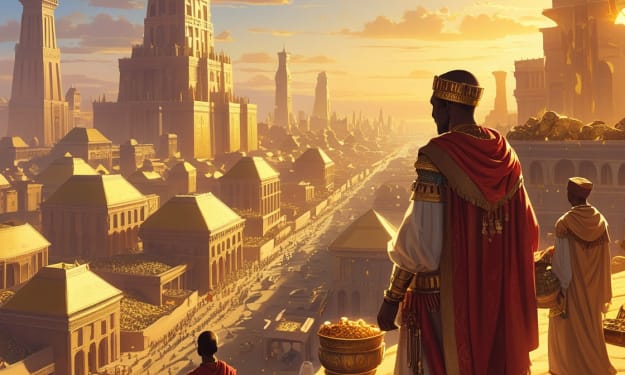
The Wealthiest Empire in History: The Golden Heritage of the Mali Empire
The Foundations of the Mali Empire The Mali Empire was established circa 1235 AD by Sundiata Keita, who unified several smaller kingdoms following the decline of the Ghana Empire. Under Sundiata’s guidance, Mali evolved into a centralized entity with a formidable military and effective administration. Nonetheless, it was under his successors—most notably Mansa Musa (r. 1312–1337)—that the empire attained its pinnacle.
By Say the truth 8 months ago in History
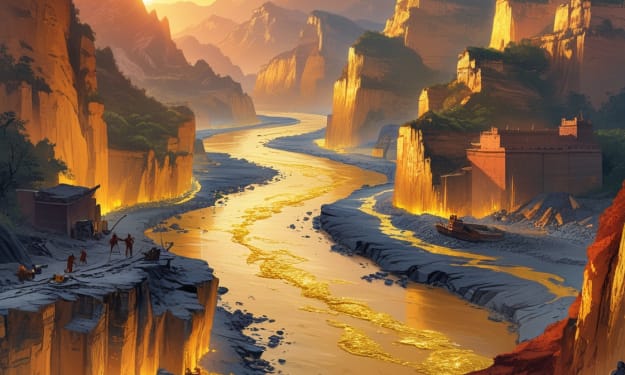
Beneath the Golden Tides: Revealing the Concealed Mineral Wealth of China's Yellow River. AI-Generated.
A River Shaping Through Epochs and Stone The Yellow River traverses a multitude of landscapes: towering mountains, fertile plains, loess plateaus, and desert basins. This journey has enabled it to carve into rock strata rich in minerals, revealing deposits that ancient civilizations soon learned to utilize. As early as the Shang Dynasty (c. 1600–1046 BCE), bronze metallurgy thrived along the river, with copper, tin, and lead extracted locally and crafted into weapons, ceremonial items, and tools.
By Say the truth 8 months ago in History
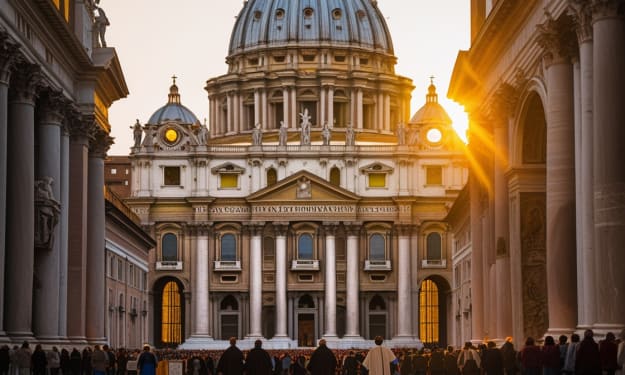
The Wealthiest Cathedral in Christianity: A Chronicle of St. Peter’s Basilica. Content Warning. AI-Generated.
The Origins: A Tomb Transformed into a Basilica The narrative commences in the 1st century CE. According to Christian doctrine, St. Peter, one of Jesus Christ's twelve disciples and viewed as the first Pope, was martyred in Rome during Emperor Nero's rule. He was crucified upside-down and interred in a burial site on Vatican Hill. Over his resting place, Emperor Constantine, the first Roman emperor to embrace Christianity, commissioned a basilica circa 319 CE.
By Say the truth 8 months ago in History
The Golden Vein of China: History and Wealth of the Yellow River's Mineral Deposits
Historical Background The history of mining and mineral utilization in the Yellow River region can be traced back to ancient China, particularly during the Xia, Shang, and Zhou dynasties (2100–256 BCE). Early Chinese metallurgy predominantly relied on copper and tin for the creation of bronze tools, weapons, and ceremonial vessels. Archaeological discoveries from the Yellow River valley, especially within Henan and Shaanxi provinces, indicate that bronze mining and casting practices were highly developed as early as 1700 BCE.
By Say the truth 8 months ago in History
The Roaring Silence: Revealing the Greatest Enigma of the Yali
Origins and Early Representations: The earliest recorded illustrations of Yalis can be traced to the Pallava and Chola temples in Tamil Nadu, dating as early as the 7th century CE. These mystical beings embellish columns, gopurams (temple towers), and even thrones. In these representations, the Yali frequently appears mid-roar, with colossal claws, razor-sharp fangs, and a serpentine tail coiling around ancient stone.
By Say the truth 8 months ago in History
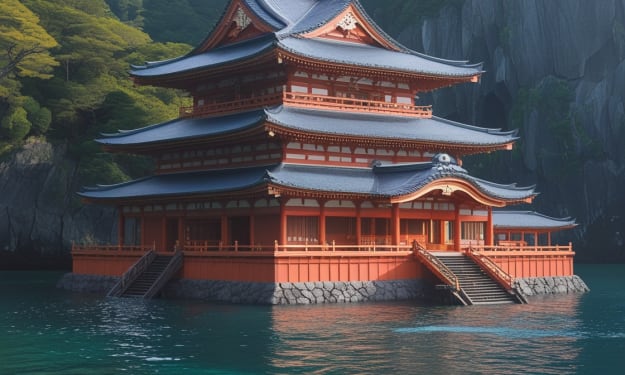
The Dragon King's Palace: Revealing the Subaquatic Treasure City of Japanese Mythology. AI-Generated.
The Mythical Origins of Ryūgū-jō Within the expansive realm of Japanese mythology, few narratives resonate with such awe as the chronicle of Ryūgū-jō (竜宮城), the Dragon Palace located beneath the ocean. Alleged to be the sphere of Ryūjin (龍神), the Dragon Deity of the sea, Ryūgū-jō is a splendid underwater palace crafted from coral, crystal, and precious metals. Its mythological foundations originate from early Shinto convictions and were further developed by Buddhist influences, folklore, and oral traditions transmitted through generations.
By Say the truth 8 months ago in History
"The Dragon Through Time: Tracing the History and Origin of the Mythical Beast"
The Genesis of the Dragon Myth The notion of dragons predates documented history. Long before societies inscribed records on tablets or scrolls, tales of serpentine monsters and sky-beasts were transmitted orally through generations. Anthropologists speculate that the dragon myth may have originated from ancient humans discovering colossal fossilized bonespossibly of dinosaurs or large prehistoric mammalsand envisioning them as remains of formidable, mythical creatures.
By Say the truth 8 months ago in History
Kappa: The River Demon of Japanese Mythology. AI-Generated.
Kappa: The River Demon of Japanese Mythology Japan's mythological realm is abundant with intriguing and peculiar beings, collectively referred to as yokai. Among these, the kappaa water-dwelling sprite or demonstands out as one of the most mysterious and enduring figures in Japanese legend. Typically portrayed as a small, humanoid entity with amphibious traits, a shell on its back, and a bowl-like indentation on its head that retains water, the kappa serves both as a menace and a moral educator. It represents Japan’s profound reverence for nature, particularly its waterways, and its longstanding tradition of storytelling.
By Say the truth 8 months ago in History
The Mythical Nine-Tailed Fox: Heritage, Lore, and Cultural Impact
Ancient Roots in China: The Huli Jing The notion of the nine-tailed fox traces back over 2,000 years to ancient China. The earliest documented mention can be found in the “Shanhaijing” (Classic of Mountains and Seas), a Chinese manuscript assembled between the 4th and 1st centuries BCE. The Huli Jing was characterized as a captivating, astute fox spirit that could exist for more than a millennium. According to Daoist beliefs, these foxes amassed spiritual energy through age and meditation, acquiring magical abilities and frequently transforming into human females to engage with humans.
By Say the truth 8 months ago in History
The Golden Hoard of Bactria: Afghanistan’s Lost Treasure of the Nomads :. AI-Generated.
The Discovery of the Bactrian Gold In 1978, Soviet archaeologist Viktor Sarianidi spearheaded a team of scholars into the Sheberghan region of northern Afghanistan. Located merely 80 miles south of the Amu Darya River and adjacent to the borders of Turkmenistan and Uzbekistan, they unearthed a series of burial mounds locally referred to as Tillya Tepe, or “Hill of Gold. ”
By Say the truth 8 months ago in History
Supreme Egyptian Wealth Yet to Be Discovered: The Buried Tomb of Pharaoh Amenhotep I. AI-Generated.
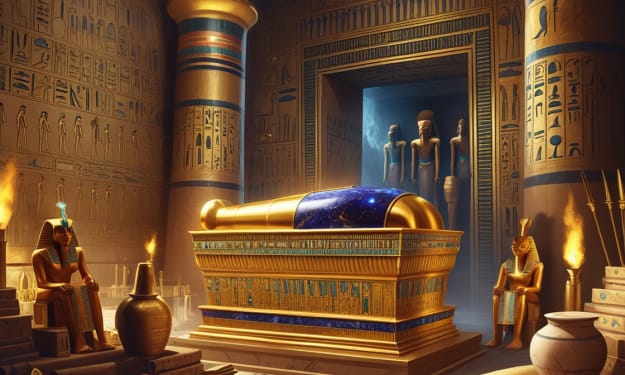
Introduction Egypt is emblematic of ancient wealthshimmering gold, revered tombs, and forgotten temples. Throughout the ages, archaeologists have uncovered monumental discoveries, from the Valley of the Kings to the Great Pyramids. Nonetheless, despite these achievements, many contend that the most significant Egyptian treasure remains concealed beneath layers of time: the lost tomb and pristine treasures of Pharaoh Amenhotep I.
By Say the truth 8 months ago in History